Free visual inspection and a written scope of work before any mitigation begins - photos, moisture readings, and drying logs go in your claim file
The scope we write is the scope we bill. Anything new gets shown to you, in writing, before we touch it.
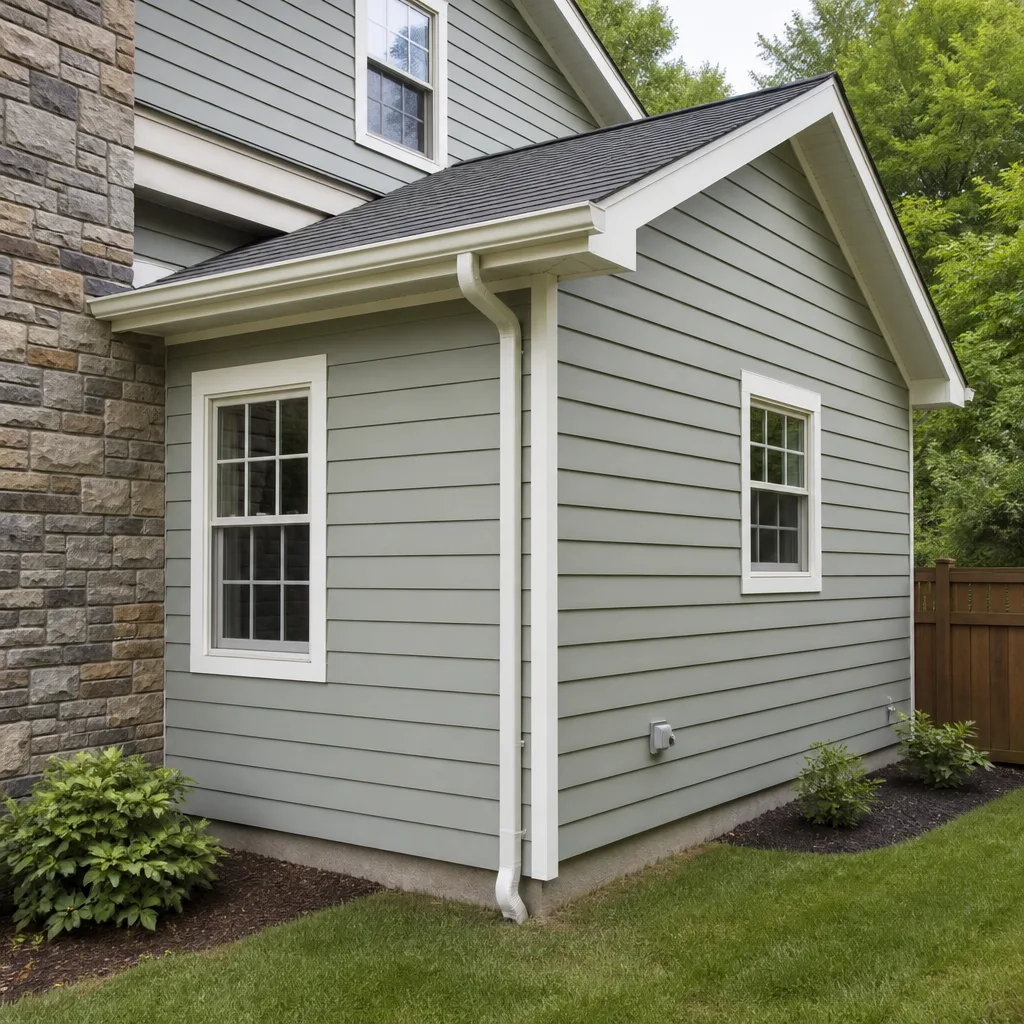
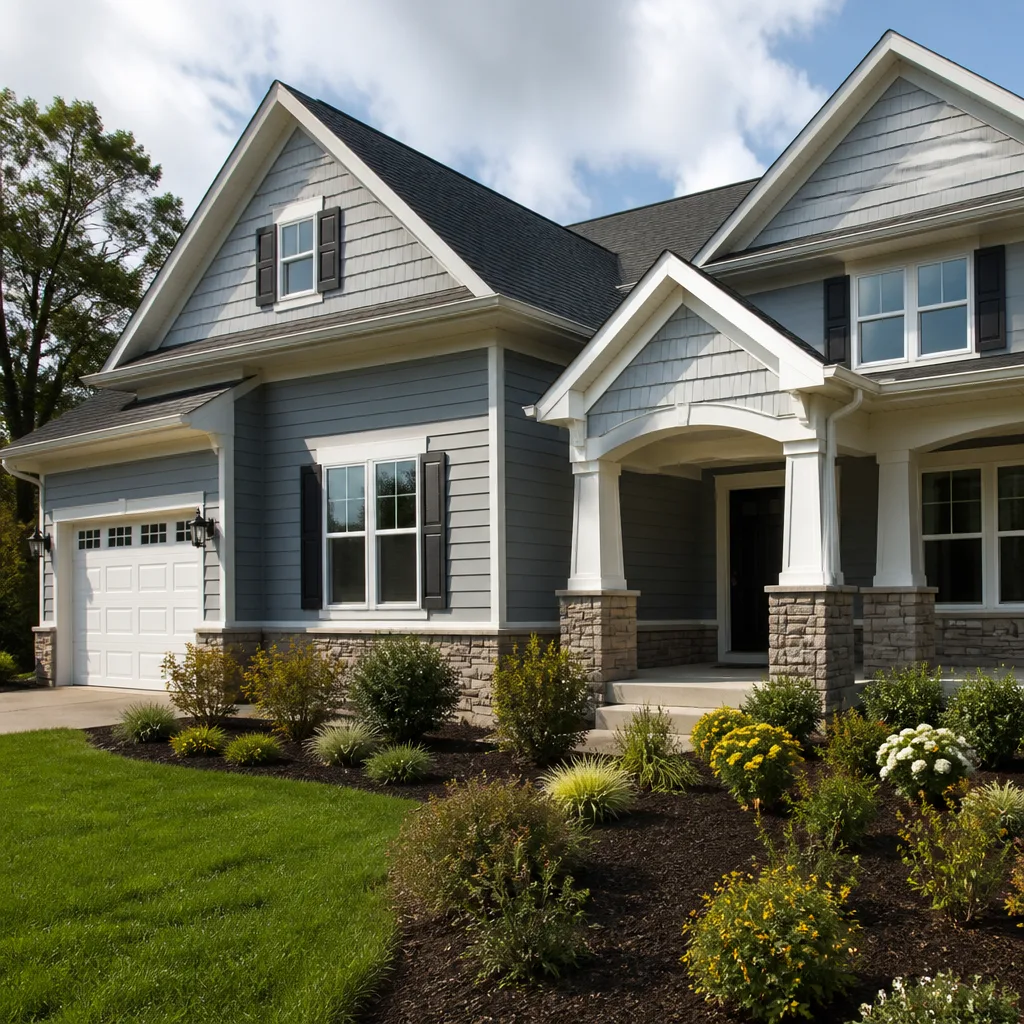
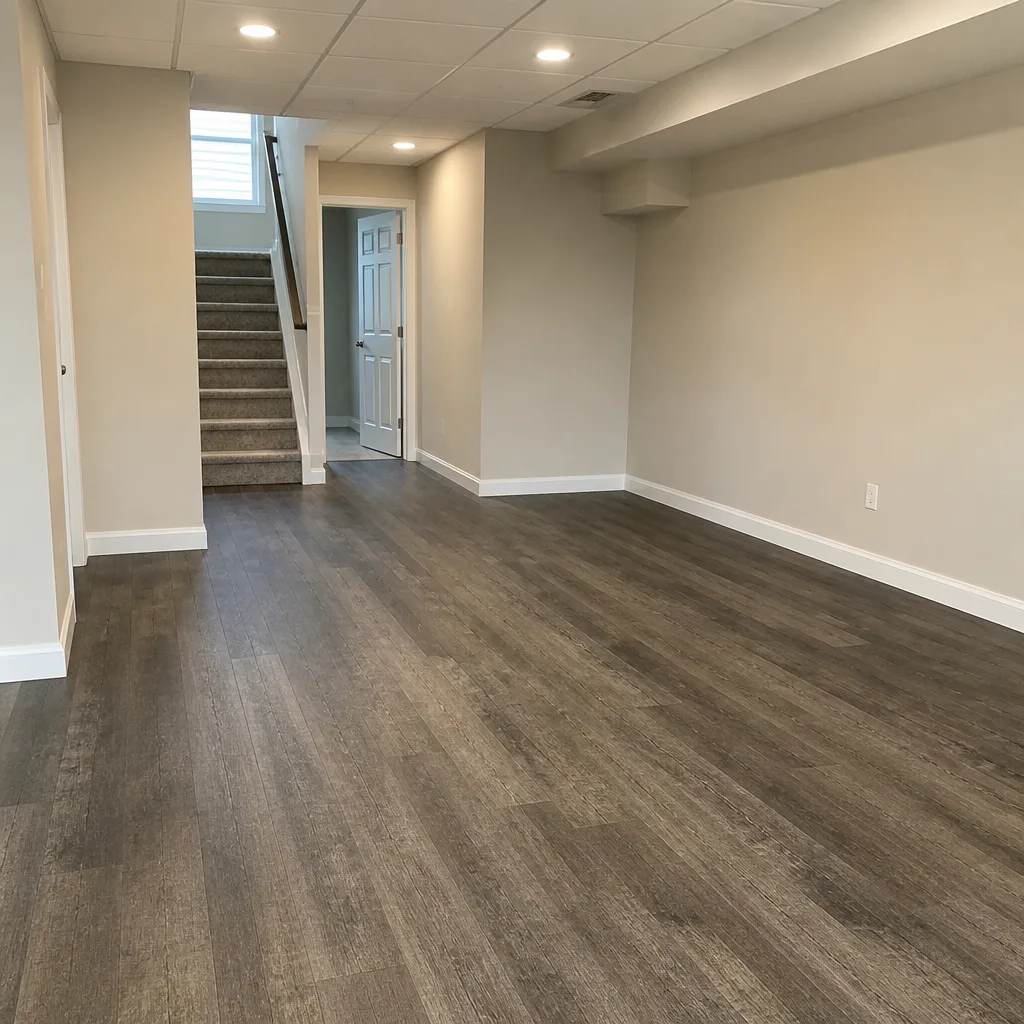
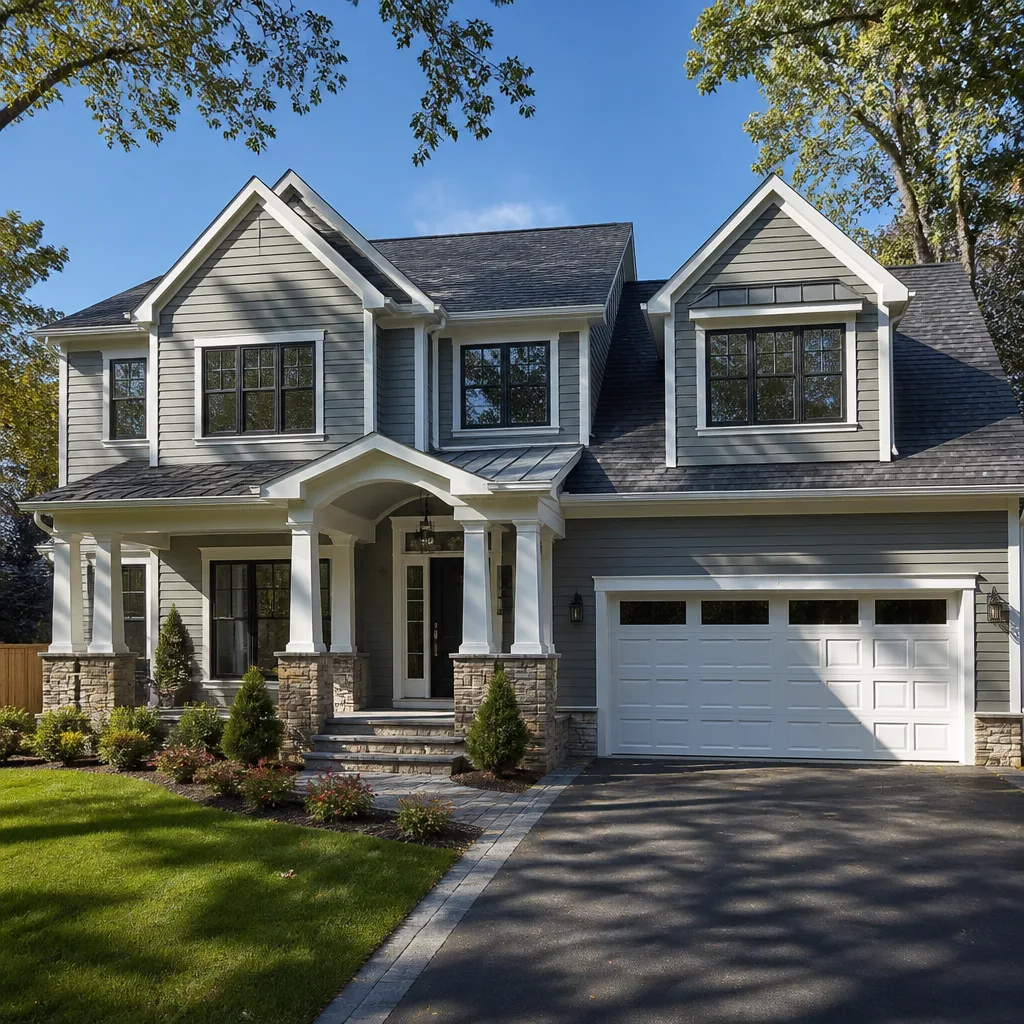
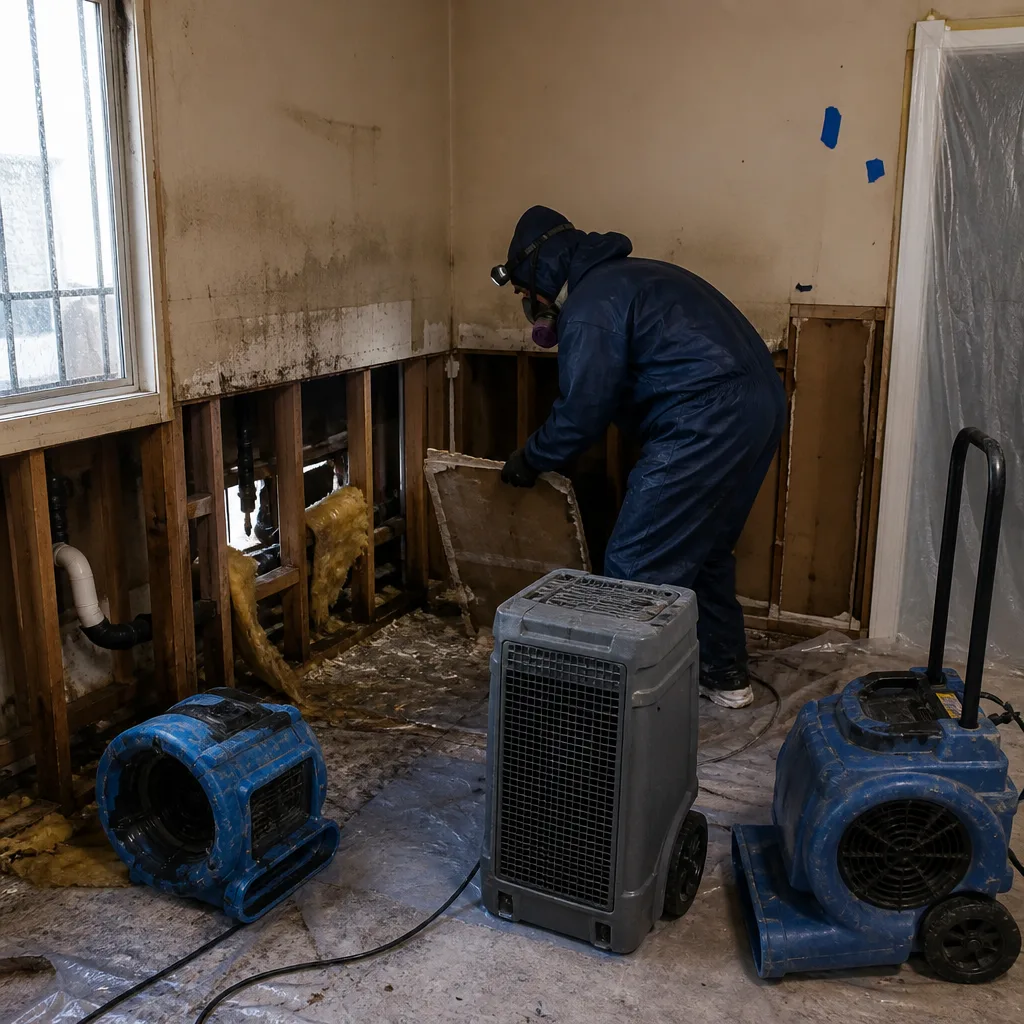 Before
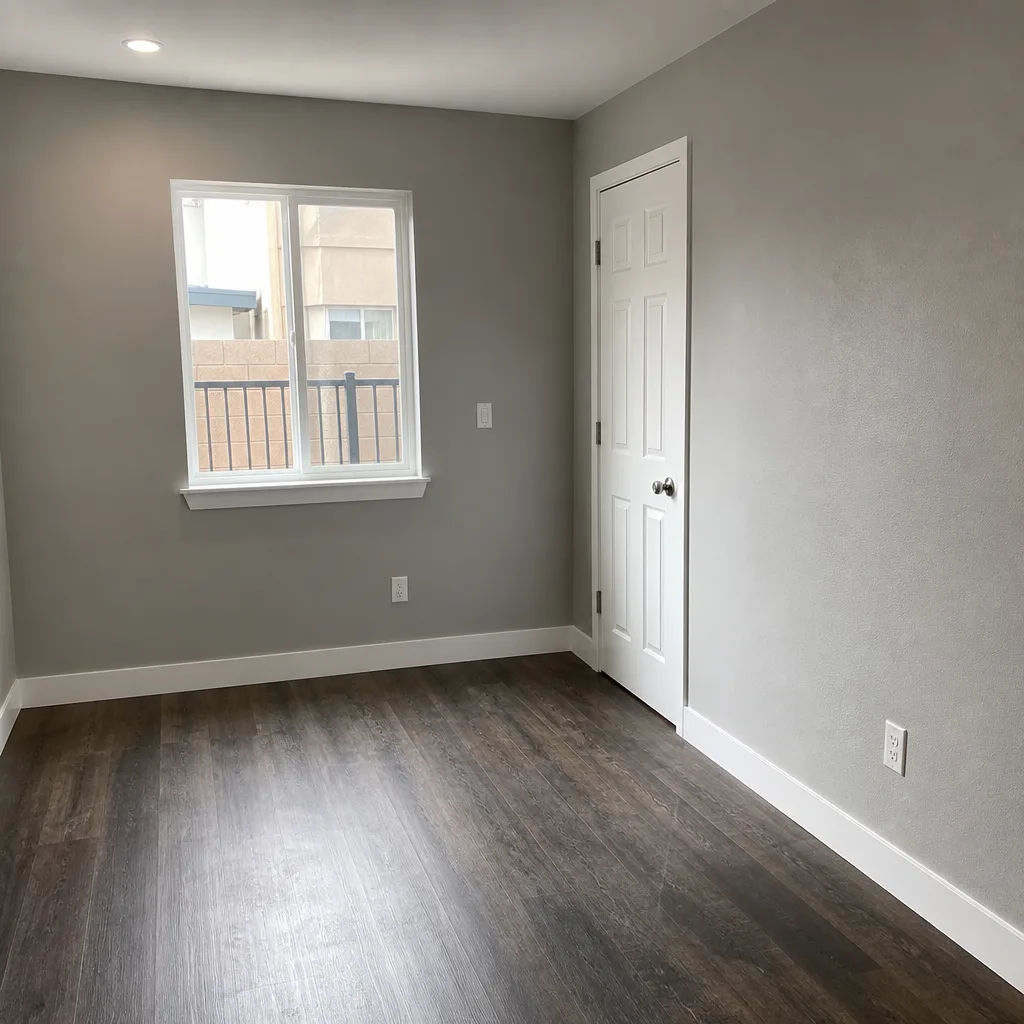 After
After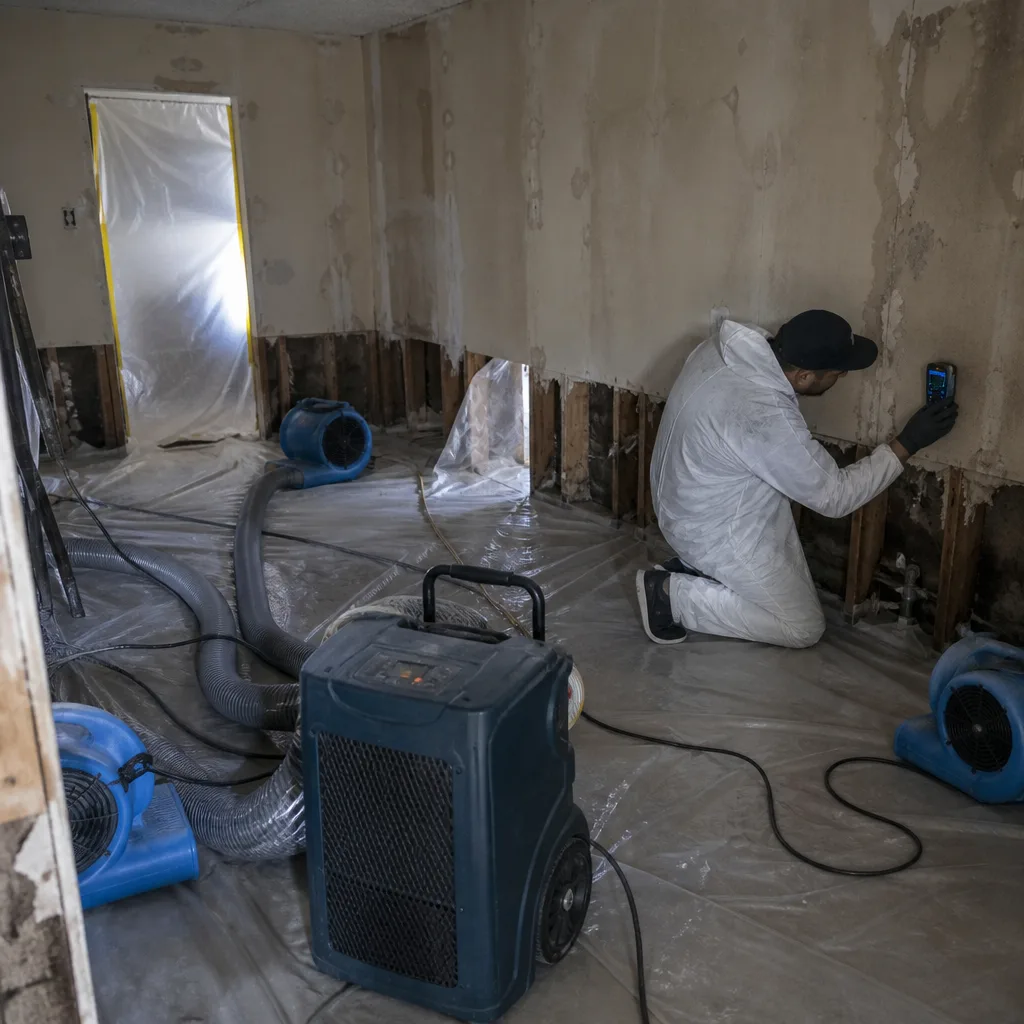 Before
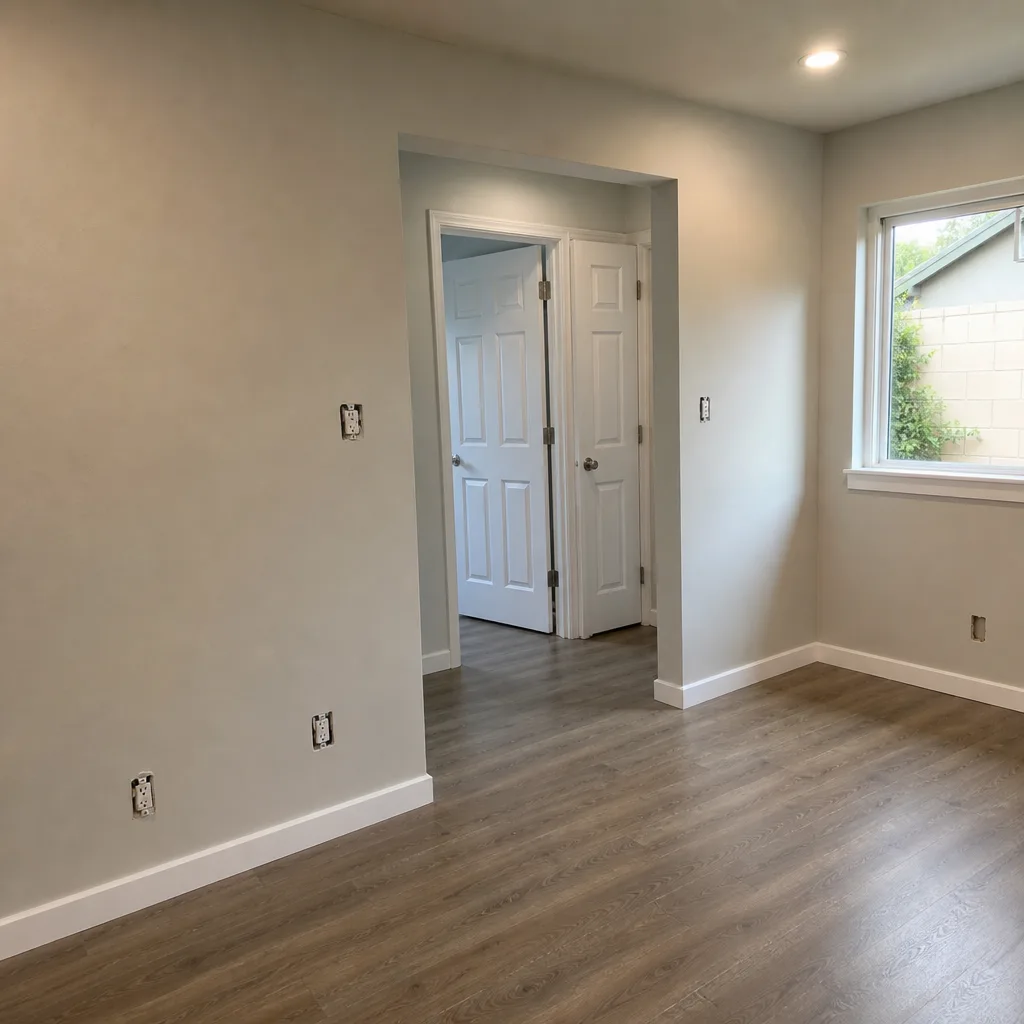 After
After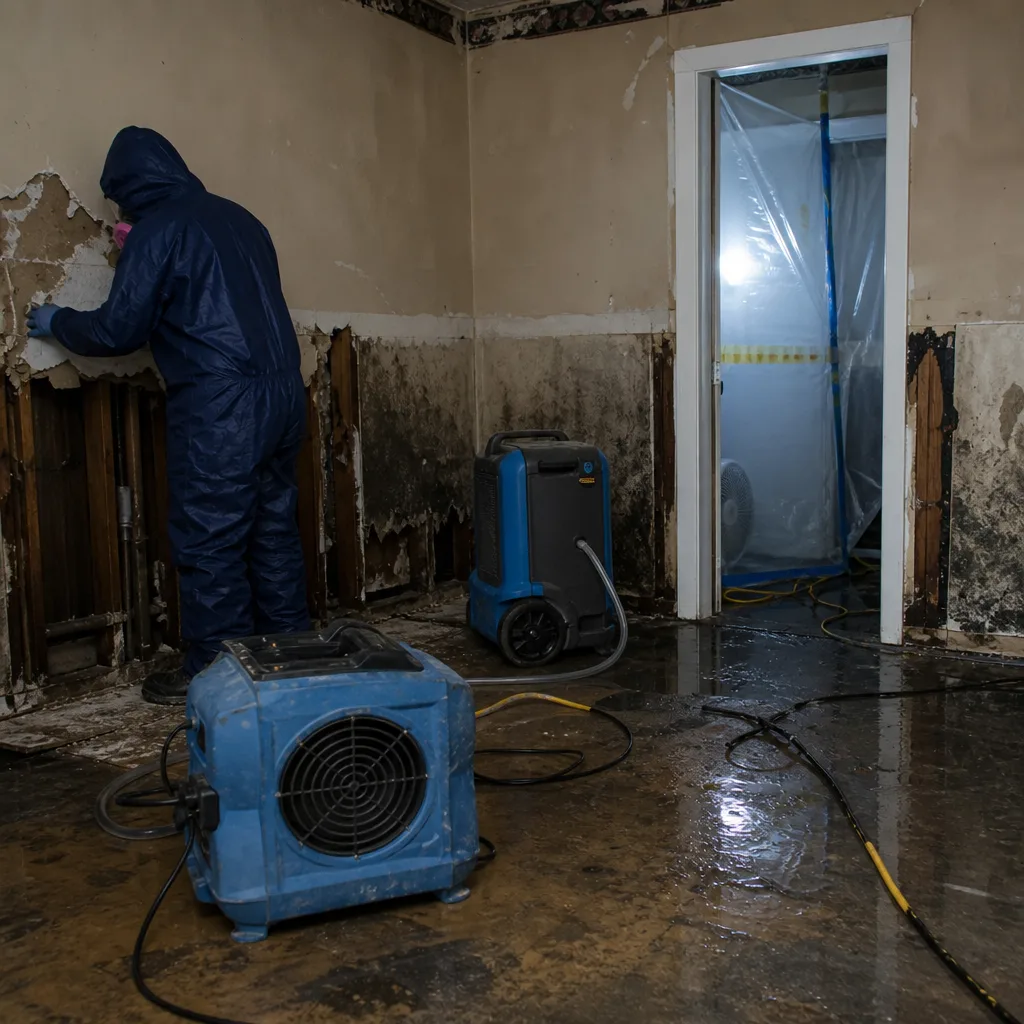 Before
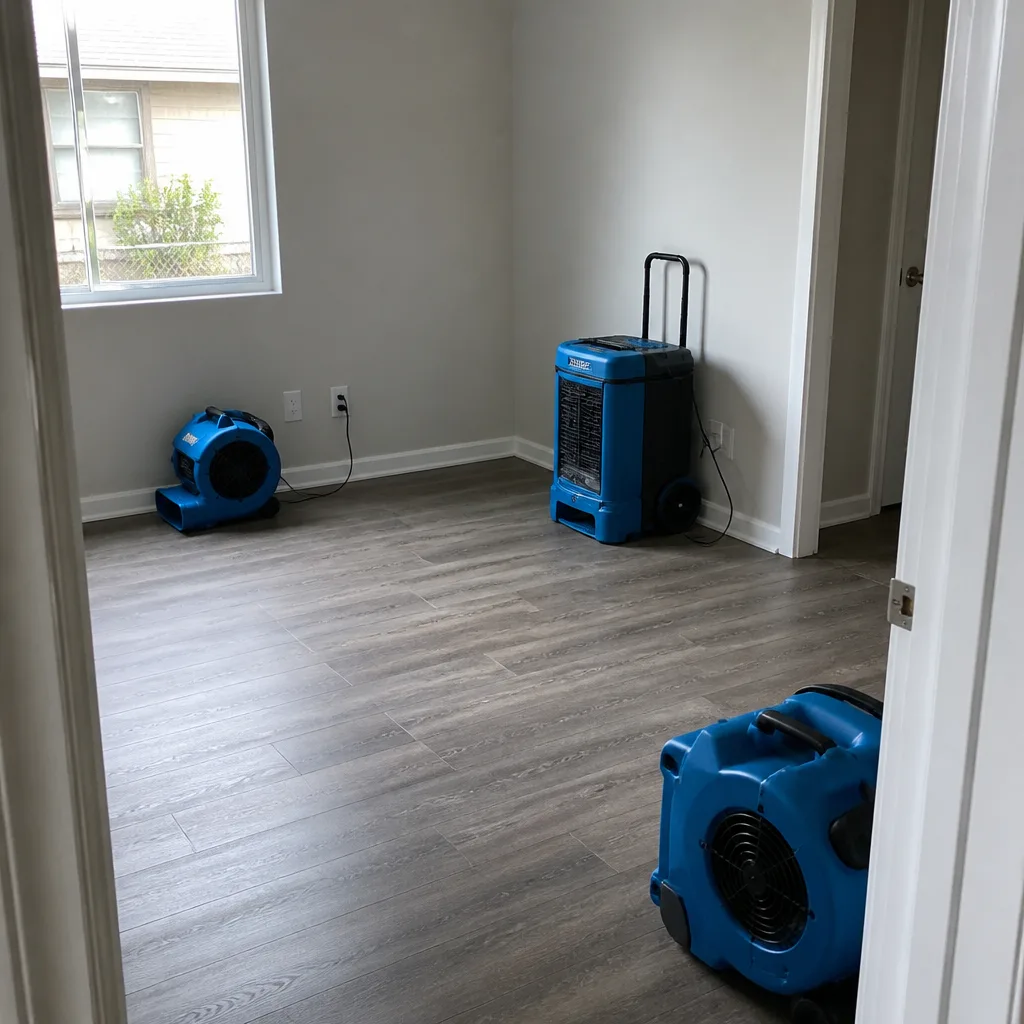 After
After24/7 Emergency Mold Remediation in Torrance
Mold remediation in Torrance typically costs $2,800-$7,500 for an average residential job, with containment and air-scrubbing work starting same-day when you call (628) 226-1011. Our dispatch office in Los Angeles coordinates crews who serve Torrance locally, and a live person answers every call, 24 hours a day, 7 days a week - no voicemail trees, no next-business-day callbacks while moisture is still spreading.
The first hour matters because Torrance’s marine-layer humidity keeps ambient relative humidity above 85-90% on summer mornings, compressing the mold-growth window to 48 hours or less after any water loss. Wait past that window and you’re not looking at surface cleaning anymore; you’re looking at full containment, demolition, and reconstruction. We offer a free visual inspection, deliver a written price before any work starts, and document every visit with a photo record.
Understanding Mold Remediation Severity in Torrance Properties
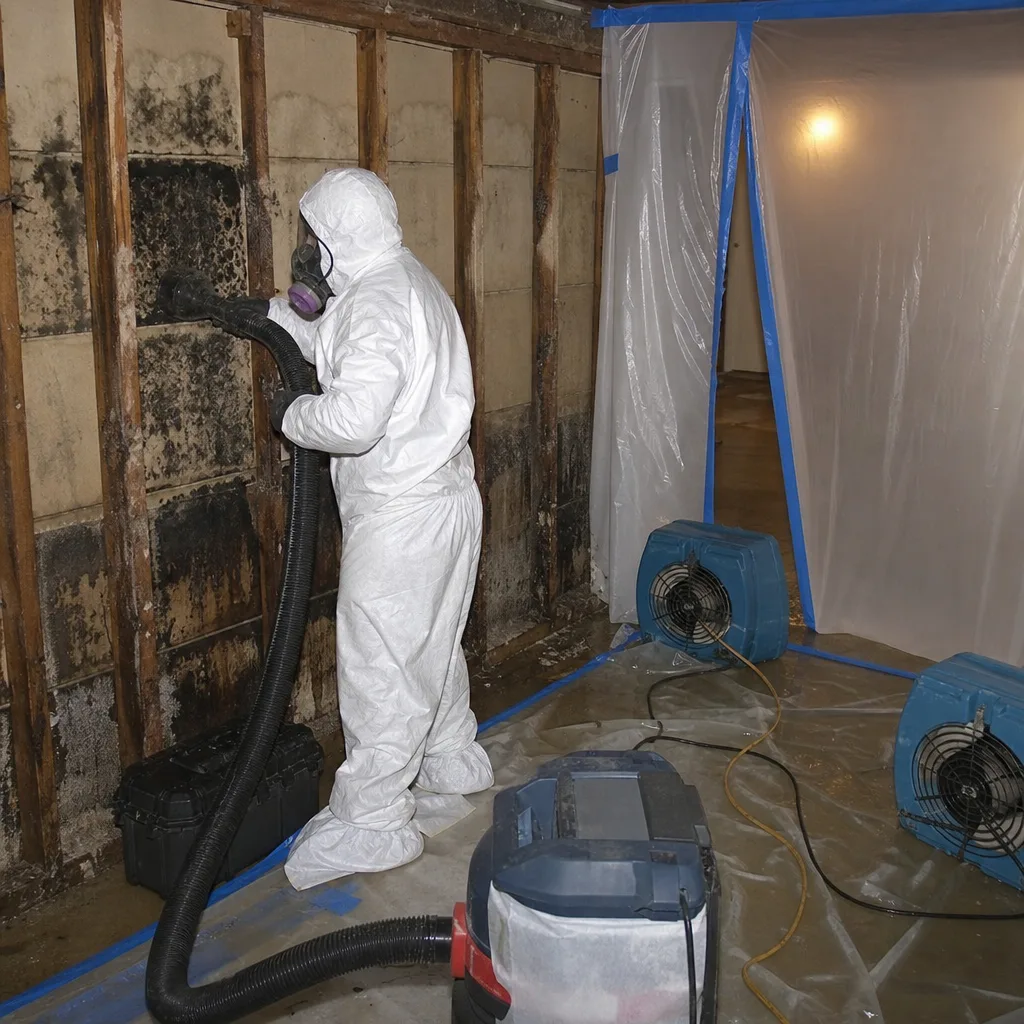
Mold damage in Torrance breaks into three practical categories. Category 1 - limited surface growth on non-porous materials like tile or glass, typically under 10 square feet, addressed with HEPA vacuuming and antimicrobial application. Category 2 - colonization of porous materials such as drywall, insulation, or carpet padding, requiring controlled demolition within a contained work zone and negative-air pressure maintained by HEPA scrubbers. Category 3 - structural involvement of wood framing, sill plates, or slab-on-grade foundations, where mycotoxin-producing species like Stachybotrys chartarum may be present and full abatement protocol applies.
Torrance’s housing stock intensifies every category. The 1950-1975 stucco-over-wood-frame tract homes that dominate from Old Torrance north through the Crenshaw-corridor neighborhoods contain asbestos in floor tiles, popcorn ceilings, and pipe insulation. Demolition of water-damaged materials requires mandatory testing and abatement before our crews can proceed. Original galvanized supply lines corrode from the inside, producing slow, concealed leaks that saturate wall cavities for months before detection. By the time a homeowner sees efflorescence on stucco or interior staining, mold has typically progressed from Category 1 to Category 2 or 3.
We classify water source by IICRC standard - Category 1 (clean supply line), Category 2 (gray water with chemical or biological load), Category 3 (black water, including sewage or groundwater intrusion). Torrance’s flat eastern neighborhoods, built on older fill and graded lots, see Category 3 conditions during El Niño seasons when storm-drain backups push contaminated water into slab-on-grade foundations. The water category determines our containment level, PPE requirements, and whether materials can be cleaned or must be removed.
Why Torrance Property Owners Choose DryMark Restoration Compton
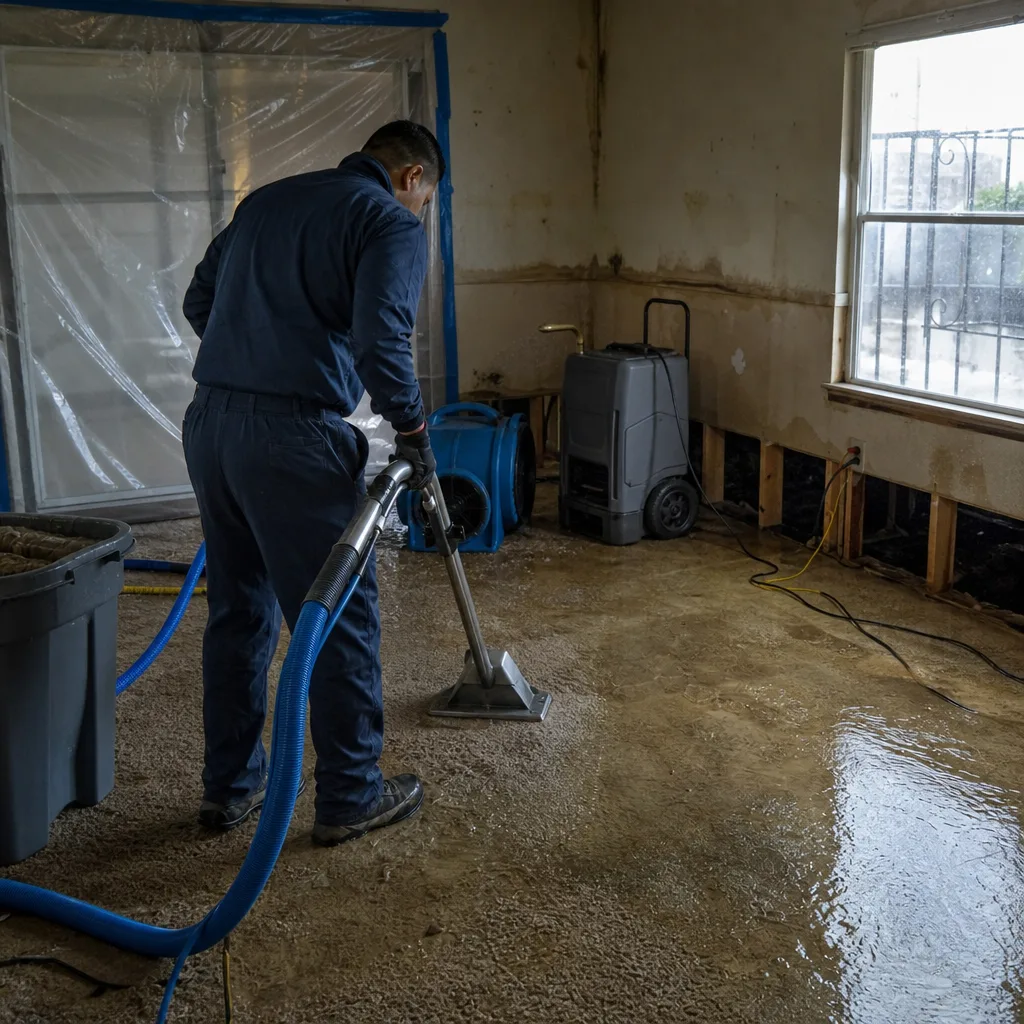
- 45-minute response commitment to Torrance addresses - our crews are staged for the South Bay, not dispatched from the Valley.
- 24/7 live answer - a real person, never an automated system or callback queue, because mold doesn’t wait for business hours.
- IICRC-certified crews - WRT (Water Damage Restoration Technician), AMRT (Applied Microbial Remediation Technician), and FSRT (Fire & Smoke Restoration Technician) where cross-training applies to combined losses.
- Free visual inspection - a trained technician assesses visible damage and moisture conditions at no charge before any scope is written.
- Direct insurance billing - we coordinate with your adjuster, provide line-item estimates, and handle documentation so your claim processes without dispute.
- One team from containment to reconstruction - no handoffs between mitigation and rebuild contractors, no gaps in documentation or warranty coverage.
BeforeAfterOur Mold Remediation Process
1. Inspection & Assessment
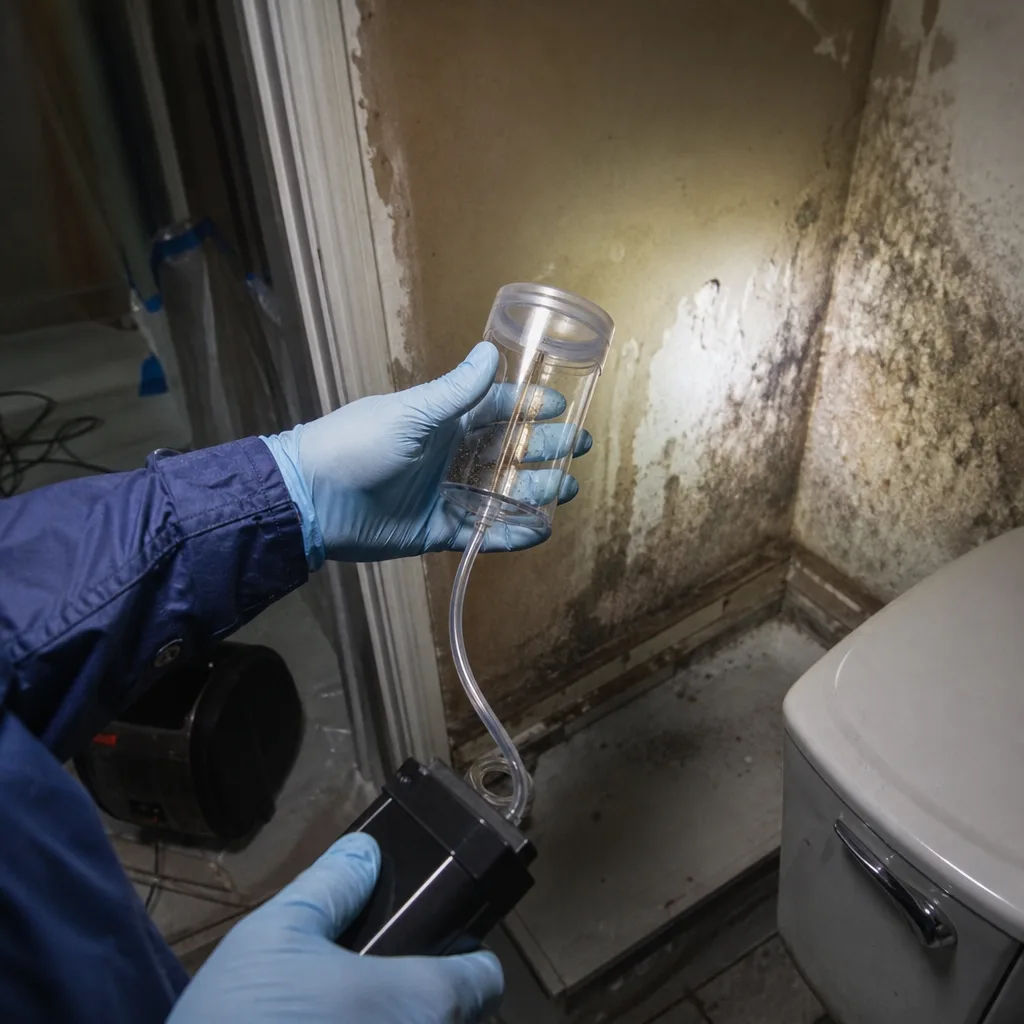
Our AMRT-certified technician conducts moisture mapping with thermal imaging and penetrating hygrometers, identifies the water source, and classifies the mold damage by square footage and material type. In Torrance, we specifically inspect for concealed galvanized-line leaks behind stucco and test for asbestos in pre-1975 materials before proposing any demolition.
2. Containment & Air Filtration
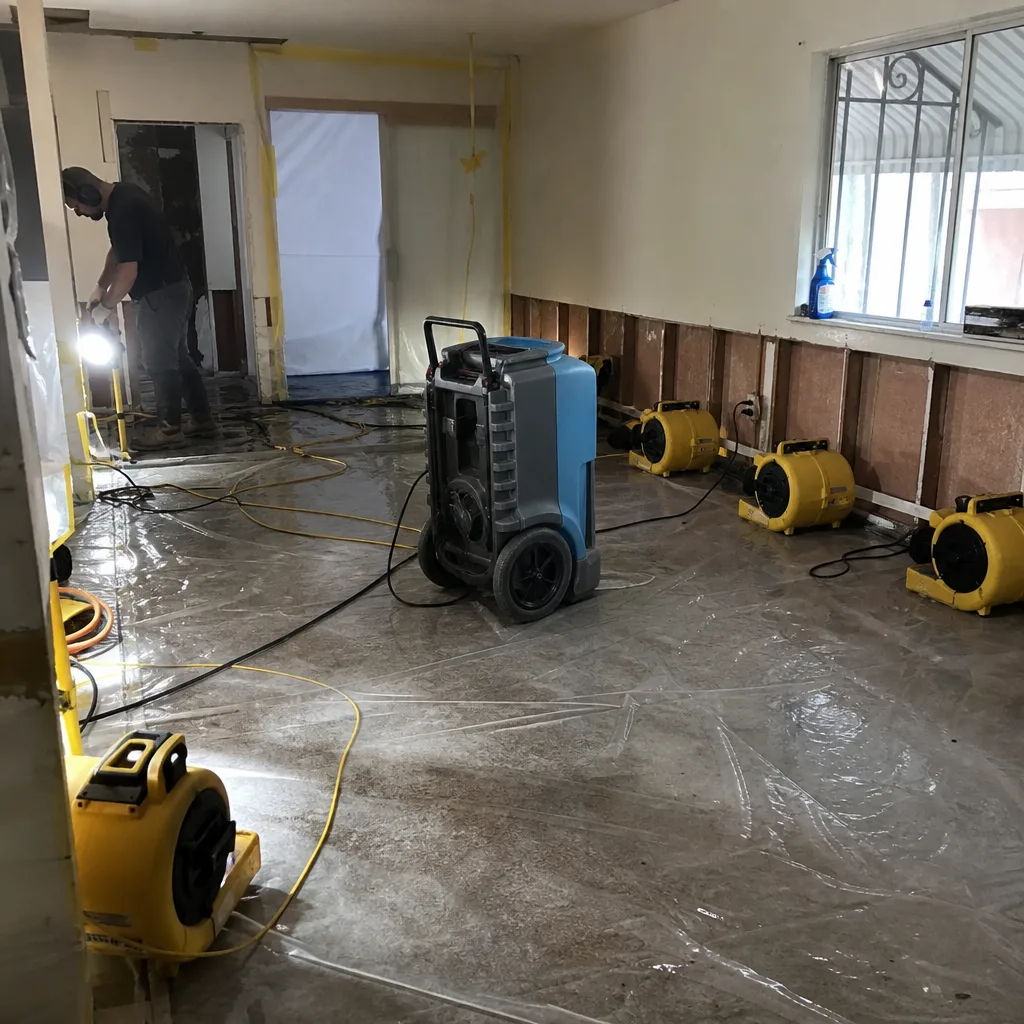
We establish polyethylene containment barriers and negative-air pressure using HEPA scrubbers (typically Phoenix or XPOWER units) to prevent cross-contamination. Airborne spore counts are documented before and after. For Category 3 jobs in eastern Torrance slab homes, we deploy additional containment layers at foundation penetrations.
3. Drying & Dehumidification
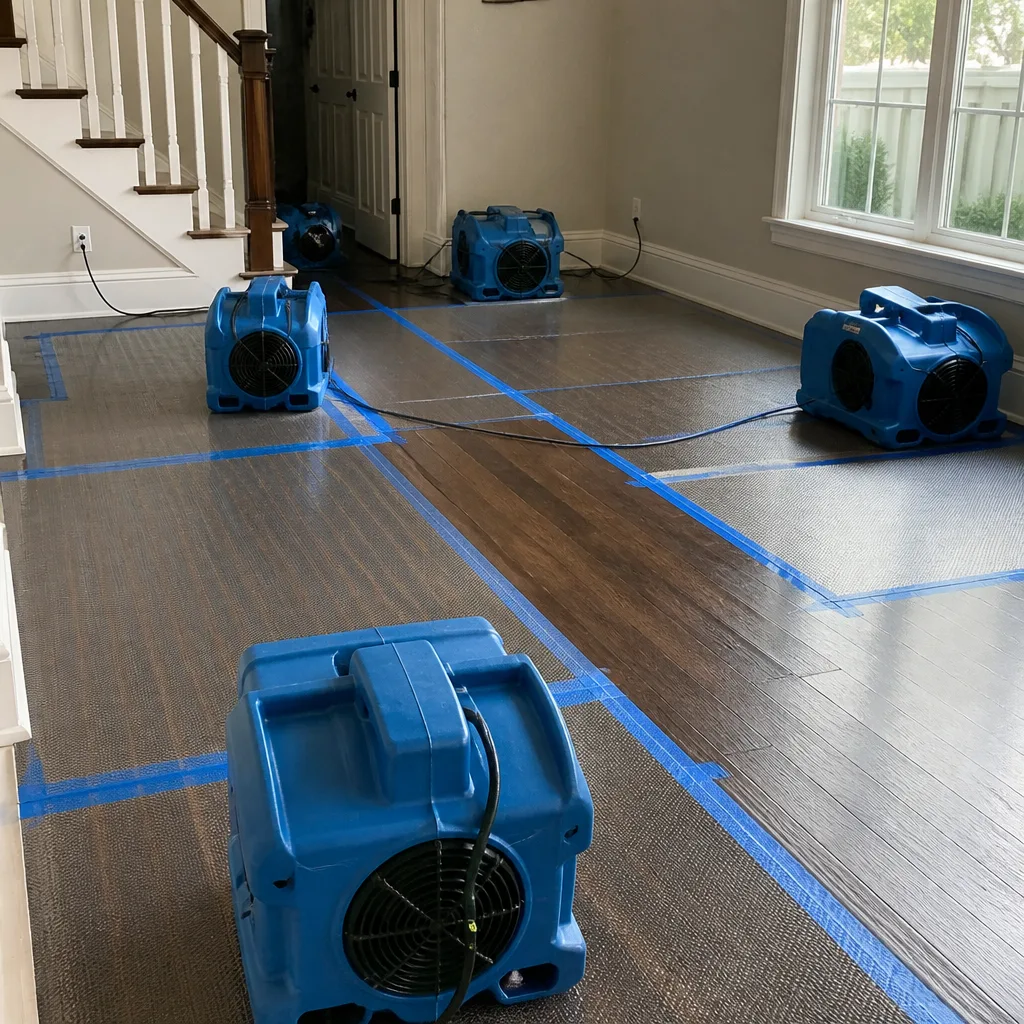
Standard IICRC 3-day drying timelines routinely fail in Torrance’s marine-layer conditions, so we size dehumidification aggressively using Dri-Eaz LGR units and B-Air axial air movers to achieve vapor pressure differential - the measurable force that pulls moisture from materials into the air for extraction. Daily moisture logs track progress in every affected room.
4. Cleaning & Antimicrobial Treatment
Non-porous surfaces receive HEPA vacuuming and EPA-registered antimicrobial application. Porous materials that test below salvage thresholds are treated with botanical or synthetic biocides per IICRC S520 standards. We document product labels, application rates, and dwell times for your insurer.
5. Demolition & Abatement (When Required)
Asbestos-containing materials identified in Torrance’s mid-century housing stock are abated by licensed subcontractors before our crews proceed with controlled demolition. Post-abatement clearance air sampling is documented. Mold-impacted framing is treated with soda blasting or encapsulant where structural preservation is viable.
6. Repairs, Reconstruction & Clearance
Our reconstruction crew replaces removed materials to pre-loss condition, matched to existing finishes where possible. Final clearance testing includes air sampling and surface swabs compared to outdoor baseline levels. The 365-Day Done Right Promise under The Haven Standard covers all work; if it’s not done right, we make it right.
Need Emergency Mold Remediation in Torrance Now?
Crews minutes away, answering live 24 hours a day. The sooner we start, the less it costs.
Working With Your Insurance Company
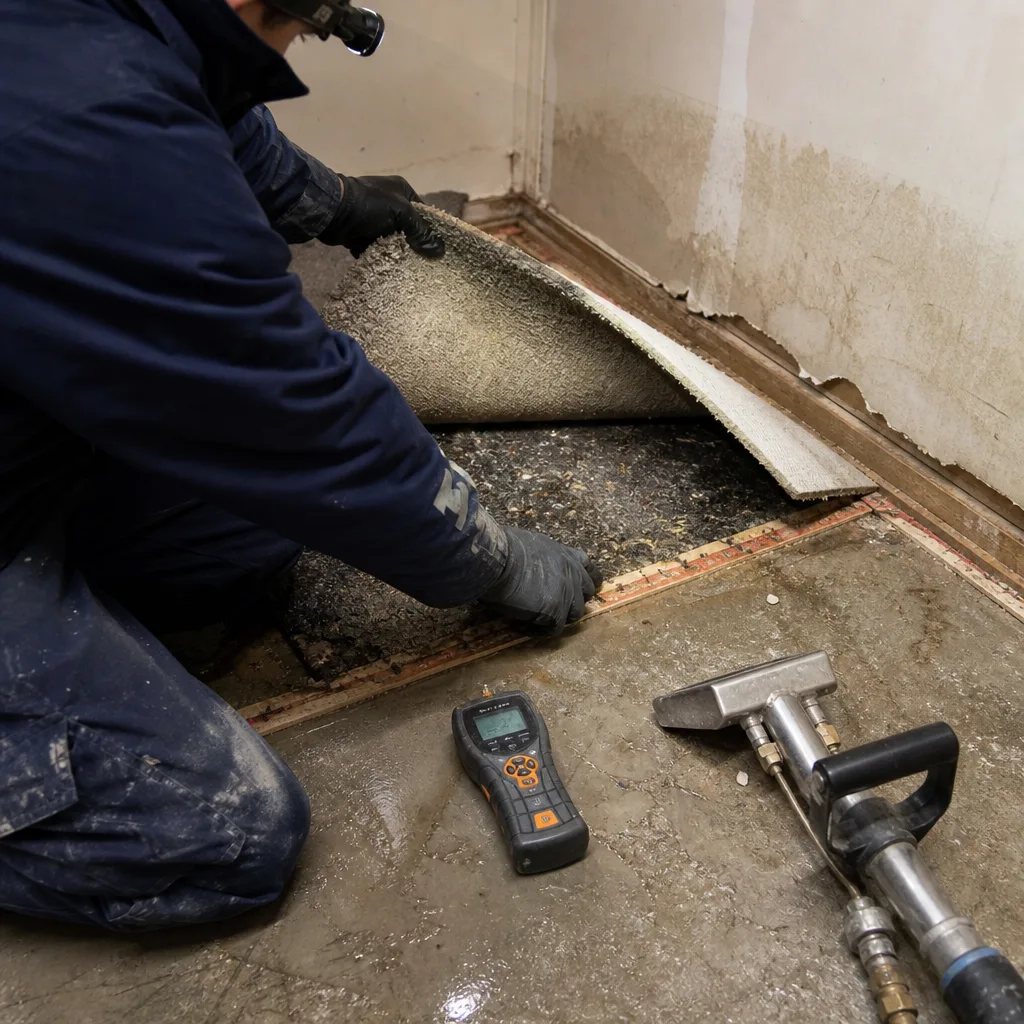
Insurance claims succeed or fail on documentation. Our founder built this company in 2011 after seeing homeowners lose legitimate claims to sloppy paperwork, so every Torrance job starts with a photo record from the first hour and ends with a complete file your adjuster can process without back-and-forth.
We provide industry-standard estimates formatted to carrier specifications, maintain direct adjuster communication throughout the job, and bill your insurance directly when coverage applies. Our daily moisture logs, written scopes, and photo documentation turn restoration invoices into payable claims. If you’ve received a competitor’s estimate, our Free Second Opinion service reviews it at no charge.
What We Provide Your Insurer
- Thorough documentation of the loss
- Photos of all damage, room by room
- Moisture readings and drying logs
- A detailed, line-item scope of work
- Direct coordination with your carrier
Built for Torrance’s Loss Calendar
Torrance’s mold season doesn’t follow a simple calendar; it follows humidity patterns and plumbing failure curves. January through March brings the heaviest marine-layer intrusion, with RH staying elevated past noon and condensation forming on slab foundations in eastern neighborhoods. April through June - the “May Gray” and “June Gloom” months - sees the most persistent coastal fog, making this the peak period for mold discovery in homes where winter leaks went unnoticed.
July through September brings occasional heat spikes that drive homeowners to run air conditioning for the first time, often revealing musty odors from systems that have been circulating spores all spring. October through December’s El Niño rain seasons produce the most severe Category 3 losses, as Torrance’s flat eastern neighborhoods experience groundwater migration and storm-drain backups that push contaminated water into slab-on-grade foundations. The 1950-1975 tract homes with original galvanized lines see their highest failure rates in these months, as thermal expansion and contraction stress corroded fittings.
We size our dehumidification capacity and crew scheduling around these patterns, not a generic annual template.
Mold Remediation Across Torrance’s Neighborhoods
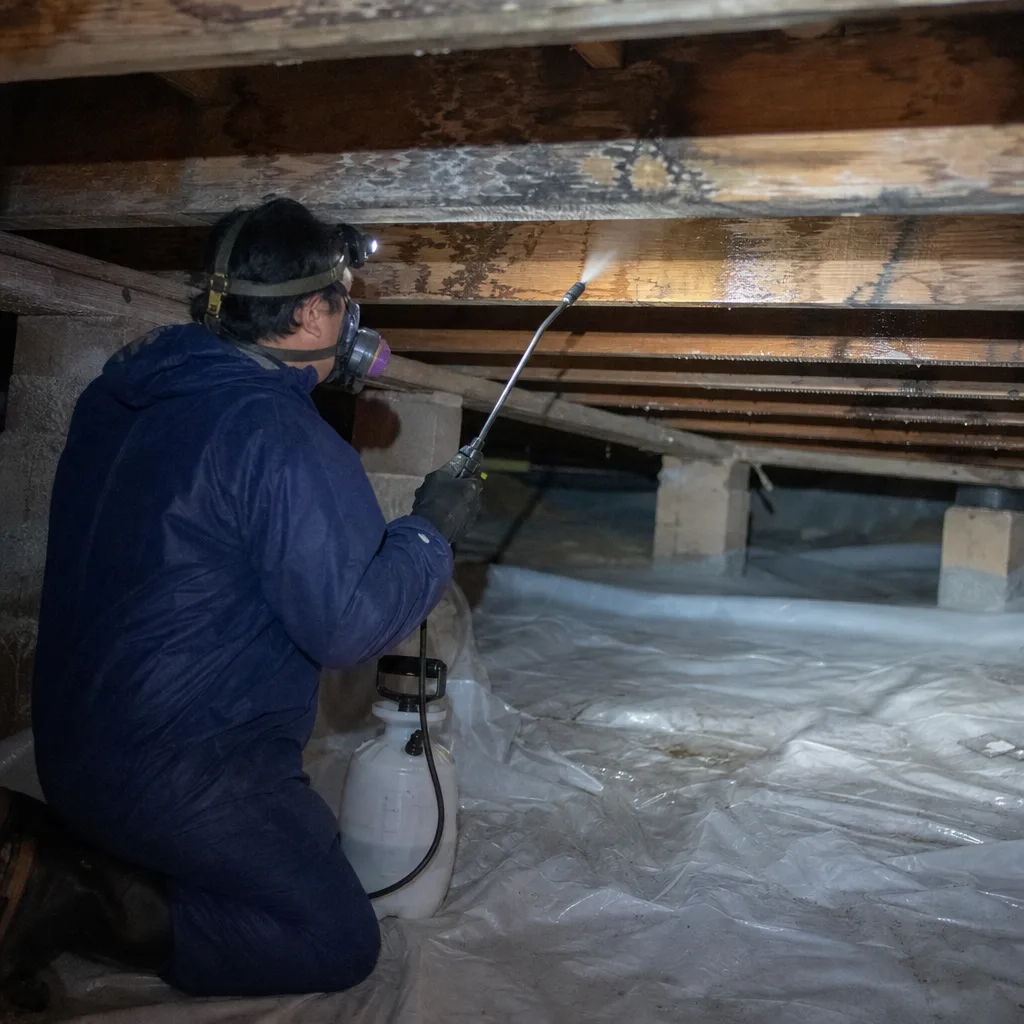
Old Torrance, south of Torrance Boulevard between Crenshaw and the refinery corridor, contains the city’s oldest housing stock - 1920s bungalows and early postwar cottages with updated plumbing but original foundations and crawl spaces. We see recurring mold in subfloor areas where perimeter drainage has failed, and our crews carry compact Injectidry systems for drying hardwood floors without demolition.
The Crenshaw-corridor neighborhoods north to 190th Street are dominated by 1950s-1960s Ranch-style stucco tracts with slab foundations and original galvanized supply lines. This is where we find the concealed leaks - pinhole failures behind stucco that saturate wall cavities for six to twelve months before showing interior symptoms. Our thermal imaging protocol is specifically tuned for this housing type.
West of Hawthorne Boulevard, the hillside neighborhoods toward Palos Verdes see different patterns: better drainage, newer construction, but more complex HVAC systems with ductwork in unconditioned attics where condensation breeds Penicillium and Aspergillus species. Air quality restoration and duct cleaning are more commonly part of the scope in this zone.
Eastern Torrance, from Van Ness to the Carson border, sits on the flattest, oldest fill in the city. Slab-on-grade homes here take on groundwater during heavy rain years, and we’ve completed multiple crawl space treatment and moisture control installations with vapor barriers and sump systems to break the cycle.
Specialized Mold Remediation Services We Offer in Torrance
Mold Inspection & Testing
Our inspections combine visual assessment, moisture mapping, and air/surface sampling analyzed by independent laboratories. In Torrance, we specifically target the failure patterns of stucco-over-frame construction and concealed galvanized plumbing. A typical inspection runs $350-$650; results guide whether remediation is warranted or a simpler moisture-control solution suffices.
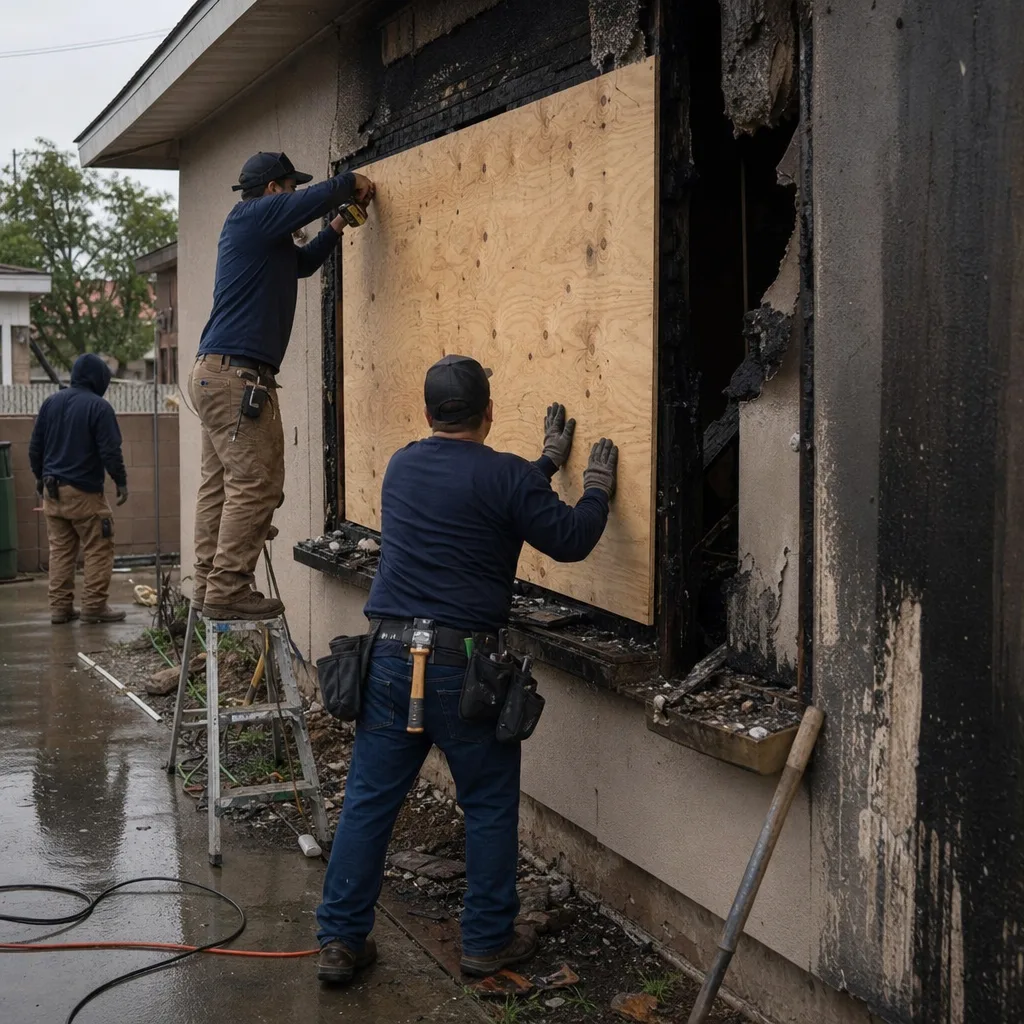
Mold Removal
Contained demolition and HEPA remediation of colonized materials, with asbestos abatement coordination for pre-1975 Torrance homes. Removal jobs in the city typically range $2,800-$5,200 for contained room-scale work, scaling to $7,500+ for whole-house involvement with structural drying.
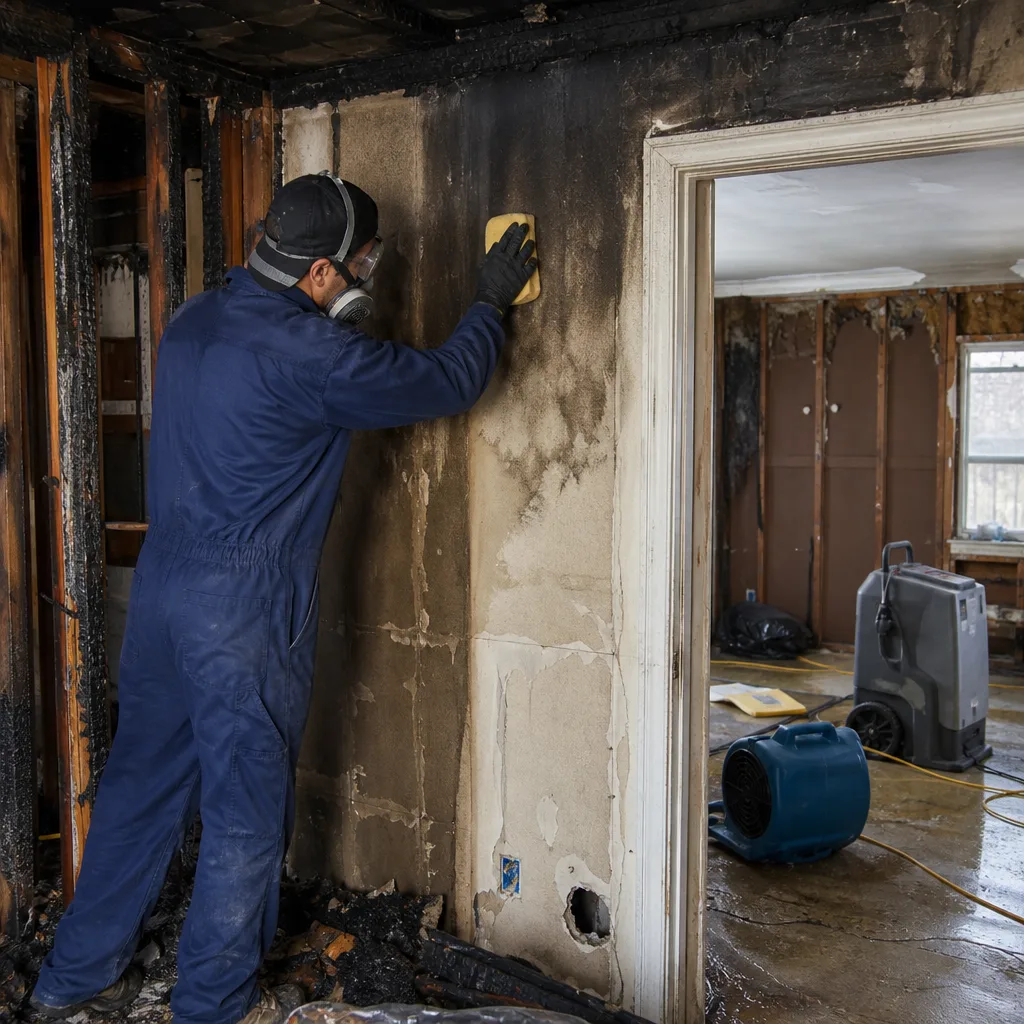
Black Mold Remediation
Stachybotrys chartarum and other mycotoxin-producing species require enhanced PPE, strict containment, and specialized disposal. We follow IICRC S520 and EPA guidelines, with clearance testing mandatory before containment is removed. Torrance’s humid wall cavities create conditions where these species thrive behind undetected leaks.
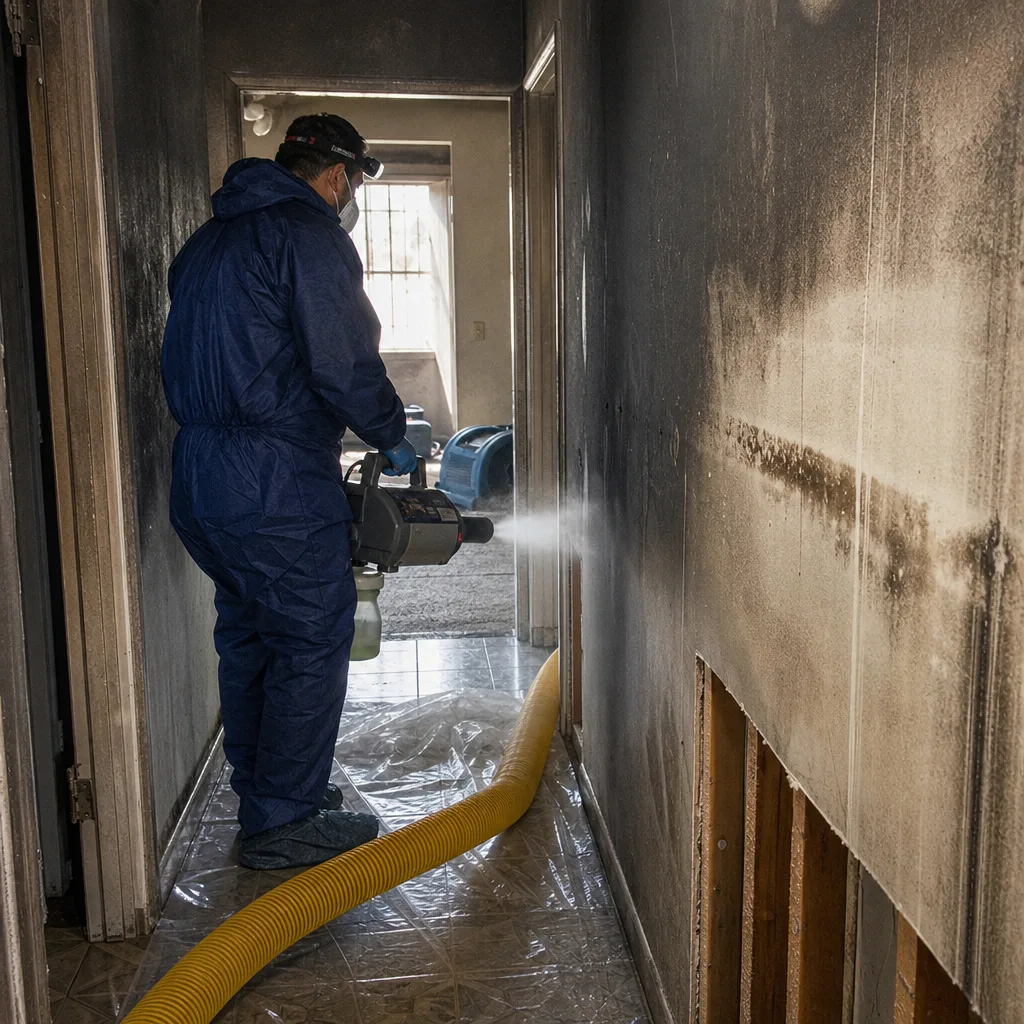
Air Quality Restoration
HEPA scrubbing, duct cleaning, and post-remediation air sampling to verify spore counts at or below outdoor baseline. Critical in Torrance’s tighter, newer homes where HVAC recirculation concentrates contaminants, and in hillside properties with complex duct runs.
Crawl Space Treatment
Vapor barrier installation, dehumidification, and structural drying for sub-grade spaces. Eastern Torrance’s slab homes rarely have true crawl spaces, but perimeter foundation areas and raised additions in Old Torrance benefit from this service.
Moisture & Humidity Control
Permanent solutions beyond the remediation event: whole-home dehumidification, ventilation improvements, and moisture-barrier systems sized to Torrance’s marine-layer climate. This is where we break the cycle that caused the mold, not just remove the result.
What happens when you call
- 1
A real person answersNo phone trees - you reach a local pro.
- 2
You get an upfront price rangeHonest numbers before anyone is dispatched.
- 3
A background-checked tech heads outLicensed & insured, dispatched right away.
- 4
You approve before work beginsNothing starts until you say go.
Mold Remediation Costs in Torrance, CA
Honest pricing for Torrance’s market, delivered in writing before work starts - Haven Standard, Clause 1.
| Service | Typical Range in Torrance |
|---|---|
| Mold inspection & testing | $350 - $650 |
| Contained room-scale remediation (under 100 sq ft) | $2,800 - $4,200 |
| Multi-room remediation with structural drying | $4,500 - $7,500 |
| Whole-house abatement with asbestos coordination | $8,000 - $15,000+ |
| Crawl space treatment with vapor barrier | $3,200 - $6,000 |
| Air quality restoration & duct cleaning | $1,800 - $3,500 |
What moves the price: square footage of colonized material, whether asbestos abatement is required, the water category (Category 3 losses cost more due to PPE and disposal), and whether structural drying is still needed. Insurance typically covers mold remediation when it results from a covered water loss, but not maintenance-related moisture. Our free inspection determines coverage applicability and produces a written scope with firm pricing. Call (628) 226-1011 for your exact quote.
We Also Serve Cities Near Torrance
Our crews respond throughout the South Bay and Harbor area, including Mold Remediation in Torrance and surrounding communities. We regularly handle losses in Harbor City, where older commercial-residential mixed buildings present unique containment challenges; Lomita, with its concentration of 1960s apartment stock and slab foundations; Carson, where industrial proximity and aging infrastructure create combined contamination scenarios; and Lakewood, whose 1950s tract housing shares the same galvanized-line and asbestos issues as Torrance. Each city’s building stock and loss patterns inform how we approach Mold Remediation in that specific market.
Serving Torrance, CA - Our Local Coverage Area
We’re based in the Torrance area and know this community well. Use the map below to see our service coverage - if you’re nearby, we can almost certainly help.
Torrance Mold Remediation Questions, Answered
Why does mold grow faster in Torrance than in inland South Bay cities?
Torrance sits roughly 2-3 miles from the Pacific in the South Bay’s heaviest marine-layer zone, where summer-morning relative humidity routinely exceeds 85-90%. That ambient moisture means wet materials don’t begin drying naturally; instead, they stay above the 16% wood-moisture-content threshold where mold colonizes, compressing the safe window from 72 hours to 48 hours or less. Inland cities like Lakewood or Carson, just 8-10 miles east, see RH drop faster as the sun burns off the layer, giving homeowners more time. Call (628) 226-1011 if you suspect a recent leak - in Torrance, waiting is the expensive choice.
My stucco home in Old Torrance has a water stain - could it be a hidden galvanized pipe leak?
Yes, and the probability is high enough that we treat every stucco stain in a pre-1975 Torrance home as a concealed leak until proven otherwise. Galvanized steel supply lines corrode from the inside, producing pinhole failures that spray pressurized water into the wall cavity for months before any interior symptom appears. Stucco masks this longer than drywall would; by the time you see efflorescence on the exterior or staining inside, the sill plate and framing are often saturated. Our inspection includes thermal imaging and moisture mapping through the stucco to locate the source without unnecessary demolition. Call (628) 226-1011 for a free visual inspection.
Does the marine layer really affect how long structural drying takes in Torrance?
Absolutely. IICRC-standard 3-day drying timelines assume ambient conditions that allow natural evaporation; Torrance’s marine layer suppresses that evaporation for hours each morning, especially during May-June. Without aggressive dehumidification sized to the actual vapor pressure, materials that read “dry” by day 3 in Riverside or Ontario are still holding moisture here. We routinely run Dri-Eaz LGR dehumidifiers and B-Air air movers for 5-7 days in Torrance, logging daily moisture readings to document when true dryness - not just surface dryness - is achieved. Skipping this step is why mold returns. Call (628) 226-1011 for a drying plan that matches your actual conditions.
Can you test for asbestos before removing water-damaged materials in my Torrance home?
We coordinate mandatory asbestos testing for any Torrance home built 1950-1975 before our crews perform demolition. The city’s housing stock of this era contains asbestos in floor tiles, popcorn ceilings, joint compound, and pipe insulation. California law requires abatement by licensed contractors before disturbance; we handle the coordination and documentation, with post-abatement clearance air sampling included. This is not optional, and any contractor who skips this step in a Torrance tract home is exposing you to liability and health risk. Call (628) 226-1011 and we’ll walk you through the testing timeline.
What does mold remediation involve for a slab-on-grade home in eastern Torrance after El Niño rains?
El Niño-season losses in eastern Torrance’s flat neighborhoods typically involve Category 3 groundwater or storm-drain backup entering through slab penetrations and perimeter joints. Remediation starts with water extraction and applied structural drying, but the critical difference is foundation moisture: slab-on-grade construction traps water in the substrate with no crawl space for ventilation. We deploy Injectidry mat systems and targeted air injection to dry the slab perimeter, then install vapor barriers or perimeter drainage if hydrostatic pressure is recurrent. Mold in these scenarios often colonizes baseplate and bottom plate of framed walls; we document moisture content at 2-foot intervals to determine salvage vs. replacement. Call (628) 226-1011 for a scope specific to your foundation type.
How fast can your crew actually get to my Torrance address?
We commit to 45 minutes from call to arrival for Torrance addresses, with crews staged for South Bay response rather than dispatched from distant yards. Our dispatch office in Los Angeles coordinates local technicians who know the city’s street grid and building types. Live answer 24/7 means no delay for callback queues. Call (628) 226-1011 - if mold is active, every hour of delay expands the containment area and the final cost.
Will my insurance cover mold remediation, or is this out of pocket?
Insurance covers mold remediation when it results from a sudden, accidental water loss - burst pipe, appliance failure, storm damage - that is itself a covered peril. It does not cover mold from long-term maintenance issues, slow leaks, or humidity control failures. Our free inspection includes documentation of the water source and timeline to support your coverage determination. We bill carriers directly and provide the photo records, moisture logs, and line-item scopes that adjusters need to approve payment. If your carrier disputes coverage, we document why and support your appeal. Call (628) 226-1011 to start the documentation process.
Can my family stay in the house during mold remediation?
For Category 1, limited-area jobs, often yes, with containment isolating the work zone. For Category 2 or 3, or any job involving Stachybotrys or other mycotoxin-producing species, we recommend temporary relocation until clearance testing confirms safe spore levels. We don’t guess at this; pre- and post-remediation air sampling compared to outdoor baseline gives the answer. Your written scope specifies the containment level and any occupancy restrictions before work begins. Call (628) 226-1011 to discuss your specific situation.
Written by Alicia Brennan, Owner at Back to Dry Restoration, serving Torrance since 2011.
Mold Remediation in Nearby Areas