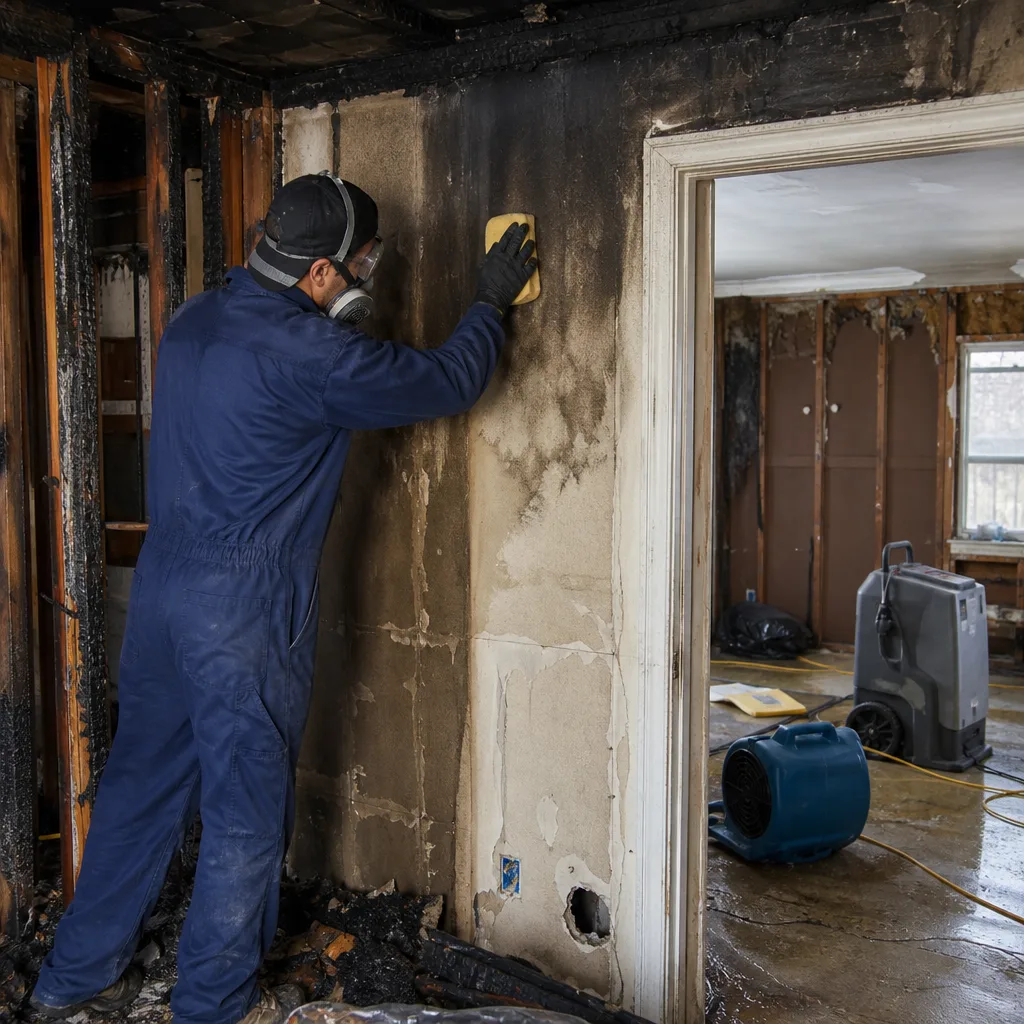
Free visual inspection and a written scope of work before any mitigation begins - photos, moisture readings, and drying logs go in your claim file
The scope we write is the scope we bill. Anything new gets shown to you, in writing, before we touch it.
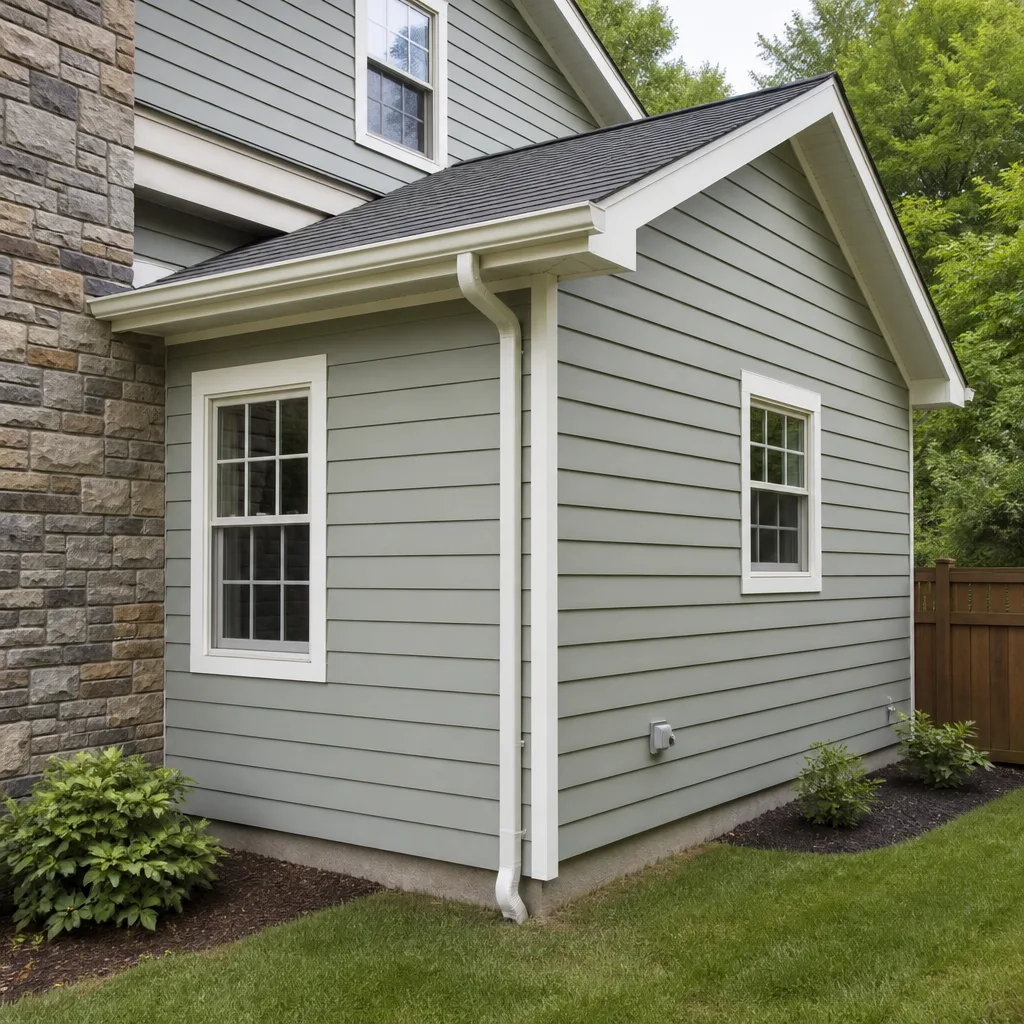
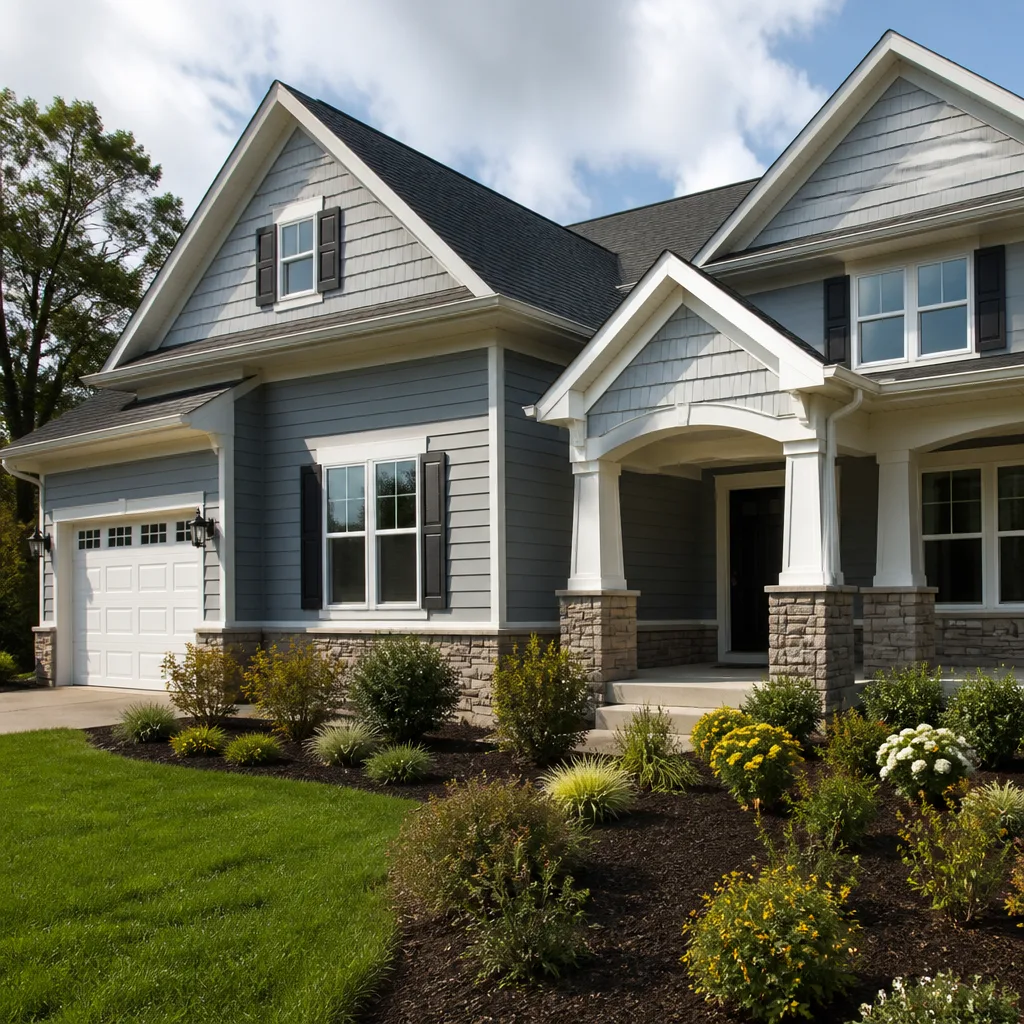
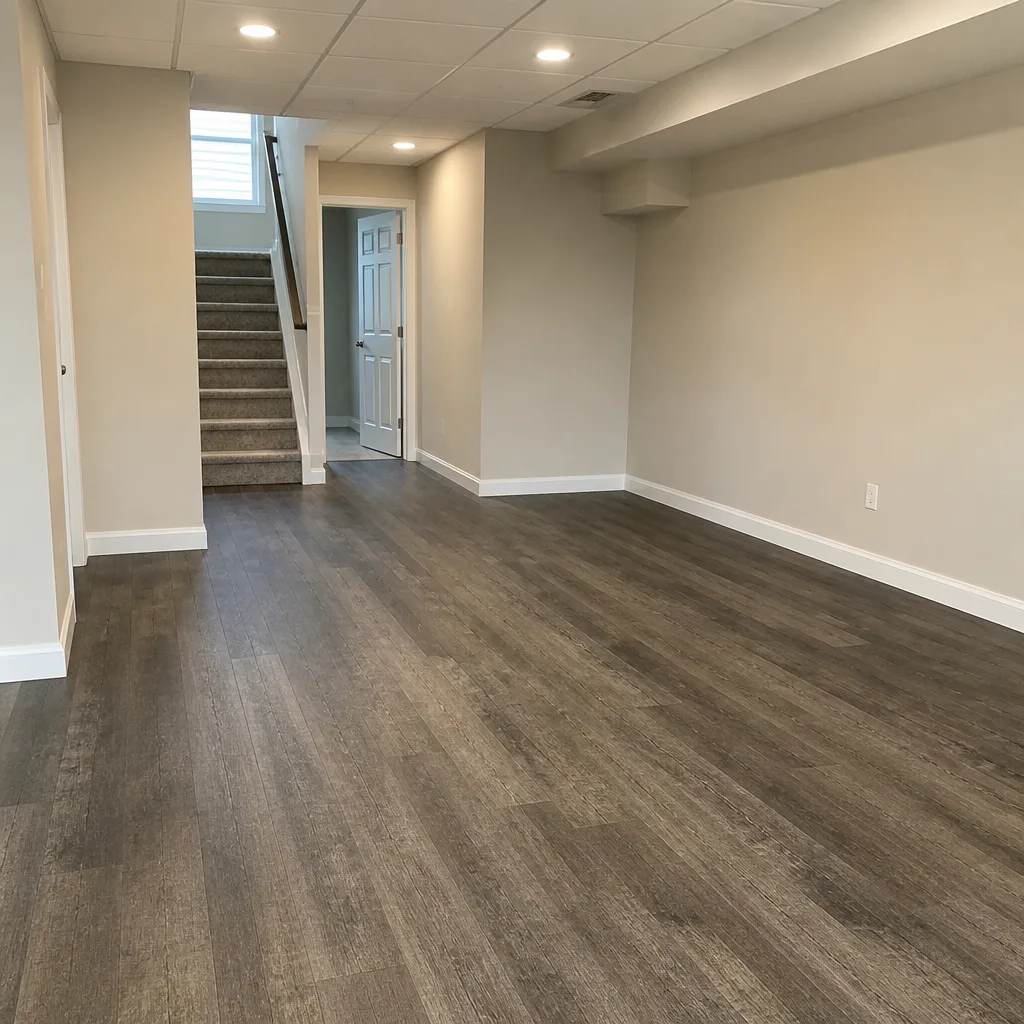
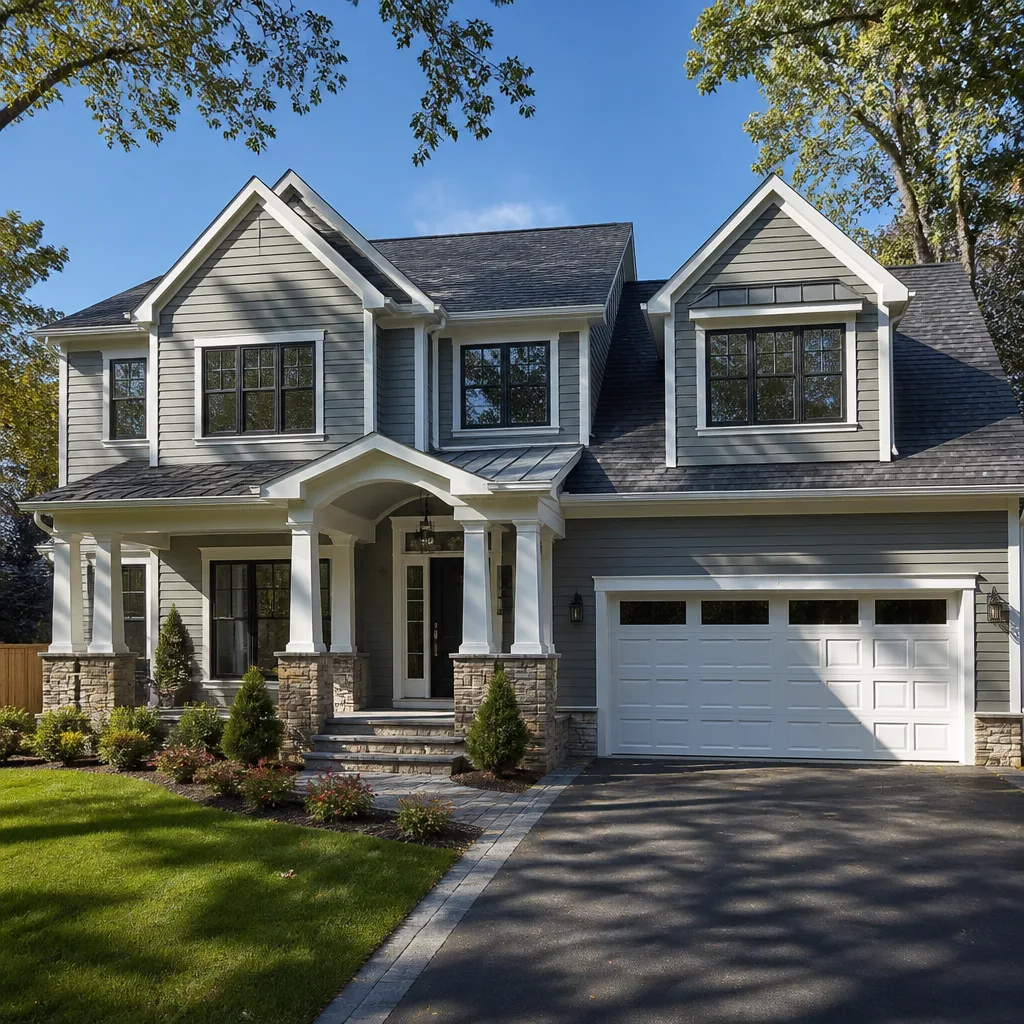
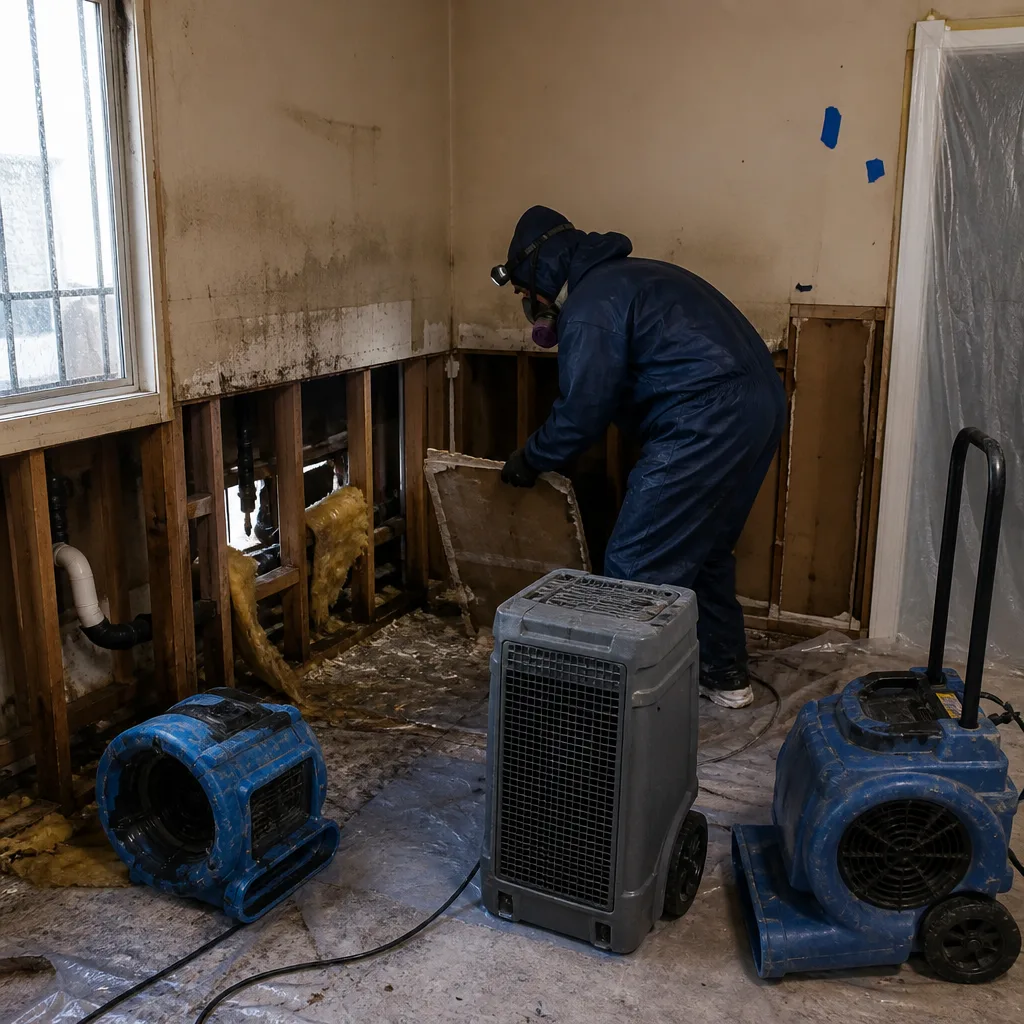 Before
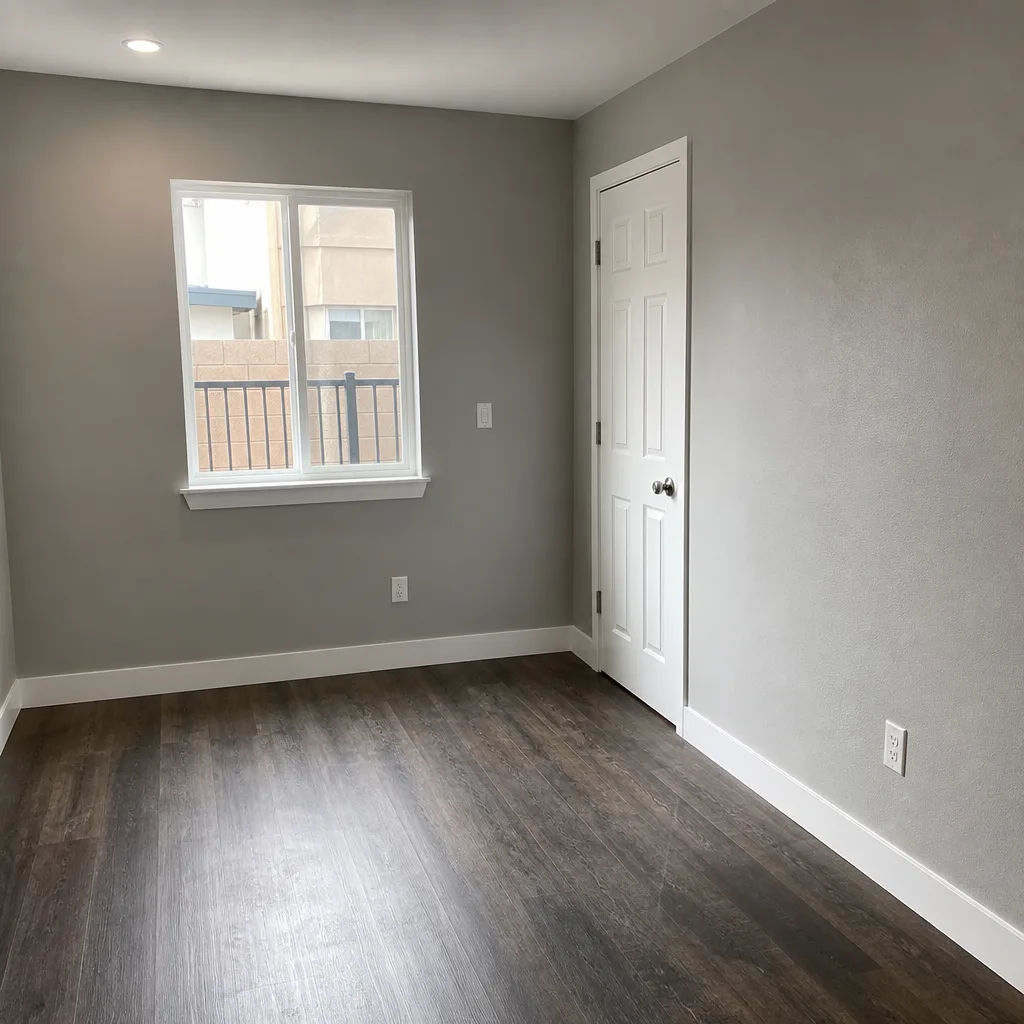 After
After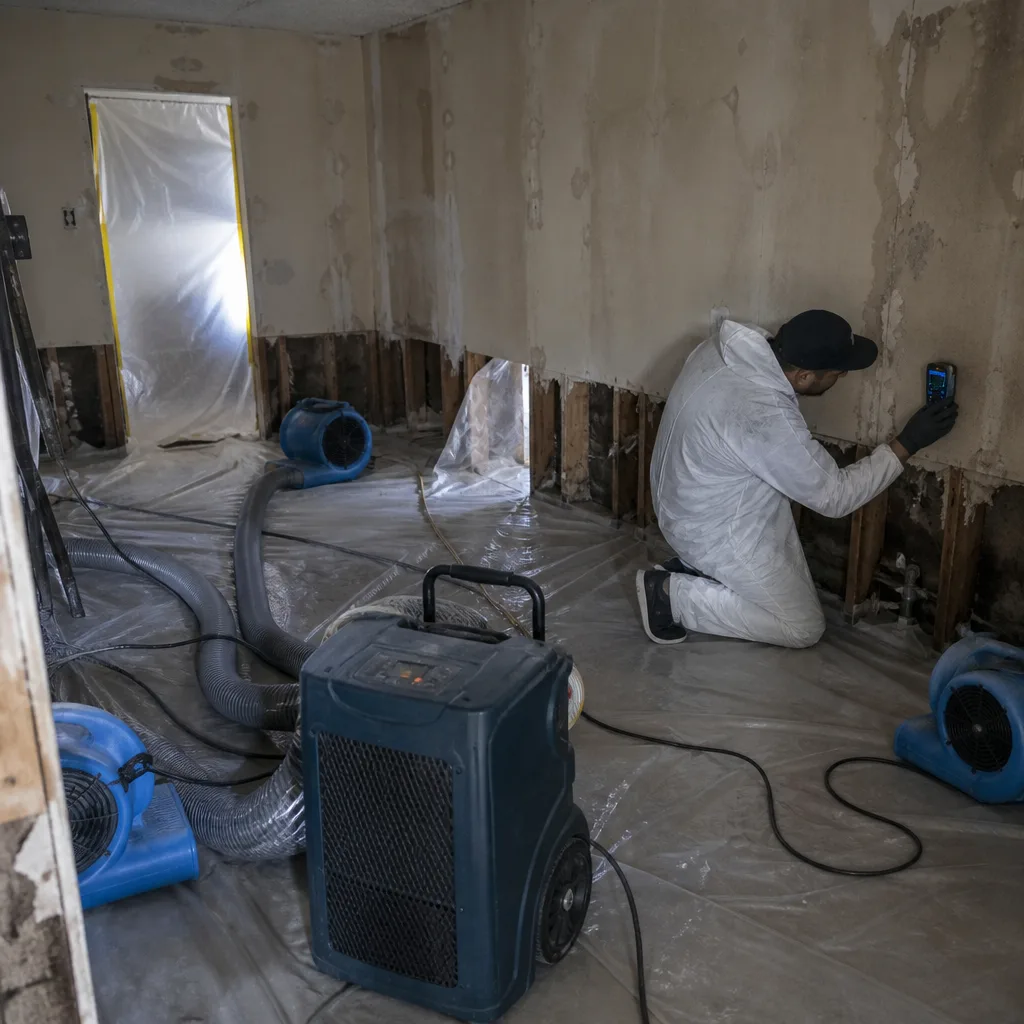 Before
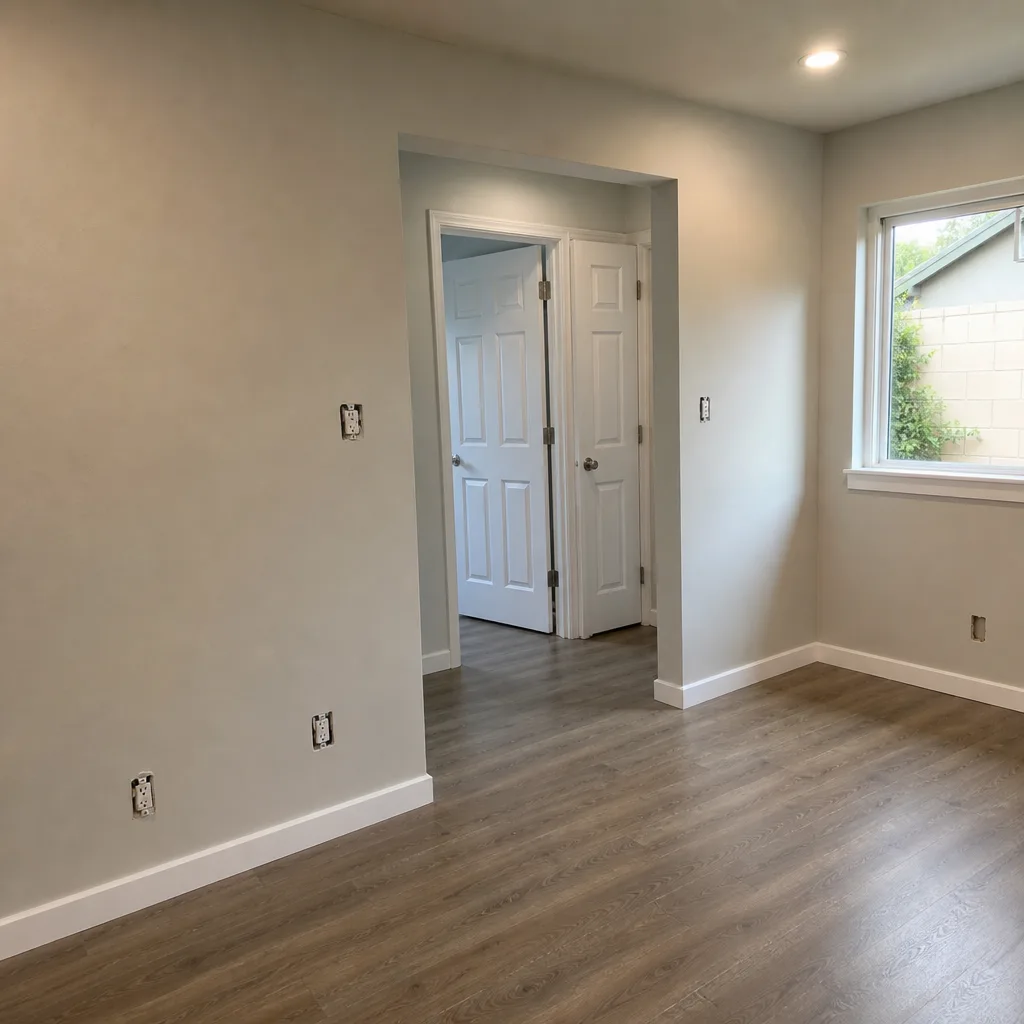 After
After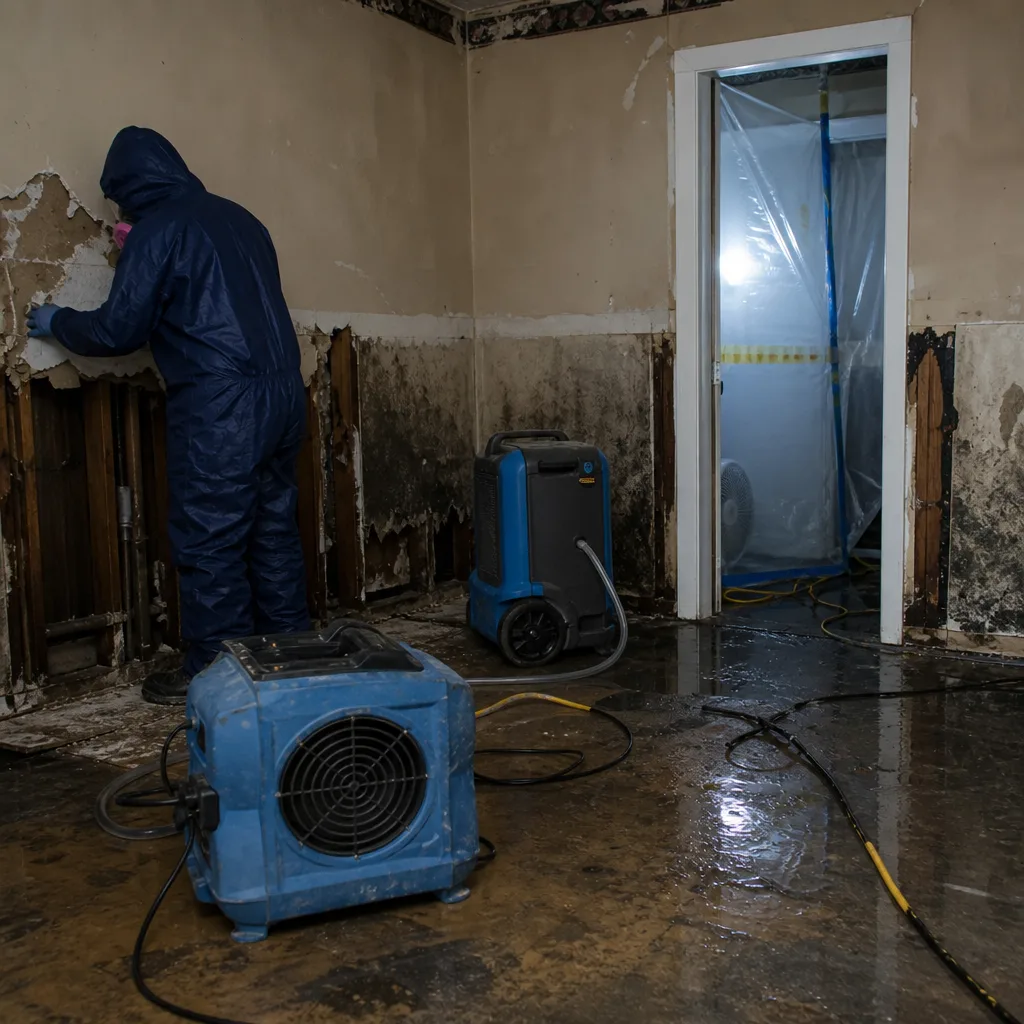 Before
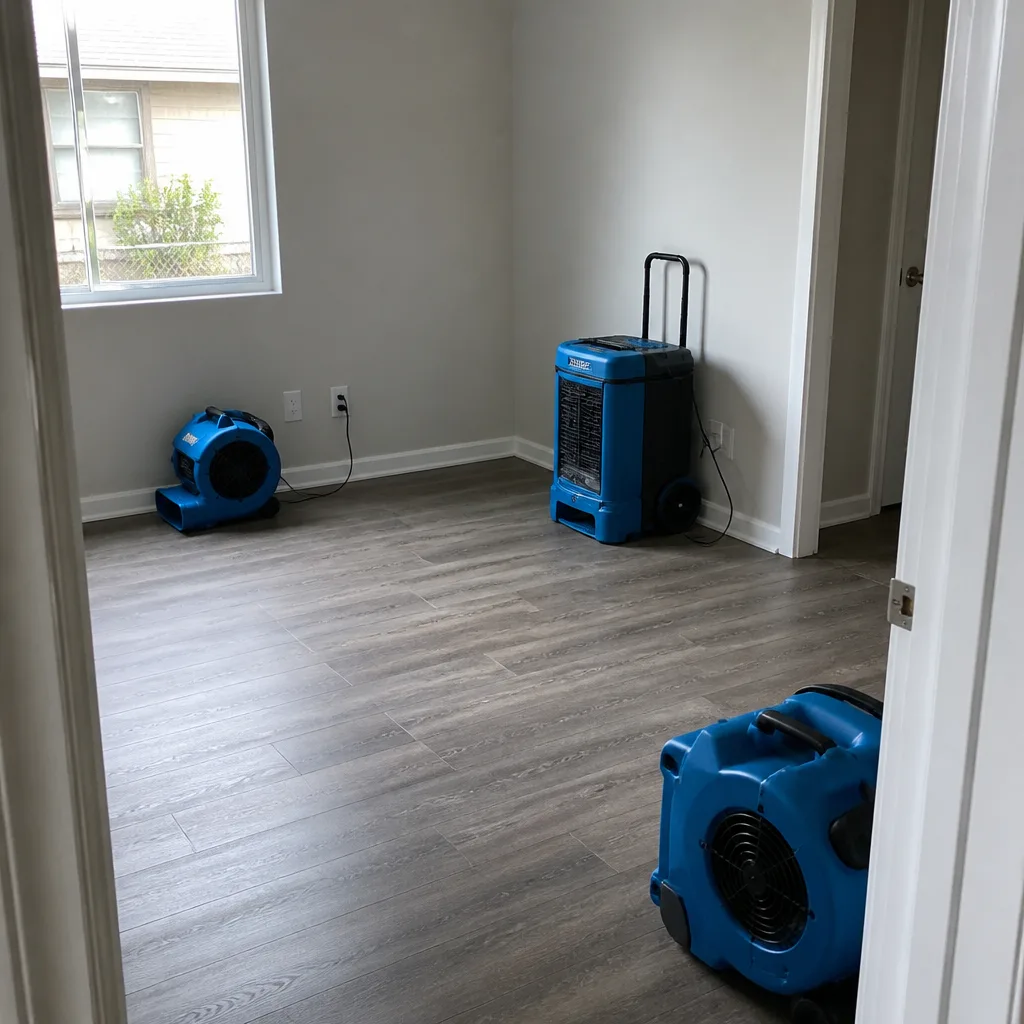 After
After24/7 Emergency Water Damage Restoration in Lakewood
Water damage restoration in Lakewood typically costs $2,800-$6,500 for a standard single-family mitigation and runs higher when asbestos-containing materials require containment. Most Lakewood homeowners reach us at (628) 226-1011 within the first hour of discovery, which is when extraction and moisture mapping matter most. Our live dispatch answers every call, 24 hours a day, 7 days a week - no voicemail, no callback queue while water is still moving through your subfloor. Crews are routed from our Los Angeles office to Lakewood addresses with a 45-minute response commitment, and every job starts with a free visual inspection and a written price before any equipment is unloaded. The first hour determines whether we are extracting standing water or later removing saturated drywall, flooring, and insulation that could have been saved.
Understanding Water Damage Restoration Severity in Lakewood Properties
Water damage in Lakewood falls into three categories under IICRC standards. Category 1 is clean water from a burst supply line - common here when original galvanized pipes pinhole under slab foundations. Category 2 carries contaminants, typical when dishwasher or washing-machine discharge lines fail. Category 3 is black water: sewage backup, groundwater intrusion from San Gabriel River basin flooding, or long-standing Category 2 that has crossed the 48-hour threshold. Every category demands different extraction, cleaning, and drying protocols.
Moisture mapping is where most Lakewood jobs separate into straightforward mitigations and expensive rebuilds. We use thermal imaging and pinless moisture meters to trace water migration across slab-on-grade concrete, through stucco wall assemblies, and into attic cavities where Lakewood’s persistent marine-layer humidity already keeps baseline readings elevated. A Category 1 supply-line failure in a 1952 tract home can become a Category 2 or 3 event within 48 hours if the coastal humidity prevents natural drying. Structural drying then requires calculated psychrometric data - temperature, relative humidity, and vapor pressure differential - to force evaporation from wet materials into the air, then remove that moisture with dehumidification rather than hoping ambient conditions will cooperate.
Why Lakewood Property Owners Choose DryMark Restoration Compton
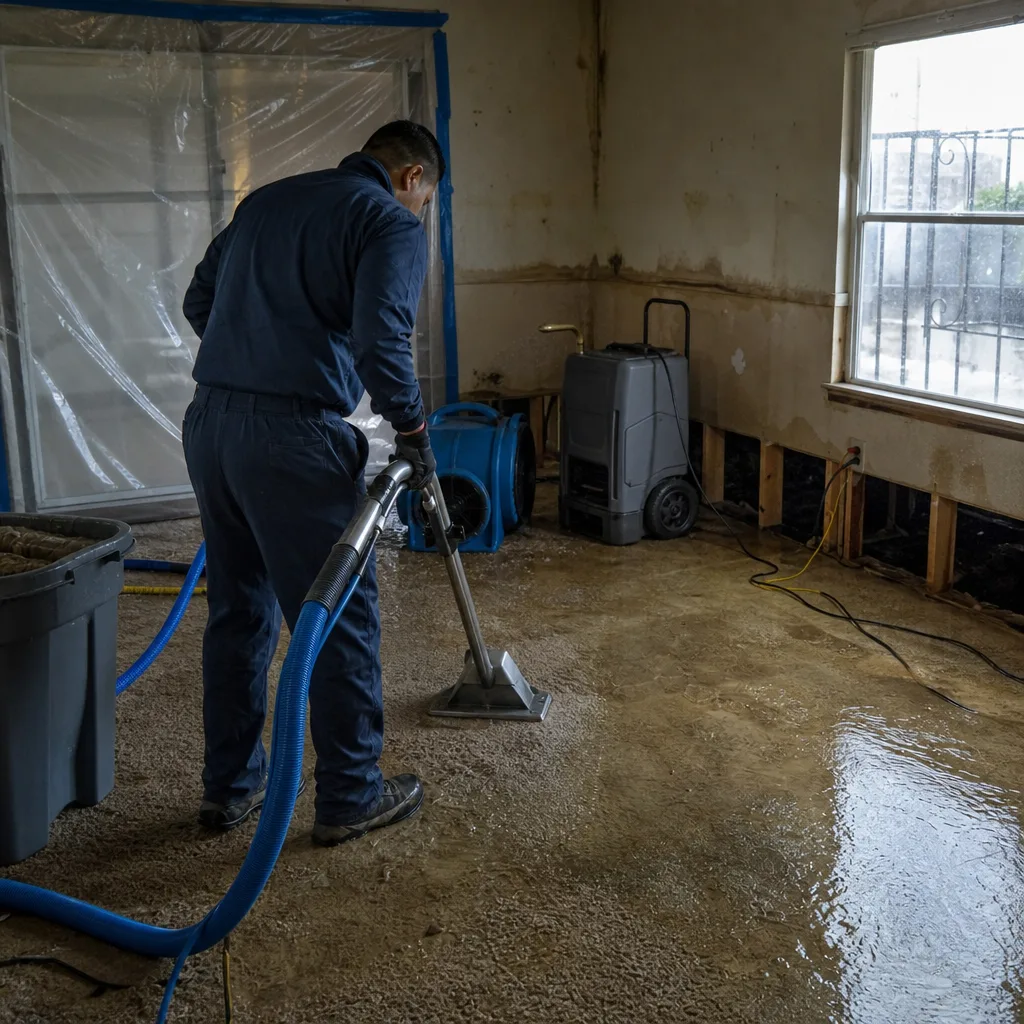
- 45-minute response commitment to Lakewood addresses, with crews dispatched from our Los Angeles office the moment you confirm the appointment.
- 24/7 live answer - a real person, never an automated system or voicemail tree, on every call at (628) 226-1011.
- IICRC-certified crews holding WRT (Water Damage Restoration Technician) and AMRT (Applied Microbial Remediation Technician) certifications, with license numbers verified before any technician arrives at your door.
- Free visual inspection and moisture mapping at no charge, with a written scope delivered before work begins - Haven Standard, Clause 1.
- Direct insurance billing and adjuster coordination, with photo-documented estimates in industry-standard format your carrier recognizes immediately.
- One team from extraction through reconstruction - no handoffs to unknown subcontractors, no gaps in documentation between mitigation and rebuild.
BeforeAfterOur Water Damage Restoration Process
1. Inspection & Assessment
We arrive with thermal imaging cameras, pin and pinless moisture meters, and hygrometers to map the full extent of water migration. In Lakewood’s slab-foundation homes, this means tracing lateral spread across concrete and into wall cavities where stucco cladding hides saturation. You receive a written scope and firm price before any work starts.
2. Extraction & Stabilization
Standing water is removed with truck-mounted and portable extraction systems. For slab leaks, we extract from carpet, pad, and hard surfaces, then evaluate whether flooring materials can be restored or must be removed - especially critical when 1950s asbestos vinyl tiles are present.
3. Drying & Dehumidification
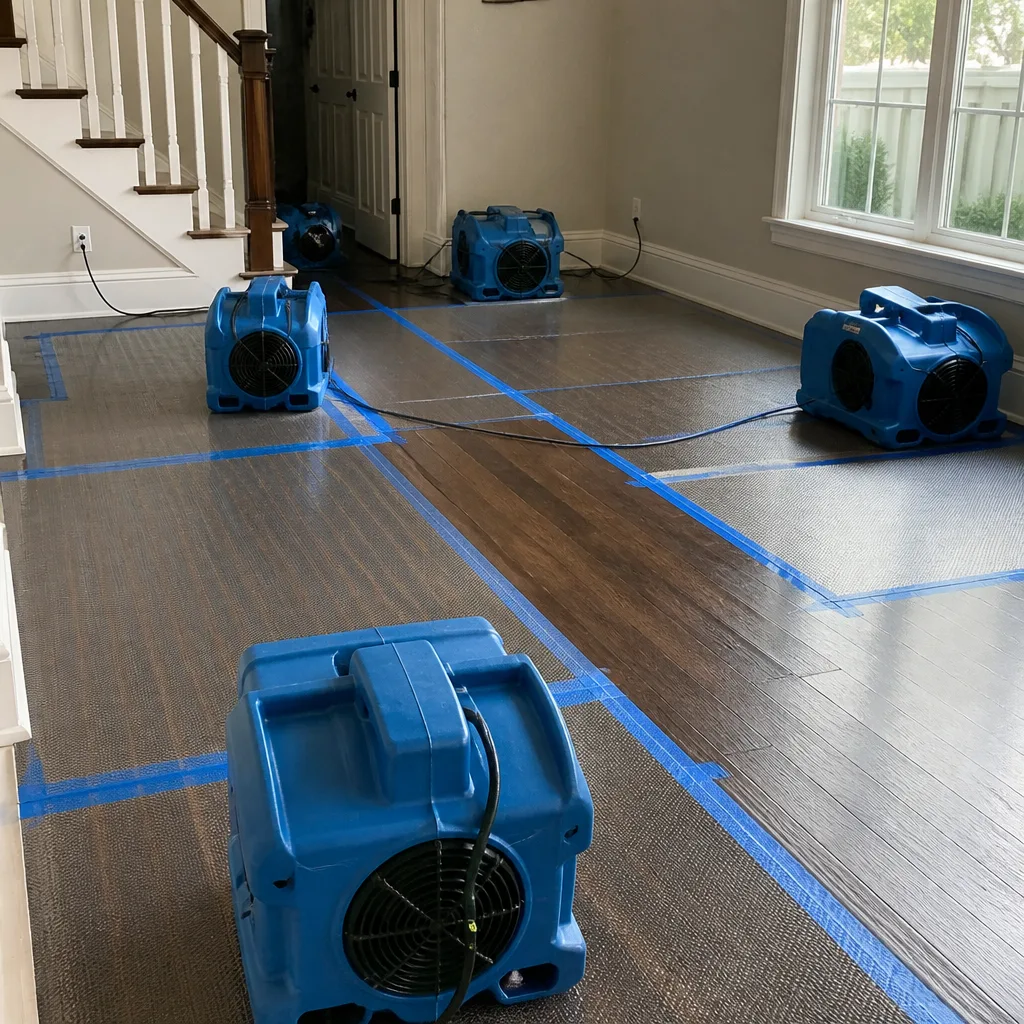
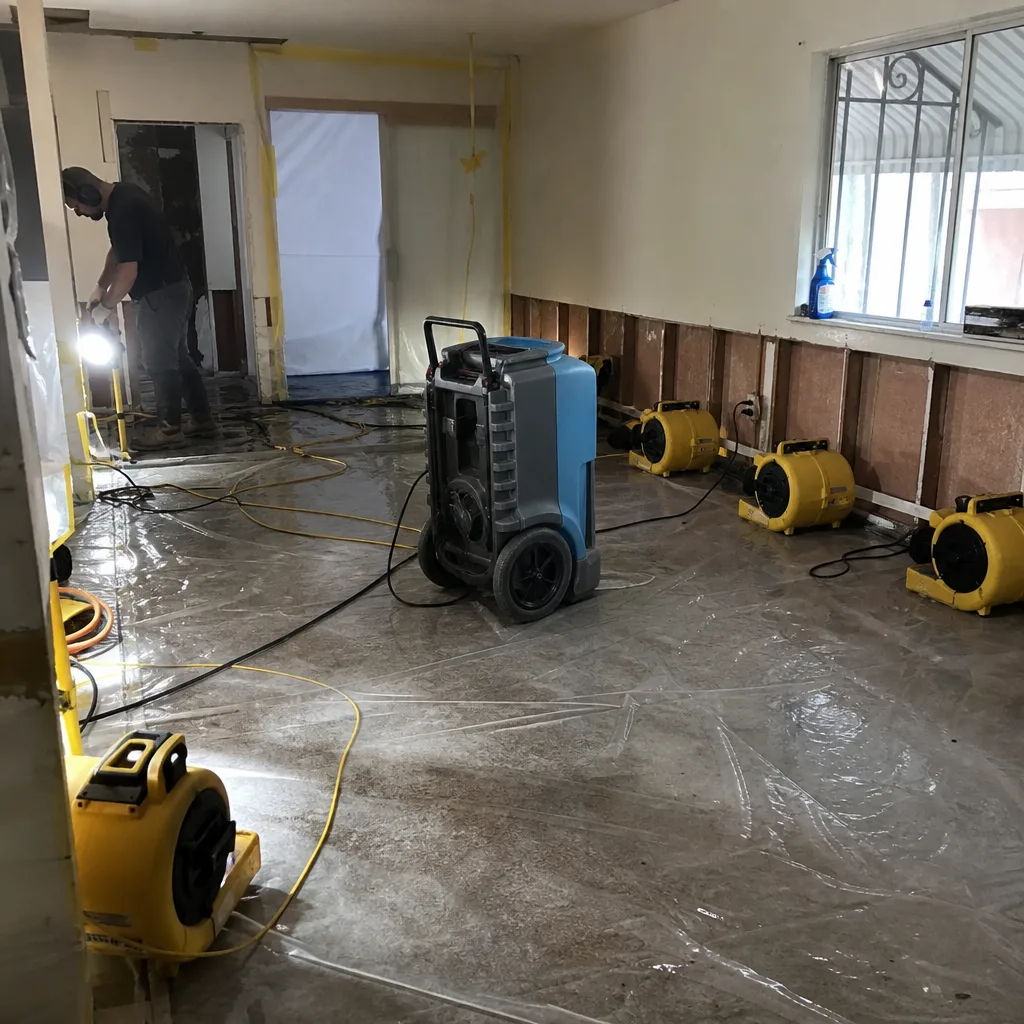
We deploy Dri-Eaz and Phoenix LGR dehumidifiers alongside XPOWER and B-Air air movers positioned for optimal airflow across wet surfaces. Daily moisture readings are logged to document drying progress to IICRC standards - the drying logs that turn your mitigation invoice into a payable insurance claim.
4. Cleaning & Sanitization
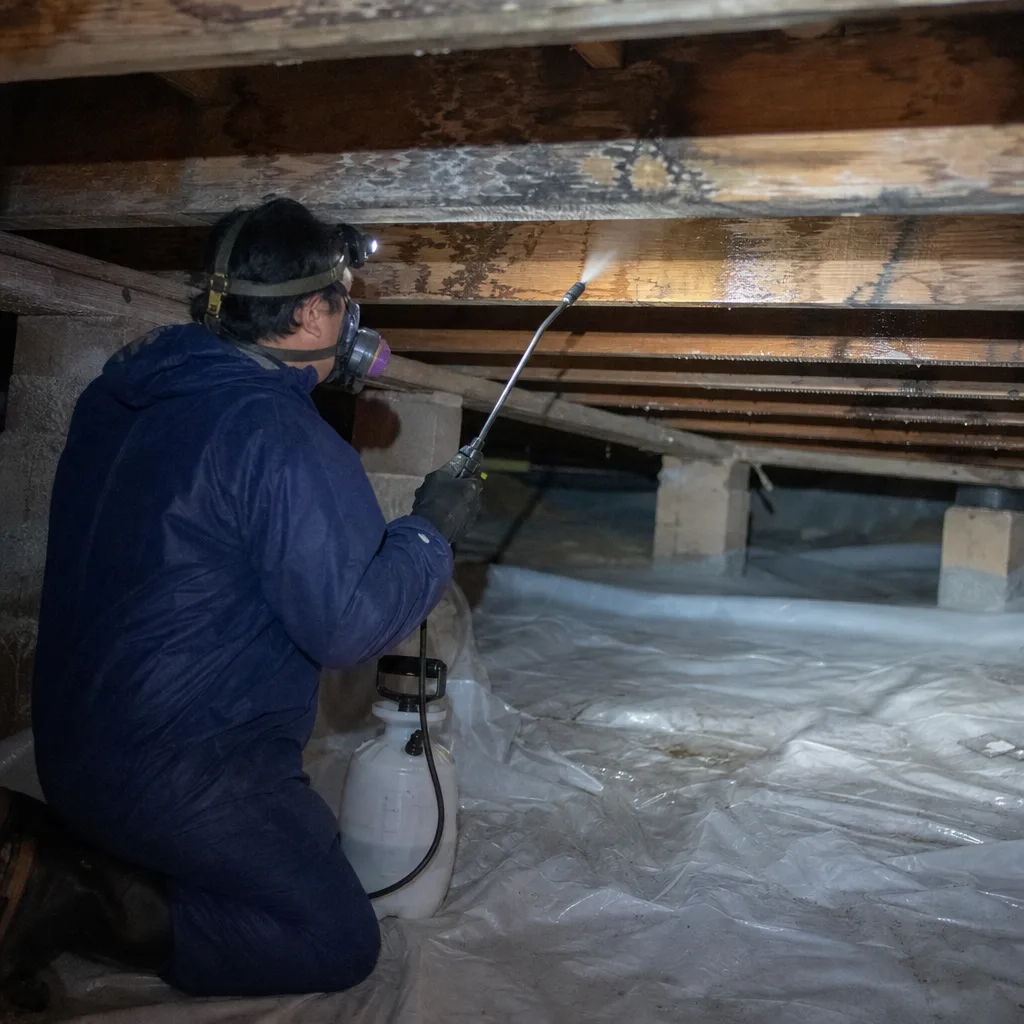
Antimicrobial treatment is applied to affected surfaces after extraction. In Lakewood’s marine-layer climate, this step prevents mold colonization that accelerated humidity would otherwise encourage within 24-48 hours of water intrusion.
5. Asbestos & Hazmat Containment
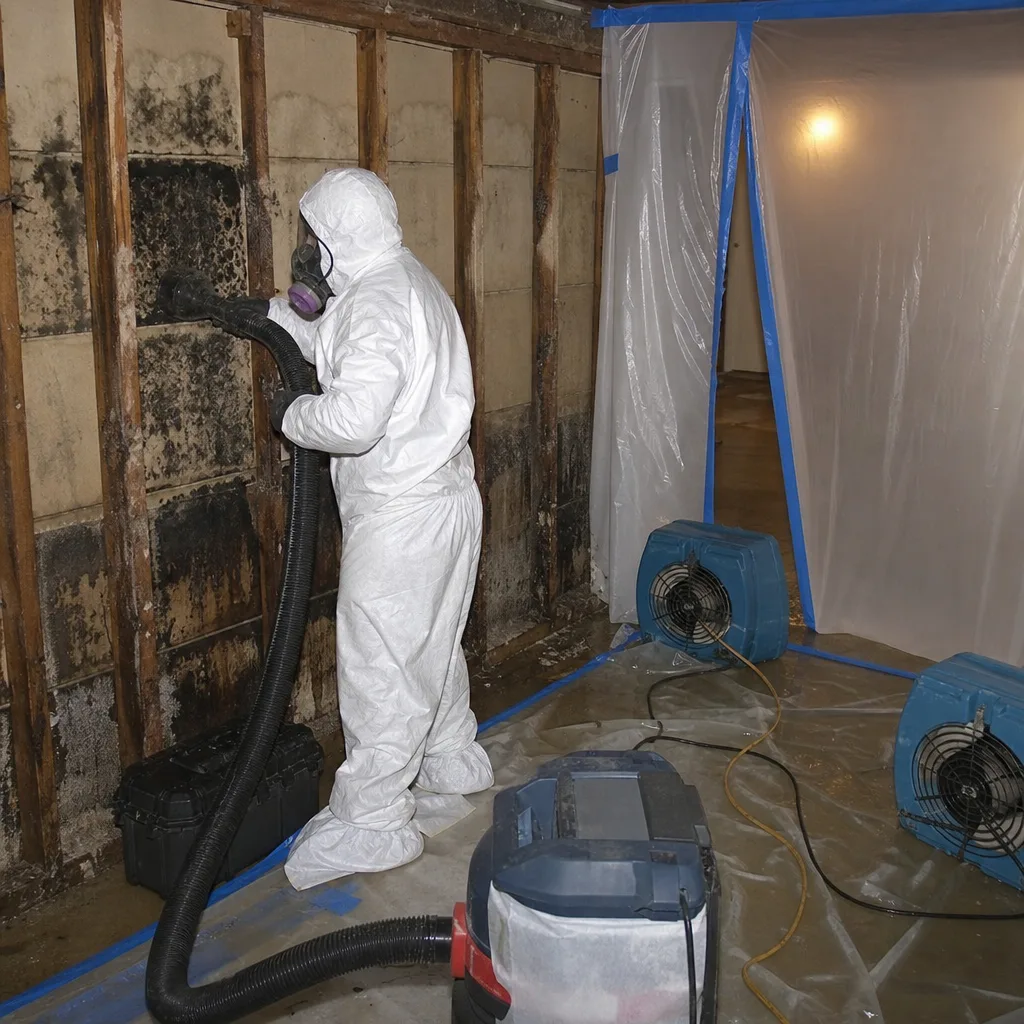
When 1950s-era asbestos vinyl floor tiles, popcorn ceilings, or textured coatings are present - the baseline assumption in Lakewood - we establish engineered containment with negative air pressure and HEPA filtration before disturbing any regulated material. Skipping this protocol turns a standard mitigation into a state-reportable abatement violation.
6. Repairs & Restoration
Once moisture readings confirm materials have returned to dry standard, we repair or replace removed materials: drywall, flooring, trim, and paint. The same crew that extracted the water completes the rebuild, with documentation continuous from first photo to final walkthrough.
Need Emergency Water Damage Restoration in Lakewood Now?
Crews minutes away, answering live 24 hours a day. The sooner we start, the less it costs.
Working With Your Insurance Company
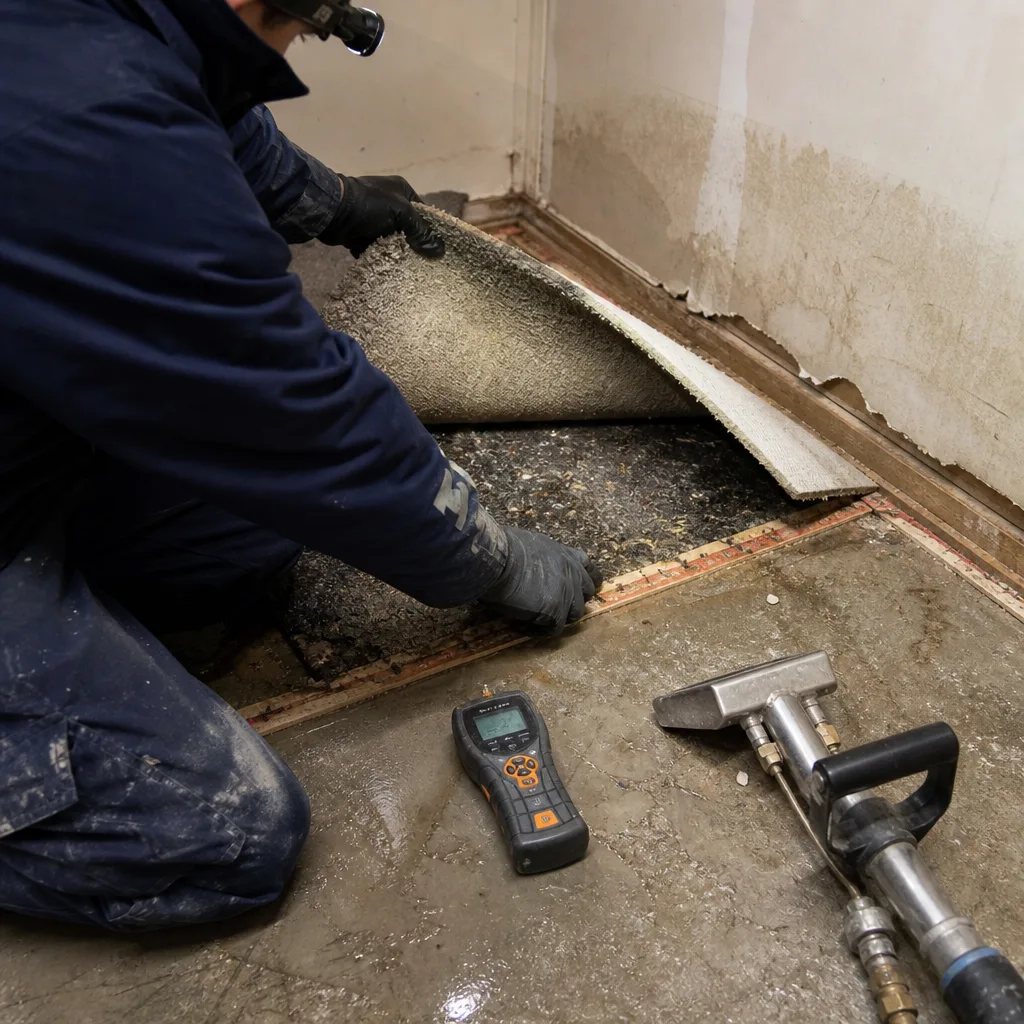
Insurance claims succeed or fail on documentation. We begin building your file from the first photo on arrival, with moisture readings, drying logs, and room-by-room damage documentation that adjusters recognize as complete. Our estimates follow industry-standard format - Xactimate or equivalent - with line-item detail that matches what carriers expect. Direct adjuster coordination means your claim moves without the back-and-forth that delays payment when documentation is thin.
We have worked with every major carrier serving Lakewood homeowners and understand the specific documentation each requires for water damage mitigation versus reconstruction. The photo record on every visit, included as standard, gives your adjuster visual proof of drying progress and material condition. Our written scope before work begins - Haven Standard, Clause 1 - prevents the scope-creep disputes that derail claims when homeowners discover additions after the crew has already started.
What We Provide Your Insurer
- Thorough documentation of the loss
- Photos of all damage, room by room
- Moisture readings and drying logs
- A detailed, line-item scope of work
- Direct coordination with your carrier
Built for Lakewood’s Loss Calendar
Lakewood’s water damage calendar follows its geography and housing stock with unusual predictability. January through March brings the heaviest supply-line failure volume: cooler nights stress already-corroded galvanized pipes, and slab leaks peak as thermal contraction opens pinholes that summer expansion had sealed. The flat, low-lying basin topography means February atmospheric-river events overwhelm storm drains near the San Gabriel River corridor, producing street flooding that enters homes through door thresholds and slab edges.
April through June shifts to irrigation-line failures and early air-conditioning condensate issues as homeowners restart systems that have sat idle. July through October is marine-layer peak humidity: even minor intrusions dry slowly, and mold colonization accelerates in wall cavities where ambient moisture already runs high. November through December brings holiday plumbing overload - garbage disposals, guest bathrooms, and washing machines pushed past capacity - plus the first cool nights that stress aging pipes before the January peak. Year-round, the cluster pattern dominates: one slab leak on a block means neighbors should inspect their own galvanized lines, because the same pipe generation is failing on the same schedule.
Water Damage Restoration Across Lakewood’s Neighborhoods
We respond across Lakewood’s distinct residential corridors, each with patterns shaped by that 1950-1953 construction window. Near Mayfair Park and the surrounding single-story tracts, slab leaks from original galvanized supply lines are the dominant call type - we have tracked block-level clusters where three homes on the same street failed within a single month. The Lakewood Country Club area sees similar housing stock with slightly larger lots, meaning longer supply-line runs and more extensive water migration before discovery. Homeowners near Del Amo Boulevard and the eastern edge toward the San Gabriel River experience more groundwater and surface flooding during intense rain events, with subfloor saturation that standard extraction alone will not address.
The neighborhoods north of Carson Street and west of Lakewood Boulevard include some of the city’s earliest-built sections, where galvanized pipe corrosion is most advanced and original asbestos floor tiles are nearly universal. Response routes from our Los Angeles office put us on these streets within minutes, and our technicians carry the hazmat protocols these homes require as standard equipment, not afterthoughts. Every neighborhood shares the same baseline: stucco cladding, slab foundations, and building materials that demand specific drying and documentation approaches a contractor unfamiliar with Lakewood’s stock would miss.
Specialized Water Damage Restoration Services We Offer in Lakewood
Emergency Water Extraction
Standing water is removed within hours of your call, using truck-mounted extraction for deep saturation and portable units for confined spaces in Lakewood’s compact single-story layouts. Extraction continues until moisture meters confirm no free water remains in carpet pad, subfloor, or wall base - the threshold where structural drying can begin effectively.
Structural Drying & Dehumidification
We calculate drying goals from initial moisture readings, then deploy Dri-Eaz and Phoenix dehumidifiers with XPOWER air movers in calculated ratios based on affected cubic footage. In Lakewood’s marine-layer climate, this is not optional: ambient humidity often exceeds 70% in morning hours, and natural drying is functionally impossible without mechanical dehumidification. Daily moisture logs document progress to IICRC drying standards.
Flood Cleanup
Surface flooding from overwhelmed storm drains, particularly near the San Gabriel River corridor and low-lying sections east of Lakewood Boulevard, brings Category 3 contamination. We extract, remove porous materials that cannot be sanitized, and apply antimicrobial treatment with documentation for your insurer showing why removal was necessary versus restoration.
Burst Pipe Restoration
Original galvanized supply lines in Lakewood’s 1950s homes fail predictably as corrosion reaches terminal stage. We extract water, dry affected assemblies, and document the line failure for insurance - but we also flag the cluster risk to neighbors, because the same pipe generation under the same slab is corroding on the same schedule. Burst pipe restoration here is rarely an isolated event.
Basement Water Removal
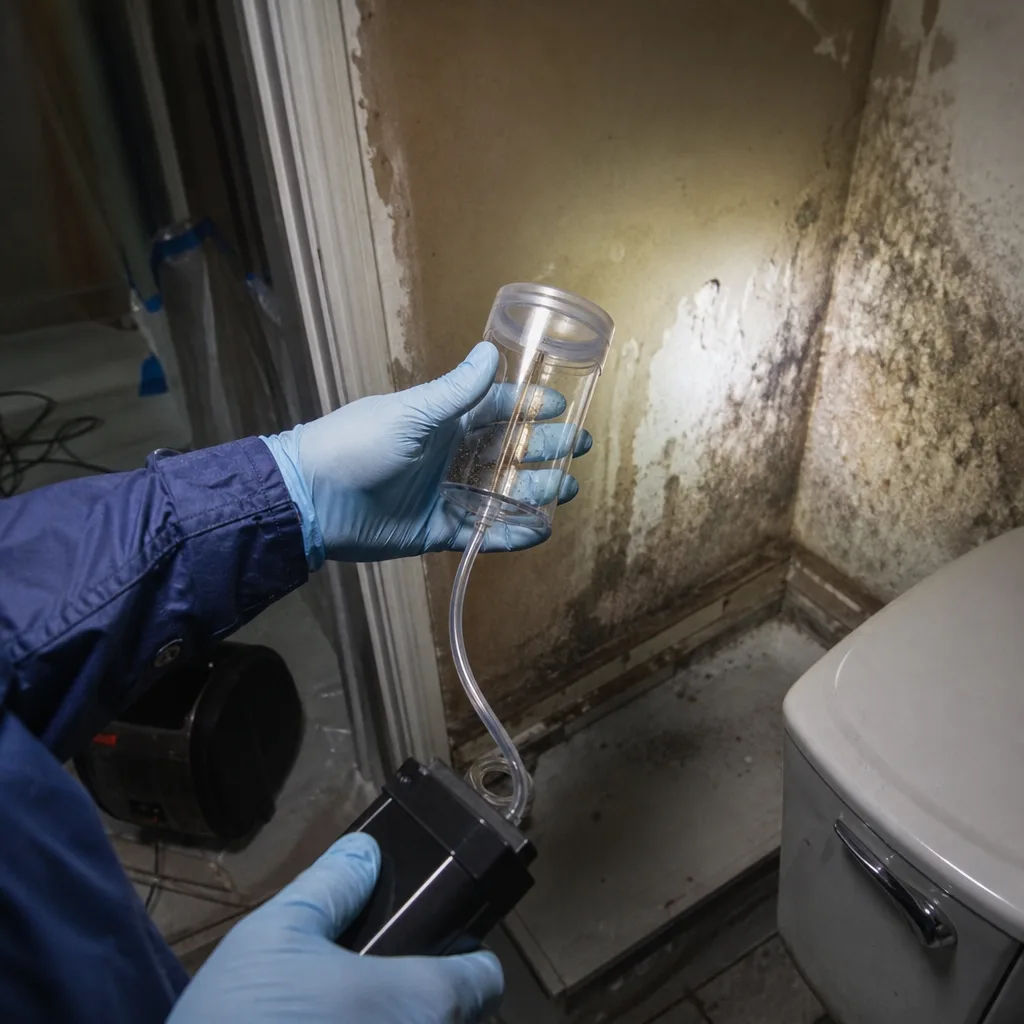
True basements are rare in Lakewood’s slab-foundation stock, but partial excavations, converted crawl spaces, and lower-level additions in later modifications do occur. We extract with submersible pumps and portable units, then address the unique drying challenge of below-grade concrete that wicks moisture from surrounding soil.
What happens when you call
- 1
A real person answersNo phone trees - you reach a local pro.
- 2
You get an upfront price rangeHonest numbers before anyone is dispatched.
- 3
A background-checked tech heads outLicensed & insured, dispatched right away.
- 4
You approve before work beginsNothing starts until you say go.
Water Damage Restoration Costs in Lakewood, CA
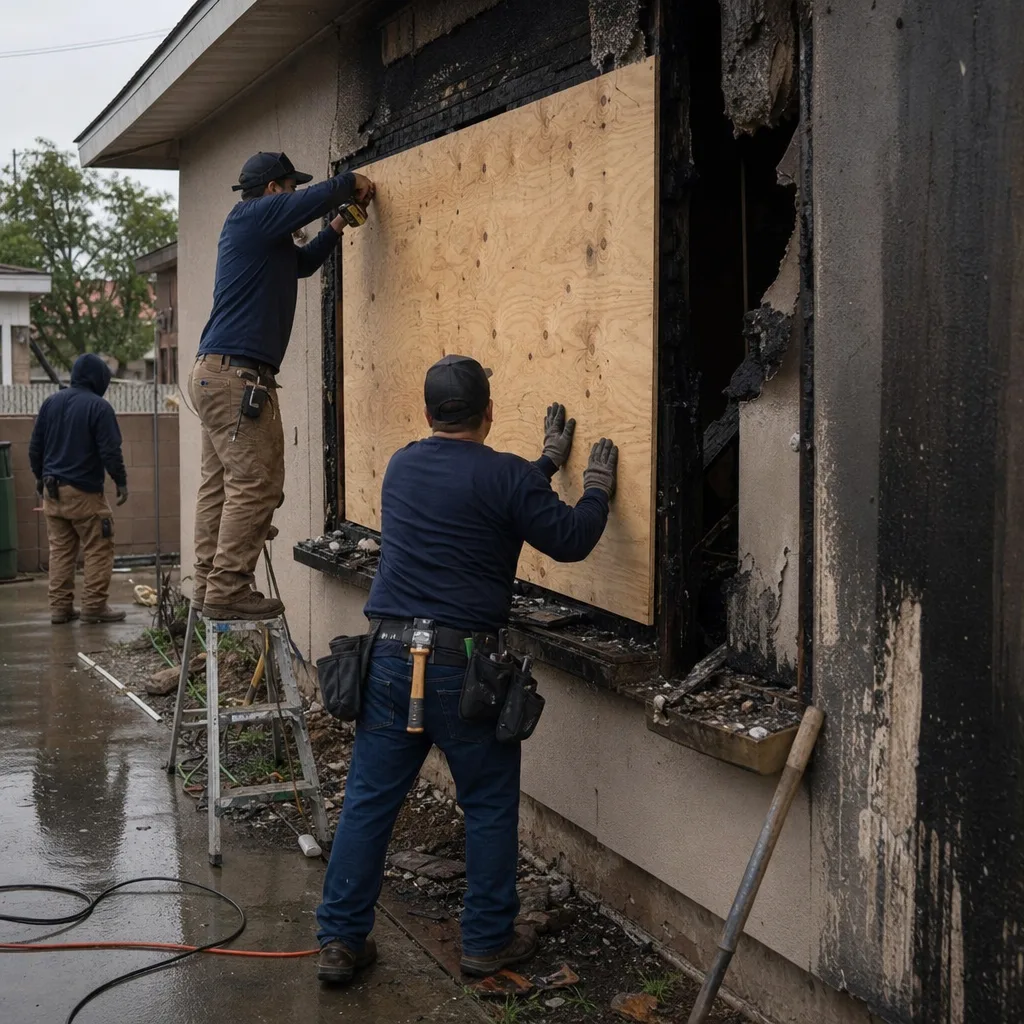
A typical water damage mitigation in Lakewood runs $2,800-$6,500 for a standard single-family extraction and drying job, with reconstruction adding $4,000-$12,000 depending on finish materials and square footage. Category 1 clean-water supply-line failures at the low end; Category 3 sewage or flood contamination at the high end due to removal and antimicrobial requirements. Asbestos-containing materials requiring engineered containment add $1,500-$3,500 for proper hazmat protocol - non-negotiable in Lakewood’s 1950s housing stock, and documented separately for insurance.
What moves the price: affected square footage, water category, whether flooring and drywall must be removed, and whether mold colonization has begun before we arrive. Insurance typically covers sudden and accidental water damage from supply-line failures, appliance overflows, and storm intrusion; gradual leaks and maintenance-related failures are often excluded. We provide a written scope and firm price before work begins - Haven Standard, Clause 1 - and offer a free second opinion on any competitor’s written estimate. Call (628) 226-1011 for your exact quote; estimates are free.
We Also Serve Cities Near Lakewood
Our crews respond throughout the surrounding area, including Lakewood neighbors in Harbor City, Lomita, Wilmington, and Torrance. Each shares elements of Lakewood’s coastal-basin climate and aging housing stock, and each receives the same documentation-first approach: written price before work, photo record on every visit, and direct insurance coordination.
Serving Lakewood, CA - Our Local Coverage Area
We’re based in the Lakewood area and know this community well. Use the map below to see our service coverage - if you’re nearby, we can almost certainly help.
Lakewood Water Damage Restoration Questions, Answered
Why do slab leaks and burst pipes seem to happen on my whole Lakewood block at once?
Because Lakewood’s roughly 17,000 single-family homes were built in the same 1950-1953 window to identical specs, original galvanized supply lines and slab plumbing fail in block-level clusters.
The same pipe specification was installed across every tract simultaneously, and corrosion progresses on the same timeline. When we mitigate a slab leak on one street, we routinely field calls from two or three neighbors within weeks as the same corroded generation gives out. This pattern is so reliable in Lakewood that we flag it to adjusters and recommend neighbors inspect their own lines. Assuming your leak is an isolated event means treating the symptom while the underlying pipe failure continues next door - and potentially in your own secondary lines. Call (628) 226-1011 if you suspect supply-line corrosion; we include line-condition assessment in our visual inspection.
Does the marine-layer humidity in Lakewood change how you dry a water-damaged home?
Yes - Lakewood’s persistent coastal marine-layer humidity keeps baseline moisture readings elevated, which means ambient drying is rarely sufficient and mechanical dehumidification is essential.
Sitting 10-12 miles inland, Lakewood experiences morning humidity that often exceeds 70% even without active water damage. Techs who rely on opening windows or passive air circulation leave hidden moisture in wall cavities and attic spaces, where mold colonizes behind stucco and drywall within 24-48 hours. We calculate vapor pressure differential - the force that drives moisture from wet materials into the air - and size Dri-Eaz and Phoenix dehumidifiers to overcome ambient conditions, not supplement them. Daily moisture logs confirm cavity readings drop to dry standard before equipment is removed. Call (628) 226-1011 for a free moisture assessment.
My 1950s Lakewood home has original vinyl floor tiles and popcorn ceilings - does water damage restoration disturb asbestos?
It can, and in Lakewood’s housing stock asbestos-containing materials are the baseline assumption, not the exception.
Original 9×9 vinyl floor tiles and sprayed acoustic ceilings from the 1950-1953 construction window are presumed asbestos-containing until laboratory analysis proves otherwise. Disturbing these materials during water extraction or demolition without engineered containment, negative air pressure, and HEPA filtration violates state regulations and creates a more serious health hazard than the water itself. Our crews establish proper containment before touching any suspect material, document the protocol with photos, and provide clearance documentation for your insurer. Skipping this step to save time turns a standard mitigation into a reportable abatement problem. Call (628) 226-1011 - hazmat protocol is standard on every Lakewood job, never an upsell.
How do you decide what can be dried versus what has to be removed in a Lakewood water damage job?
The decision is based on material classification, contamination category, and moisture readings - not guesswork.
IICRC standards classify materials as restorable or non-restorable based on porosity and exposure time. Carpet pad exposed to Category 2 or 3 water is removed. Drywall with moisture readings above 16% for more than 48 hours is typically removed, especially in Lakewood’s humid climate where mold risk is elevated. Structural lumber and concrete can usually be dried in place with proper equipment and time. We document every removal decision with photos and moisture data, so your insurer understands why restoration was attempted or abandoned on each material. Nothing is removed without written notation in your scope. Call (628) 226-1011 for a free assessment with documented recommendations.
What brands of drying equipment do you use on Lakewood water damage jobs, and why does it matter?
We deploy professional-grade drying systems from Dri-Eaz, Phoenix, XPOWER, B-Air, and Injectidry, documented to IICRC, RIA, and IFA standards.
The brand matters because equipment specification determines whether drying logs will support your insurance claim. Phoenix LGR dehumidifiers remove more grains per pound at lower humidity levels - critical in Lakewood’s marine-layer conditions where standard refrigerant units stall. Injectidry’s panel and mat systems force airflow through hardwood and subfloor assemblies that air movers alone cannot reach. XPOWER and B-Air air movers are positioned for calculated airflow patterns, not convenience. Daily readings from this equipment populate the drying logs that adjusters require to approve mitigation invoices. Generic or underspecified equipment produces incomplete documentation and disputed claims. Call (628) 226-1011 to discuss equipment specifications for your job.
How fast can someone actually get here for water damage in Lakewood?
Our response commitment to Lakewood is 45 minutes from dispatch confirmation, with live phone coverage 24 hours a day, 7 days a week.
Dispatch is coordinated from our Los Angeles office, with crews pre-positioned for rapid response to Lakewood addresses. The first hour after discovery is when extraction prevents the lateral spread that turns a contained supply-line failure into a whole-house mitigation. We do not use voicemail trees or next-business-day callbacks for active water damage. When you call (628) 226-1011, a live person answers, confirms your address, and dispatches the nearest crew immediately.
Will insurance cover my water damage restoration in Lakewood?
Most sudden and accidental water damage is covered, but documentation determines whether your claim is paid without dispute.
Supply-line bursts, appliance overflows, and storm intrusion are typically covered perils. Gradual leaks, maintenance failures, and seepage are often excluded. We document the cause from our first photo, write estimates in industry-standard format, and coordinate directly with your adjuster. The photo record on every visit, moisture readings, drying logs, and written scope - all included as standard - give your carrier the evidence required to process payment. We have worked with every major insurer serving Lakewood and understand their specific documentation requirements. Call (628) 226-1011 for a free inspection and insurance documentation review.
How long does water damage restoration take in a typical Lakewood home?
Extraction and stabilization take hours; structural drying typically requires 3-5 days; reconstruction adds 1-3 weeks depending on scope.
The drying timeline depends on water category, affected materials, and whether asbestos containment is required - common in Lakewood’s 1950s stock. We do not guess at completion; daily moisture logs show when materials reach IICRC dry standard. Reconstruction begins only after documented confirmation, with the same crew completing repairs to maintain continuous documentation. Rushing drying to meet a schedule leaves hidden moisture that causes mold and future disputes. Call (628) 226-1011 for a timeline based on your specific conditions.
Written by Alicia Brennan, Owner at Back to Dry Restoration, serving Lakewood since 2011.
Water Damage Restoration in Nearby Areas