
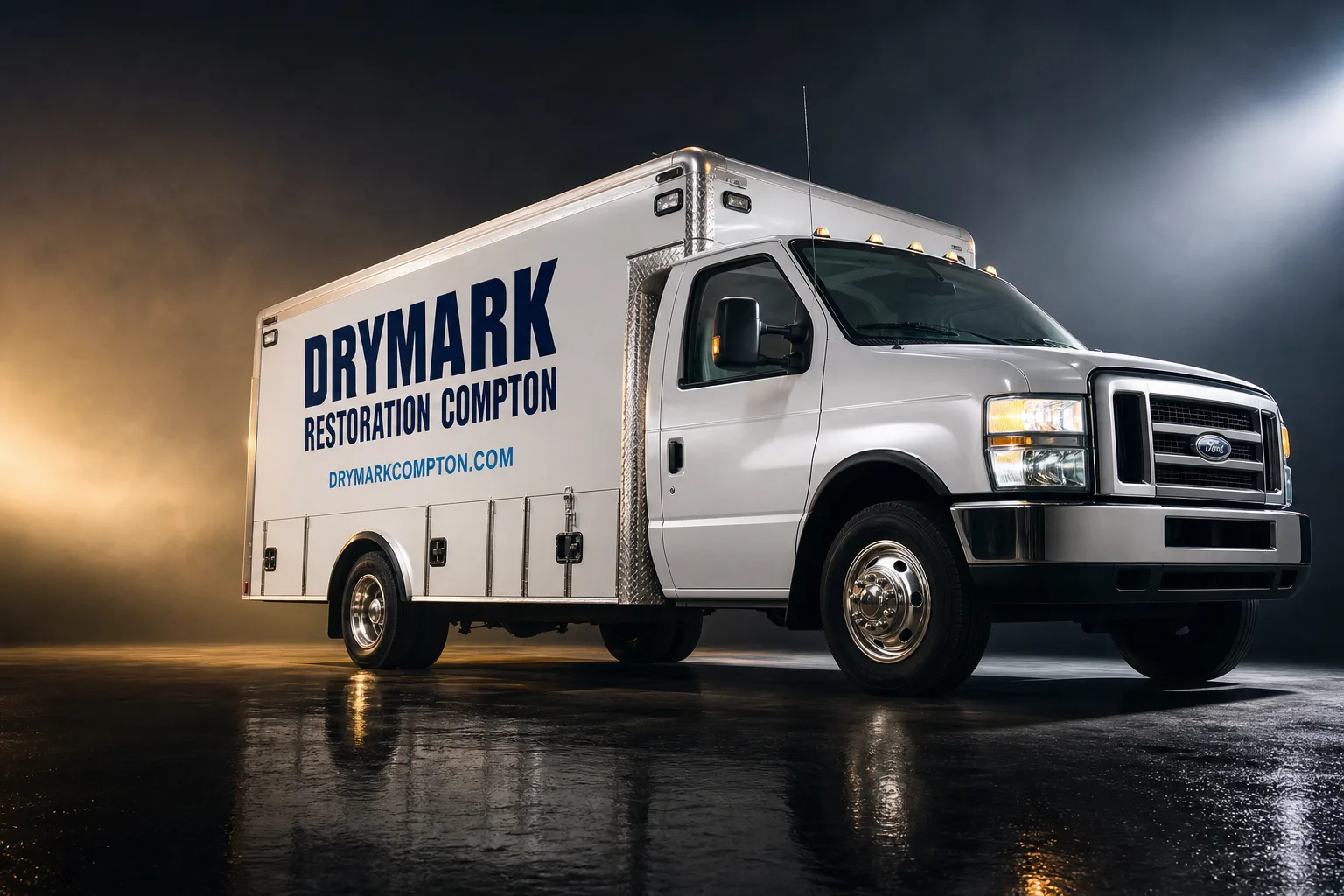
Free visual inspection and a written scope of work before any mitigation begins - photos, moisture readings, and drying logs go in your claim file
The scope we write is the scope we bill. Anything new gets shown to you, in writing, before we touch it.
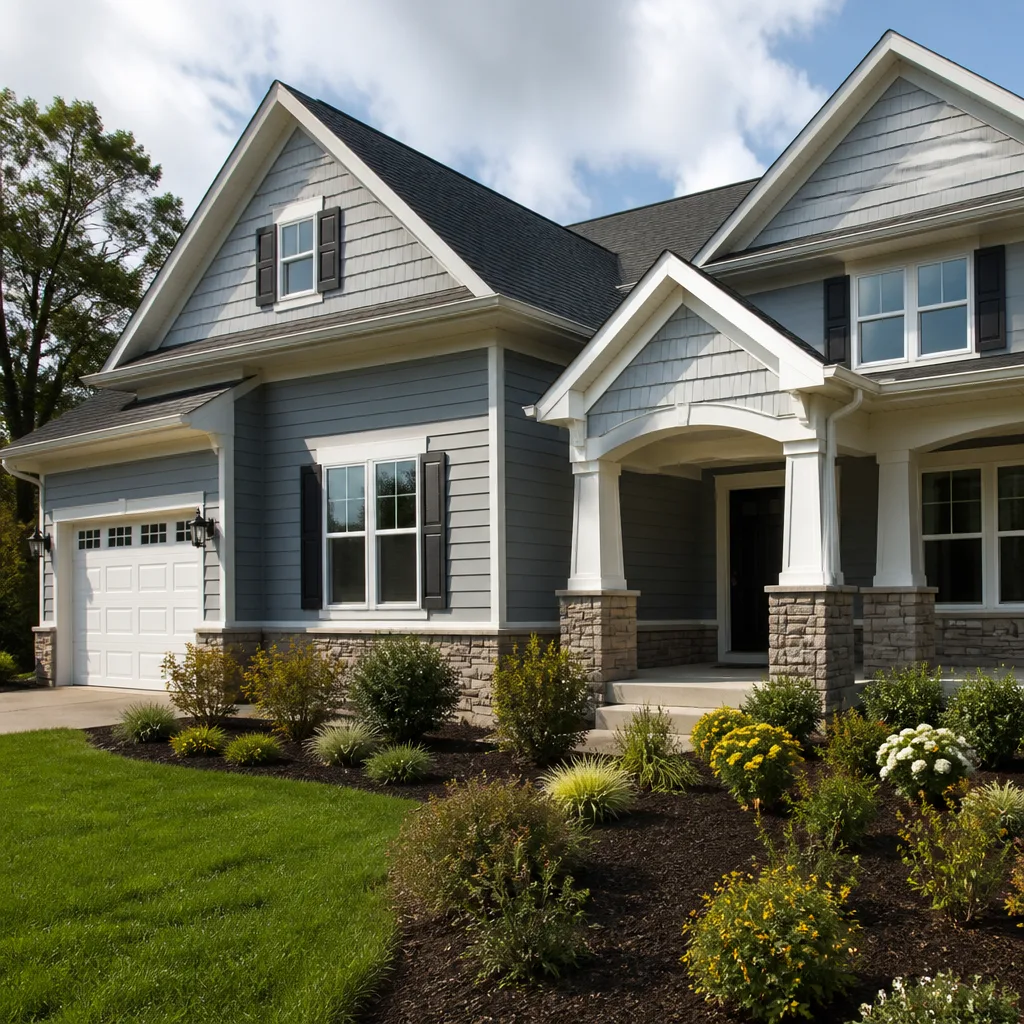
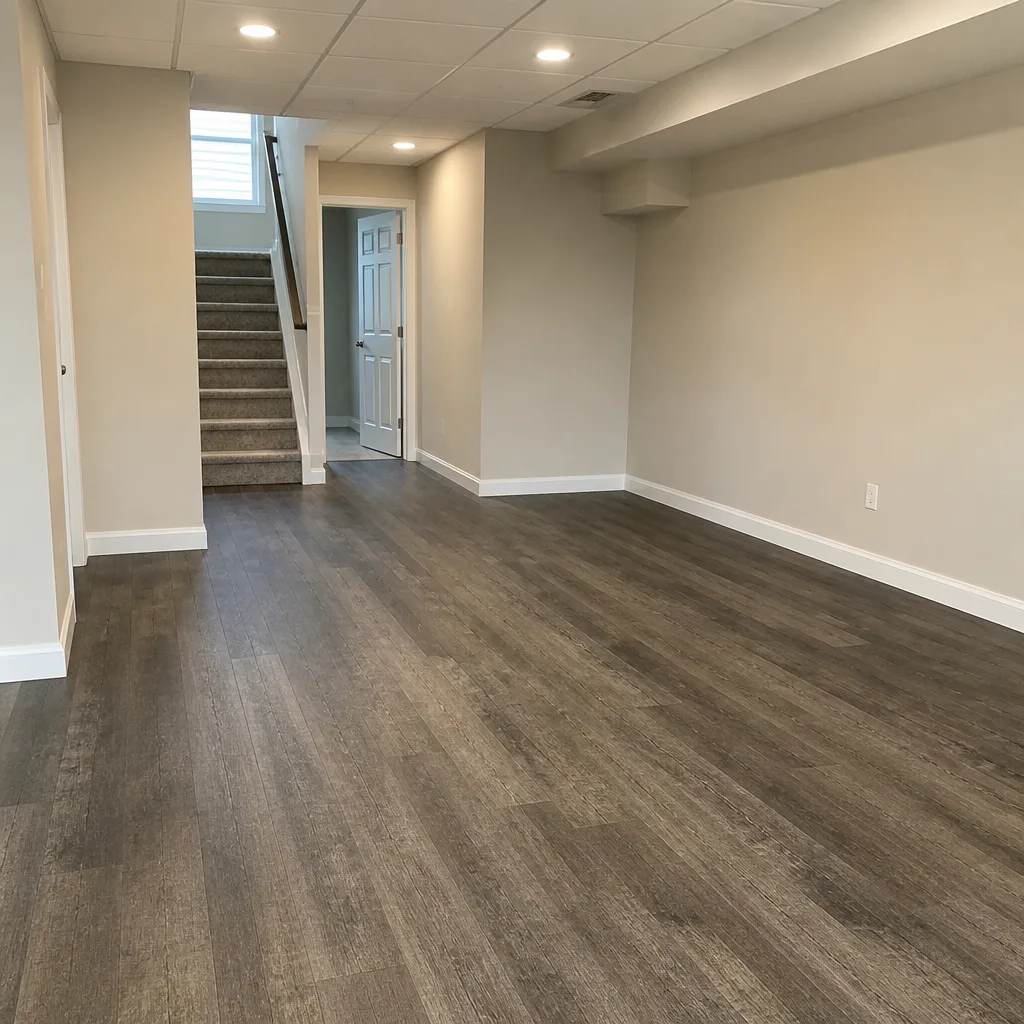
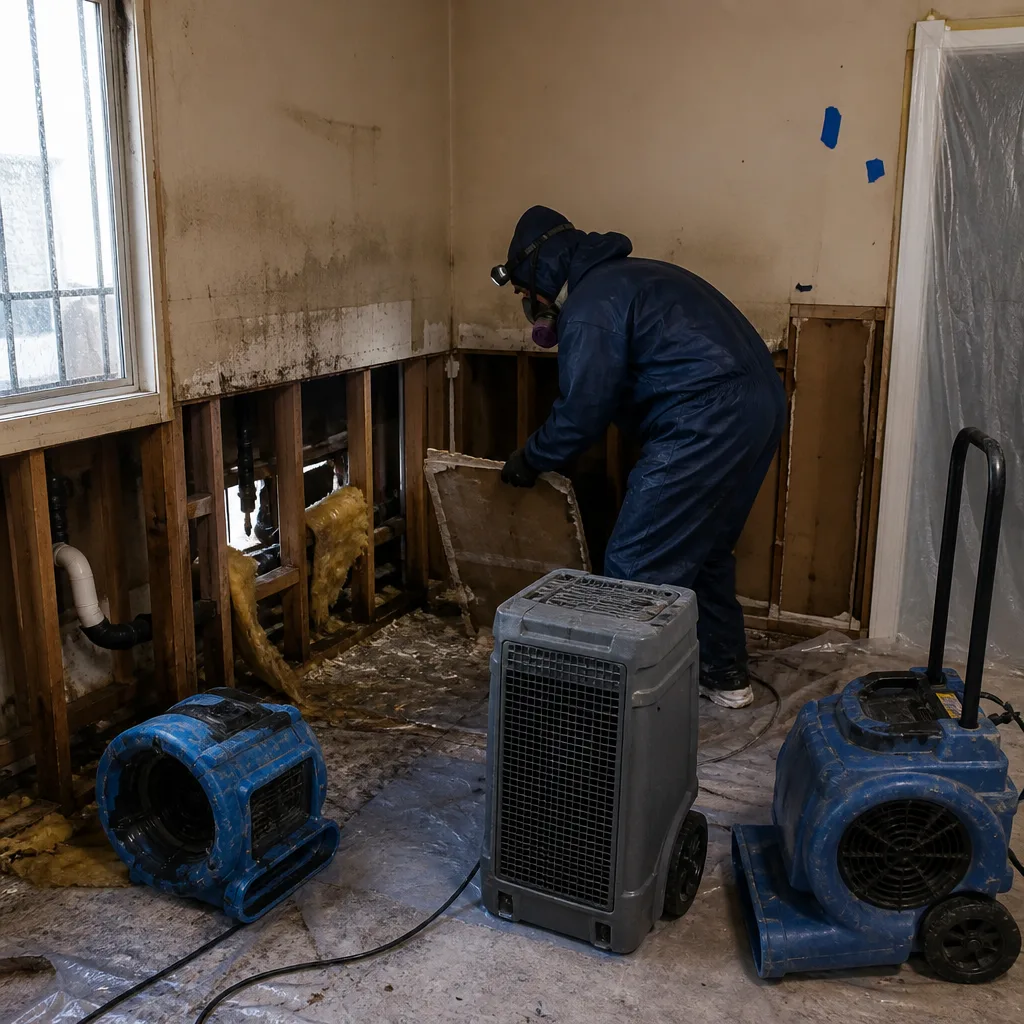 Before
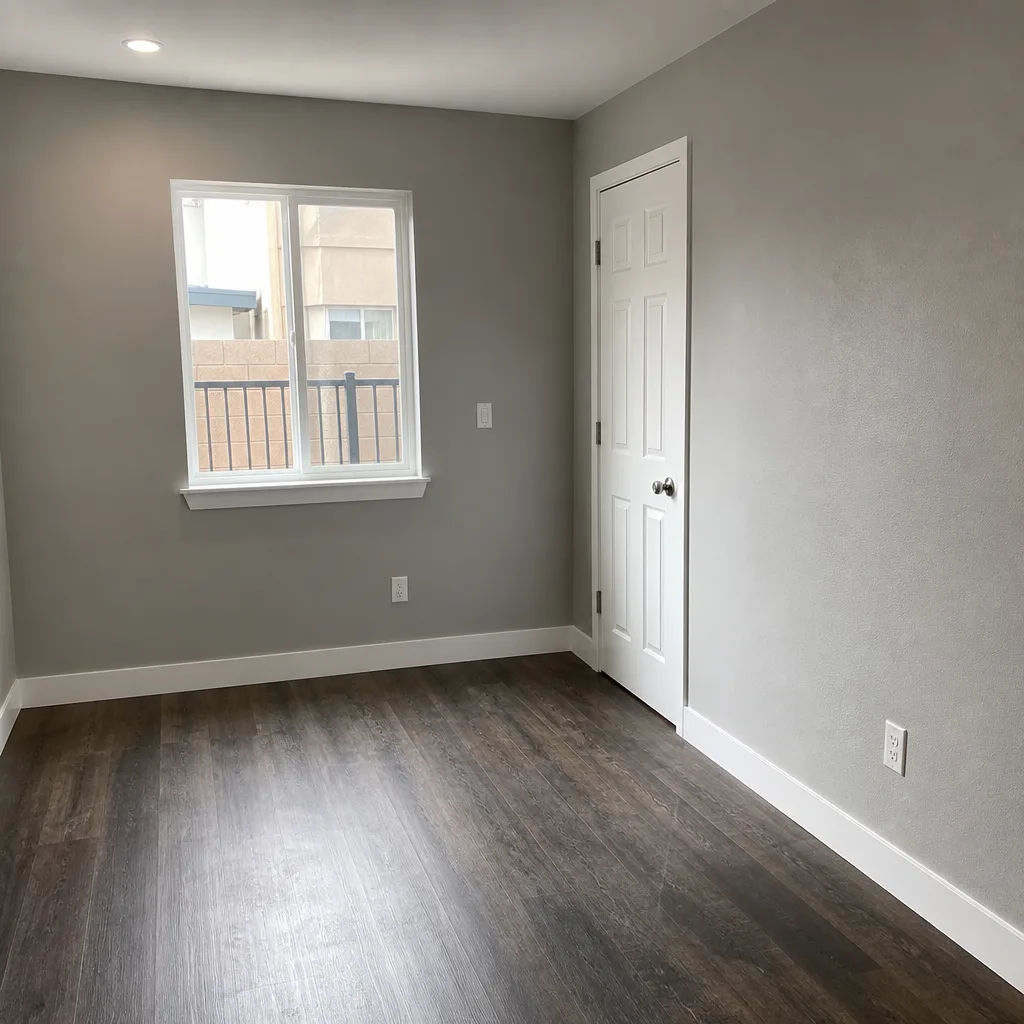 After
After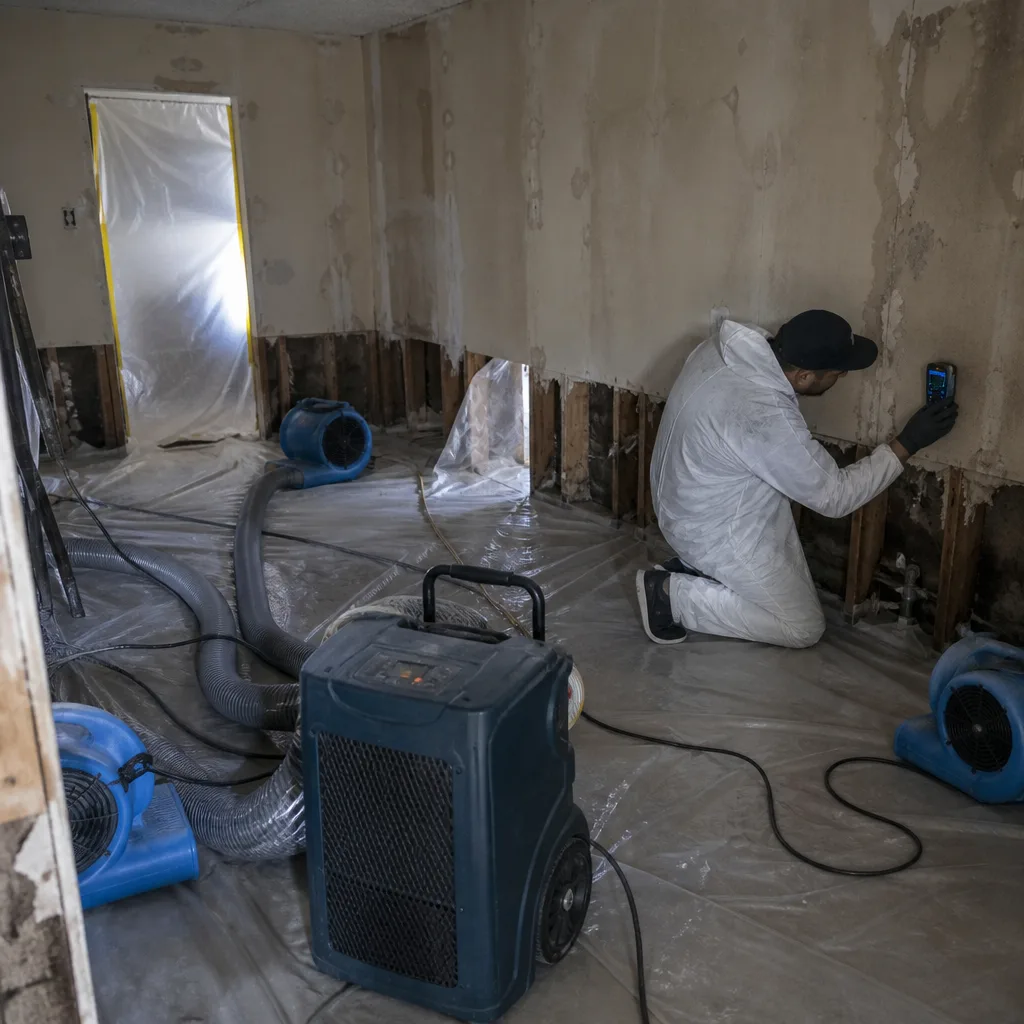 Before
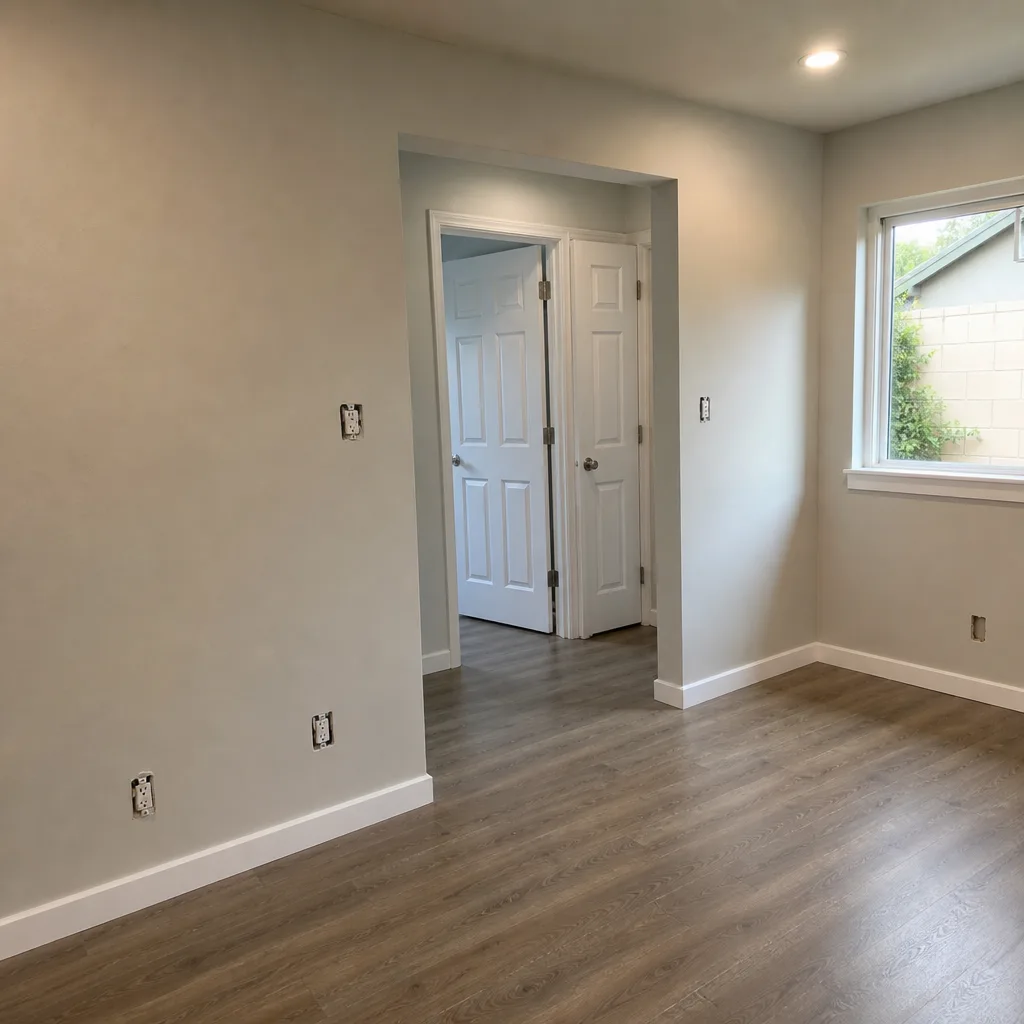 After
After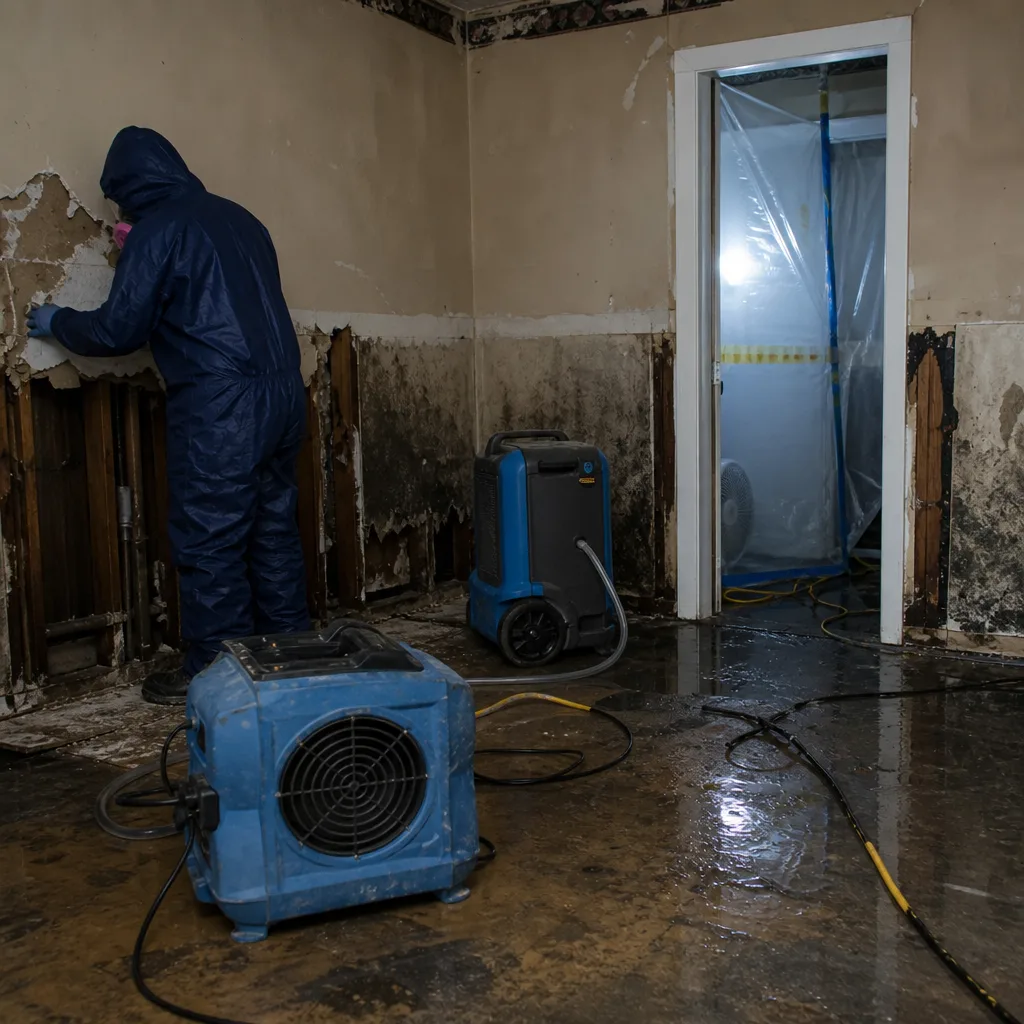 Before
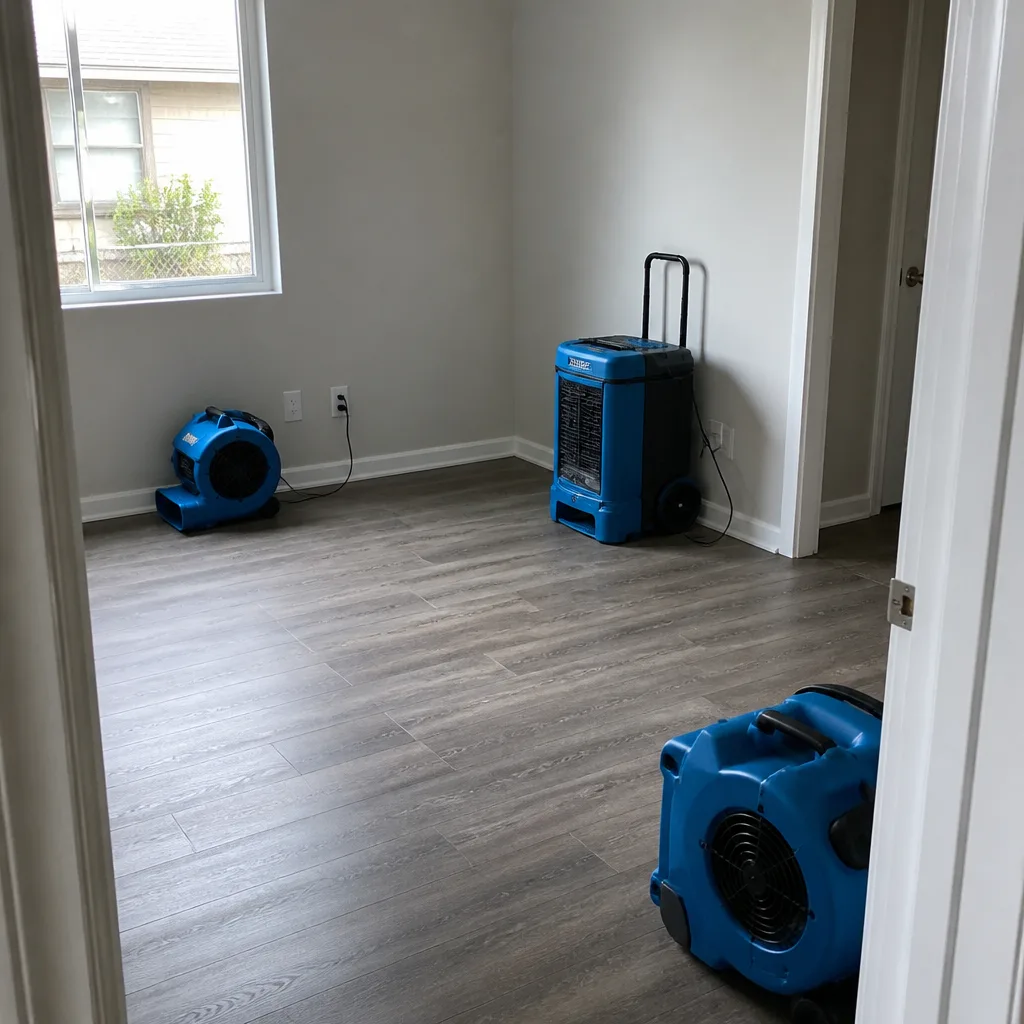 After
After24/7 Emergency Water Damage Restoration in Wilmington
Water damage restoration in Wilmington typically costs $2,800-$7,500 for a standard residential mitigation, with emergency extraction starting at $450-$950 and structural drying running $1,200-$3,200 depending on affected square footage and contamination level. Call (628) 226-1011 now and a live person will answer, 24 hours a day, no voicemail. Crews dispatch throughout the Wilmington area within 45 minutes of your call, and we perform a free visual inspection before any work begins.
The first hour determines whether you’re looking at a three-day drying job or a three-week reconstruction. Water follows the path of least resistance through Wilmington’s older wood-frame construction, wicking up drywall, saturating insulation, and pooling in crawlspaces where the marine layer already holds ambient humidity above 65 percent. Every minute of delay gives Category 1 clean water time to degrade into Category 2 or 3, expanding the scope and the final invoice. Our Water Damage Restoration team carries thermal imaging cameras and penetrating moisture meters on every truck, so we find what you can’t see before we quote a single dollar.
Understanding Water Damage Restoration Severity in Wilmington Properties
Water damage classification follows IICRC S500 standards: Category 1 is clean water from a supply line, Category 2 is gray water with chemical or biological load, and Category 3 is black water carrying pathogens from sewage or ground flooding. In Wilmington, these categories shift faster than inland cities because the harbor marine layer keeps relative humidity high enough that microbial growth begins on wet drywall within 24 to 48 hours.
Moisture mapping with thermal imaging and non-penetrating meters lets us trace the migration pattern without tearing into walls blind. Psychrometric data, vapor pressure differential readings, and specific humidity calculations tell us when the structure has reached dry standard, not just when it feels dry. Wilmington’s 1940s-1960s bungalows complicate this work: galvanized plumbing corrodes in hard water, original pipe insulation often contains asbestos, and the lack of vapor barriers means moisture moves laterally through wall cavities with little resistance. We document every reading, every photo, every material classification by trade name, so your carrier sees the same evidence we do.
Why Wilmington Property Owners Choose DryMark Restoration Compton
- 45-minute response commitment to Wilmington addresses, with crews staged for the harbor area’s unique access patterns
- 24/7 live answer by a real person, never an automated system or voicemail tree, on every emergency line
- IICRC-certified crews holding WRT (Water Damage Restoration Technician) and AMRT (Applied Microbial Remediation Technician) credentials
- Free visual inspection with moisture readings and photo documentation before any scope is written
- Direct insurance billing with adjuster coordination, daily drying logs, and line-item estimates built to Xactimate standards
- One team from extraction through reconstruction, so no handoff gaps and no finger-pointing if something needs revisiting
BeforeAfterOur Water Damage Restoration Process
1. Inspection & Assessment
We arrive with thermal imaging, penetrating and non-penetrating moisture meters, and hygrometers to map the full extent of migration. In Wilmington, this includes checking crawlspaces and slab perimeters for petroleum sheening from legacy oil-field infrastructure, a due-diligence step that almost never comes up across the freeway in Harbor City.
2. Extraction & Stabilization
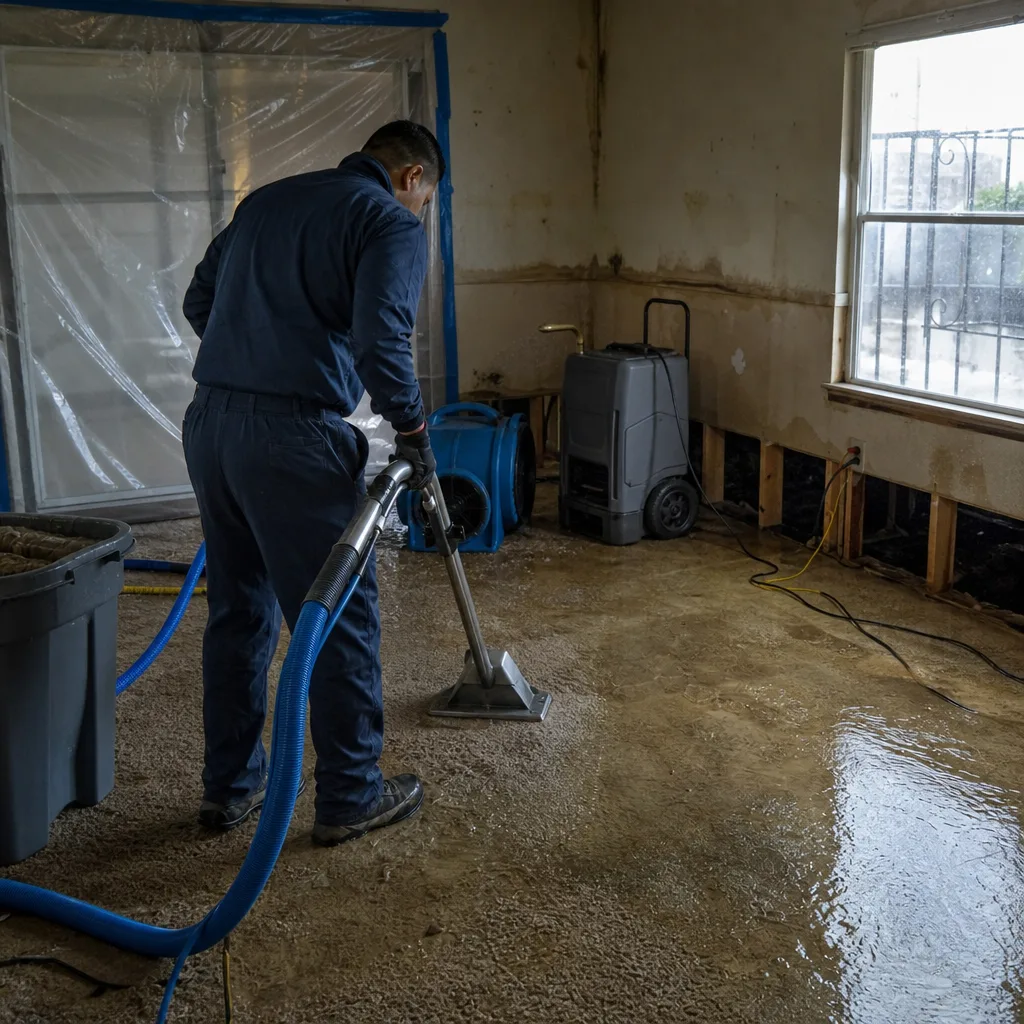
Truck-mounted extraction units remove standing water, followed by portable units for confined spaces. We set containment barriers immediately if Category 3 water or asbestos-containing materials are suspected, preventing cross-contamination before it starts.
3. Drying & Dehumidification
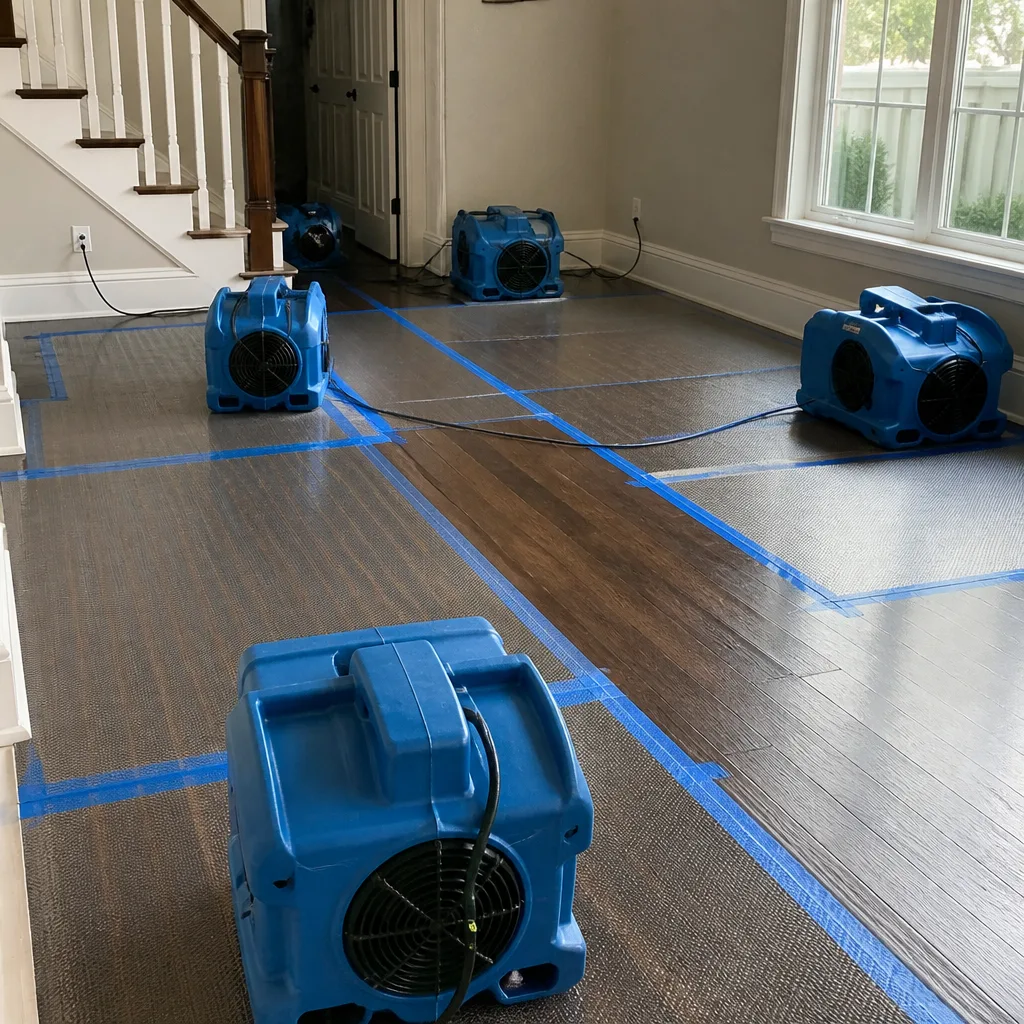
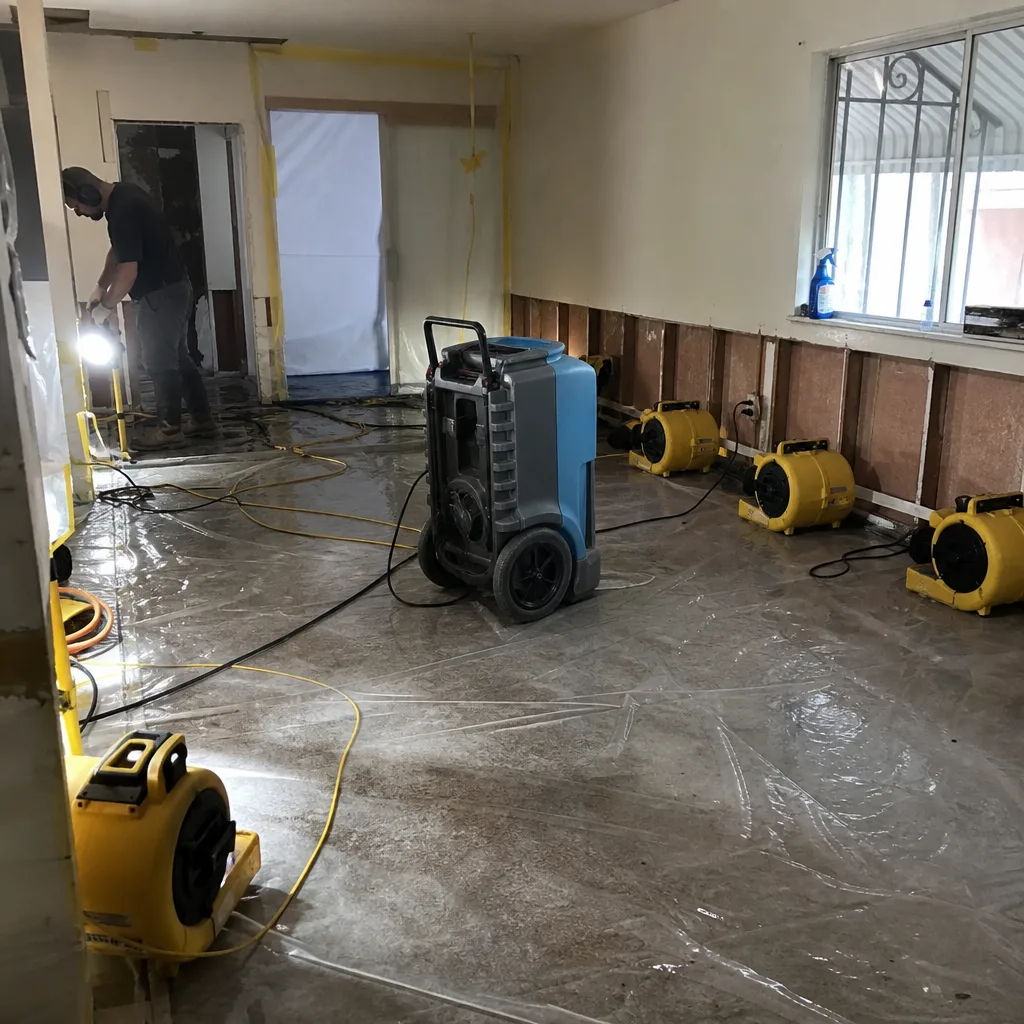
Dri-Eaz and Phoenix LGR dehumidifiers paired with XPOWER and B-Air axial air movers create controlled airflow. Injectidry wall cavity drying panels deliver targeted drying to Wilmington’s plaster and lath or early drywall systems without destructive demolition where possible.
4. Cleaning & Sanitization
HEPA air scrubbers run continuously during active work, capturing particulates including the industrial baseline load that Wilmington’s harbor proximity introduces. Antimicrobial treatment follows IICRC standards for the water category documented.
5. Environmental Due-Diligence & Abatement
When petroleum sheening, soil odor, or asbestos-containing materials appear, we pause standard mitigation, set full containment, and coordinate third-party environmental sampling. This sequencing, abatement-first, protects both occupant health and claim integrity.
6. Repairs & Restoration
Once dry standard is verified with documented moisture readings, we rebuild to pre-loss condition with a written scope, photo record, and the 365-Day Done Right Promise stamped on every job under The Haven Standard.
Need Emergency Water Damage Restoration in Wilmington Now?
Crews minutes away, answering live 24 hours a day. The sooner we start, the less it costs.
Working With Your Insurance Company
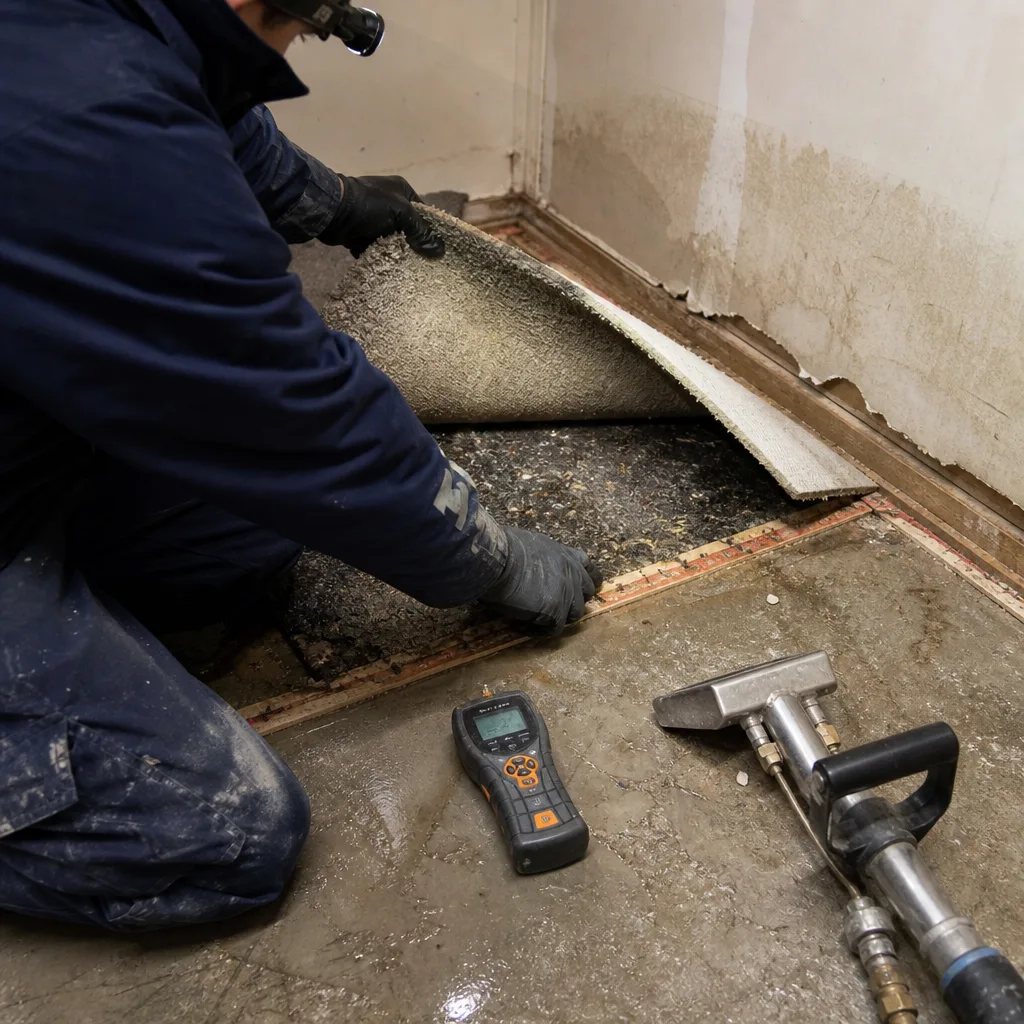
Documentation from the first hour is what turns a restoration invoice into a claim your carrier pays without a fight. We photograph every room before touching anything, log moisture readings at every visit, and build estimates to industry-standard formats that adjusters recognize. Direct communication with your carrier means you’re not translating between two professionals who’ve never spoken.
Our Los Angeles office coordinates scheduling and documentation review, while crews serve Wilmington locally with the equipment and familiarity this market demands. Every estimate is line-itemed, every drying day is justified with psychrometric data, and every scope change is written and photographed before execution.
What We Provide Your Insurer
- Thorough documentation of the loss
- Photos of all damage, room by room
- Moisture readings and drying logs
- A detailed, line-item scope of work
- Direct coordination with your carrier
Built for Wilmington’s Loss Calendar
January through March brings the heaviest rain window, with saturated ground and aging galvanized supply lines vulnerable to pressure spikes when temperatures drop below 50°F overnight. April and May see marine layer intensification, fog rolling inland past Anaheim Street and holding humidity against structures already compromised by winter leaks. June through October is dry on paper, but Wilmington’s industrial heat island and poor attic ventilation in uninsulated bungalows create condensation events that mimic active leaks.
November and December return the rain pattern, and this is when we see the most severe losses: delayed maintenance meets first storms, and homeowners discover supply line corrosion only when the ceiling gives way. The harbor’s storm surge risk, while lower than direct coastal properties, still elevates groundwater tables enough to push hydrostatic pressure through slab cracks in older construction near the refineries.
Water Damage Restoration Across Wilmington’s Neighborhoods
Near the Port of Los Angeles along Harry Bridges Boulevard, commercial and mixed-use buildings face roof-drainage failures during marine layer events, with flat-roof ponding that migrates through parapet walls into tenant spaces. The residential blocks between Anaheim Street and Pacific Coast Highway, dense with 1950s wood-frame rentals, show the highest frequency of galvanized pipe failures and the associated asbestos floor tile exposures when walls are opened for drying.
West of Figueroa Street, closer to the Carson border, larger lots with detached garages see slab seepage during winter rain, with water tracking under foundation plates and wicking into wall bottom plates before any interior sign appears. The area near Banning Park, with its slightly elevated grade and older tree canopy, experiences more roof and gutter overflow damage than pipe failures, but the resulting Category 2 or 3 water from organic debris complicates the sanitization scope.
On a 1950s wood-frame bungalow near the docks, our crew responded to a burst galvanized supply line that had been weeping inside a wall for days; moisture mapping showed saturation well past the visible stain, and the standing water in the crawlspace had a faint petroleum sheen. Because pump jacks operate on active lots within walking distance of that street, we flagged the soil odor and paused standard mitigation to run due-diligence sampling before any pack-out or sub-slab work. After abating the asbestos-containing floor tile uncovered at the wall base and completing containment, we set Dri-Eaz and Phoenix air movers with Injectidry wall cavity panels and logged structural drying over several extra days to overcome the harbor humidity, then finished with antimicrobial treatment and documented pre-loss condition for the carrier.
Specialized Water Damage Restoration Services We Offer in Wilmington
Emergency Water Extraction
Truck-mounted and portable extraction units remove standing water from Wilmington’s tight crawlspaces and low-clearance basements. Response time to the harbor area averages under 45 minutes, critical when Category 3 flooding from storm drains or sewage backup is involved.
Structural Drying & Dehumidification
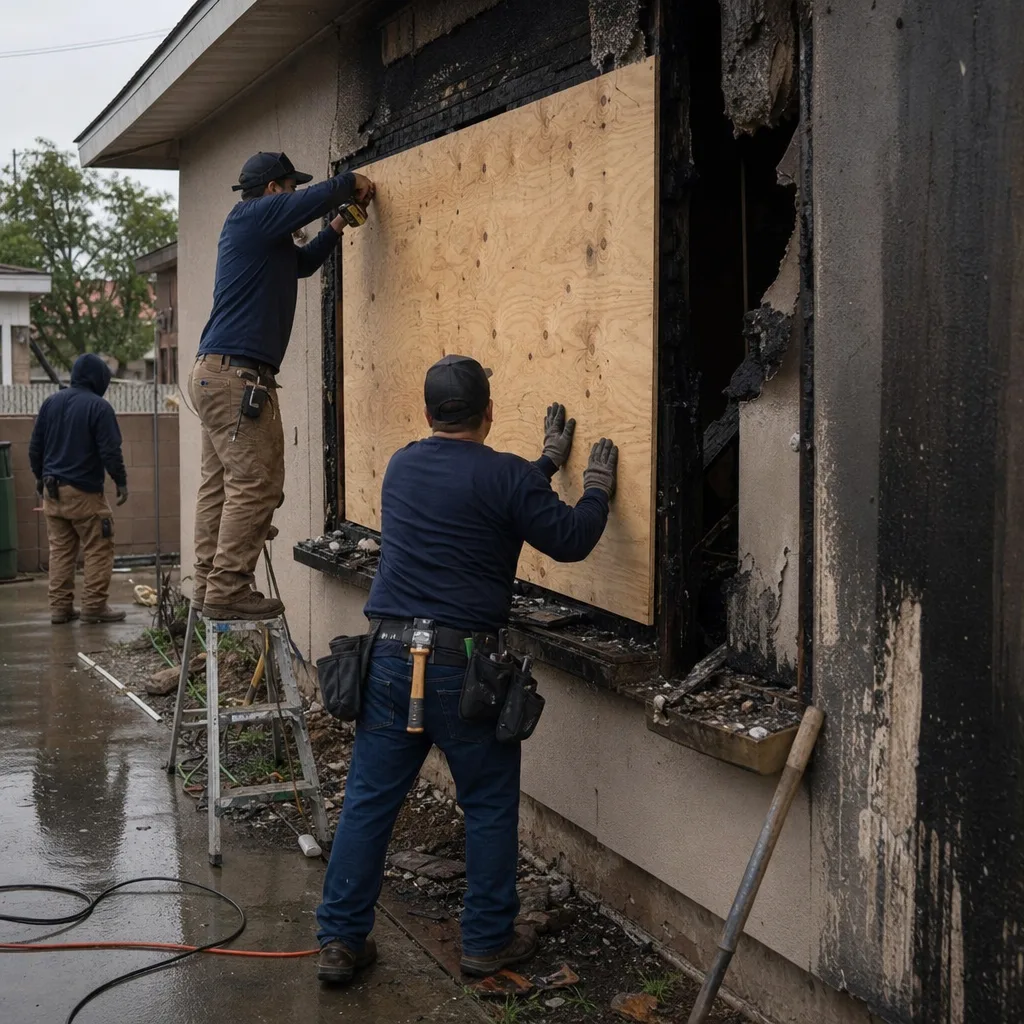
LGR dehumidifiers and desiccant systems sized to the harbor’s high ambient humidity, not inland dry standards. Tertiary drying with Injectidry panels for wall cavities and hardwood floor mat systems for the original oak common in pre-1960 bungalows.
Flood Cleanup
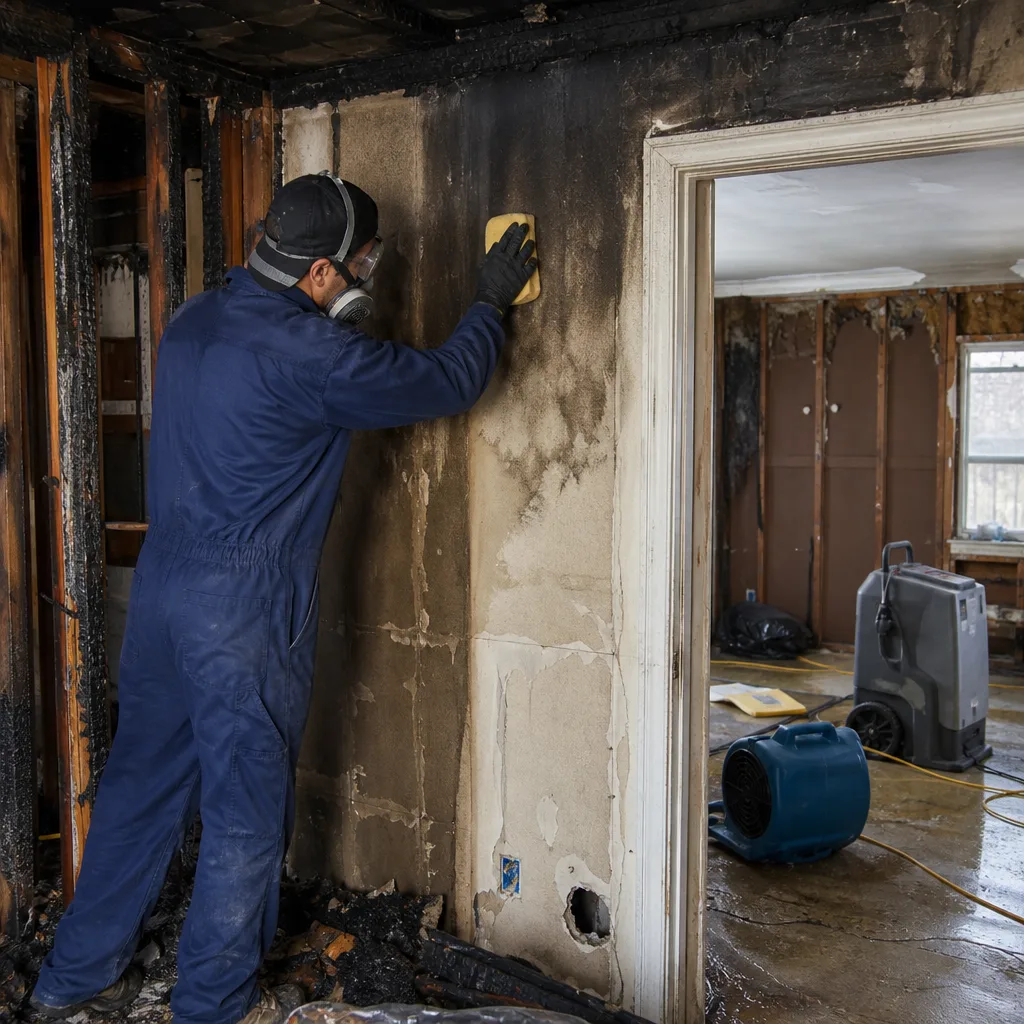
Groundwater and storm-surge flooding in Wilmington often carries petroleum residue from legacy oil-field infrastructure. We test before we treat, documenting sheening and odor for both health and claim purposes.
Burst Pipe Restoration
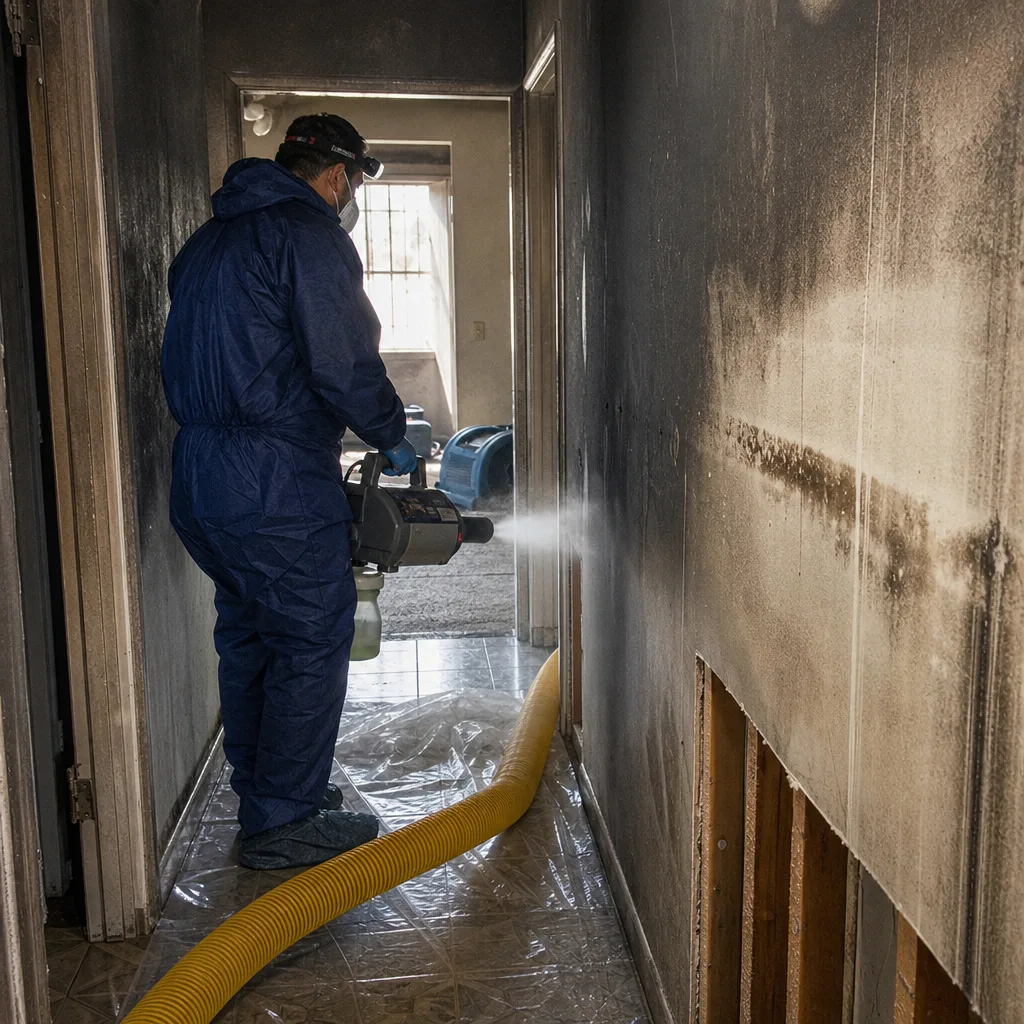
Galvanized supply lines in Wilmington’s housing stock fail at corroded joints and pinholes, frequently hidden inside walls for days before visible damage appears. We map the full migration path, abate any asbestos insulation, and scope replacement versus repair with your adjuster.
Basement Water Removal
Below-grade spaces in Wilmington’s older construction face hydrostatic pressure through slab cracks and inadequate perimeter drainage. Submersible pumps, extraction, and vapor barrier installation where the original construction omitted it.
Ceiling & Roof Leak Water Damage
Marine layer condensation and winter rain penetration through aging roof assemblies. We trace the leak source, document roof system failure versus maintenance issues for claim clarity, and dry the assembly without unnecessary demolition where possible.
What happens when you call
- 1
A real person answersNo phone trees - you reach a local pro.
- 2
You get an upfront price rangeHonest numbers before anyone is dispatched.
- 3
A background-checked tech heads outLicensed & insured, dispatched right away.
- 4
You approve before work beginsNothing starts until you say go.
Water Damage Restoration Costs in Wilmington, CA
Emergency water extraction in Wilmington runs $450-$950 for a typical residential call, with structural drying and dehumidification adding $1,200-$3,200 depending on affected square footage and equipment count. Category 3 flood cleanup with full sanitization and contents handling ranges $3,500-$7,500. Burst pipe restoration with wall repair and finish replacement typically falls between $2,800-$6,500. Asbestos abatement, when triggered by Wilmington’s legacy construction, adds $1,500-$4,000 depending on material type and containment complexity.
What moves the price: water category (Category 1 vs. 3 changes labor and disposal costs significantly), affected square footage, whether asbestos or petroleum contamination triggers environmental steps, and how long water sat before extraction began. Insurance typically covers sudden and accidental water damage; gradual leaks and maintenance issues are usually excluded. We provide a written price before any work starts, Haven Standard, Clause 1, and offer a Free Second Opinion on any competitor’s written estimate.
We Also Serve Cities Near Wilmington
DryMark Restoration Compton responds throughout the harbor area, including Lakewood to the north, Harbor City immediately across the freeway, Carson to the east, and Lomita to the south. Each market carries distinct housing stock and loss patterns, and crews are routed from our Los Angeles office with equipment and documentation protocols matched to the specific city’s requirements.
Serving Wilmington, CA - Our Local Coverage Area
We’re based in the Wilmington area and know this community well. Use the map below to see our service coverage - if you’re nearby, we can almost certainly help.
Wilmington Water Damage Restoration Questions, Answered
Why does water damage restoration in Wilmington sometimes require environmental testing that other LA neighborhoods don’t?
Wilmington’s position between the Port of LA and the Phillips 66 / Valero refineries means water damage can mobilize petroleum-contaminated soil and elevate baseline VOCs and particulates in ways that don’t occur in Torrance or San Pedro. Active pump jacks operate within walking distance of residential streets, and legacy oil-field infrastructure underlies much of the neighborhood. When our crews find petroleum sheening in standing water or detect soil odor during crawlspace work, we pause standard mitigation and run due-diligence sampling before any sub-slab or extensive demolition proceeds. This protects occupant health and prevents claim disputes over pre-existing environmental conditions. Call (628) 226-1011 if you’ve noticed unusual odors or discoloration in flood water.
Our Wilmington bungalow flooded from a burst galvanized pipe - how fast do we need to act before mold starts?
Mold colonization on wet drywall in Wilmington typically begins within 24 to 48 hours, faster than inland markets because the San Pedro Bay marine layer maintains ambient humidity above 65 percent even in so-called dry months. The combination of harbor moisture and trapped industrial air pollutants creates compounded indoor air contaminant profiles that accelerate microbial growth. We recommend emergency extraction within 4 hours of discovery and continuous dehumidification until moisture readings confirm dry standard, which in Wilmington’s poorly insulated bungalows often requires several extra days compared to inland drying timelines. Call (628) 226-1011 for immediate dispatch.
What does ‘Category 3’ water mean for a Wilmington flood cleanup, and does it change what we can keep?
Category 3 water, also called black water, carries pathogenic, toxigenic, or other harmful agents from sewage, ground flooding, or storm drain backup. In Wilmington, Category 3 events frequently include additional petroleum or chemical loading from street runoff and legacy infrastructure, raising the contamination profile beyond standard sewage backup. Porous materials that absorb Category 3 water, including carpet, pad, drywall below the water line, and upholstered furniture, must be removed and disposed of per IICRC S500 standards. Non-porous items can sometimes be cleaned and sanitized if addressed promptly. We document every salvage decision with photos for your claim file. Call (628) 226-1011 for a free assessment of what can be saved.
Do the older homes in Wilmington need asbestos abatement before water damage restoration can start?
Wilmington’s housing stock, dominated by 1940s-1960s wood-frame bungalows and small stucco rentals, frequently contains asbestos in floor tiles, textured ceilings, and pipe insulation. If water damage restoration requires cutting into or disturbing these materials, abatement must precede standard mitigation to prevent cross-contamination. We test suspect materials during our initial inspection and, if positive, set full containment before any drying or demolition begins. This sequencing adds time and cost, but skipping it risks health exposure and claim denial. Haven Standard, Clause 1: the written price includes this step when needed, with no surprise additions once work is underway. Call (628) 226-1011 to schedule inspection.
How does the harbor marine layer affect drying times for water damage in Wilmington?
The San Pedro Bay marine layer pushes persistent coastal humidity directly into Wilmington’s older, poorly insulated housing stock, creating vapor pressure conditions that slow evaporation and extend structural drying timelines by 30 to 50 percent compared to inland cities. Industrial air pollutants trapped by the same atmospheric conditions can also deposit on wet surfaces, requiring additional cleaning and HEPA filtration steps. Our crews size dehumidifier capacity to these actual conditions, not textbook dry-climate standards, and we don’t close out a job until documented moisture readings confirm the structure has reached equilibrium with local ambient conditions. Call (628) 226-1011 if a previous contractor declared your property “dry” but odors or staining persist.
How quickly can DryMark Restoration Compton actually get to my Wilmington address?
Our response commitment to Wilmington is 45 minutes from call to on-site, 24 hours a day, 7 days a week. Crews are staged with knowledge of harbor area traffic patterns and the industrial access routes around the port and refineries. The live person who answers your call at (628) 226-1011 confirms your address, briefs the crew on known hazards like active pump jack proximity or suspected asbestos, and dispatches immediately.
Will my insurance cover the full water damage restoration, or will I pay out of pocket?
Sudden and accidental water damage from burst pipes, appliance failures, or storm intrusion is typically covered under standard homeowners policies, subject to your deductible. Gradual damage from maintenance neglect, slow leaks, or foundation seepage is usually excluded. We document the loss cause with photos and moisture mapping from the first hour, build estimates to Xactimate standards your adjuster recognizes, and coordinate directly with your carrier. Our written scope, delivered before work begins, separates covered and non-covered items so you know your exposure upfront. Call (628) 226-1011 and bring your policy declaration page to the inspection.
Can we stay in our home during water damage restoration?
Occupancy depends on water category, extent of demolition, and whether asbestos abatement or environmental sampling is active. Category 1 losses with limited demolition and no hazardous material concerns may allow partial occupancy with containment barriers. Category 3 flooding, active asbestos abatement, or petroleum contamination work requires temporary relocation for safety and regulatory compliance. We specify occupancy status in the written scope before work begins, so you’re not surprised by a move-out order after crews arrive. Call (628) 226-1011 to discuss your specific situation.
Written by Alicia Brennan, Owner at Back to Dry Restoration, serving Wilmington since 2011 under The Haven Standard.
Water Damage Restoration in Nearby Areas