
Last updated September 23, 2026
Free visual inspection and a written scope of work before any mitigation begins - photos, moisture readings, and drying logs go in your claim file
The scope we write is the scope we bill. Anything new gets shown to you, in writing, before we touch it.
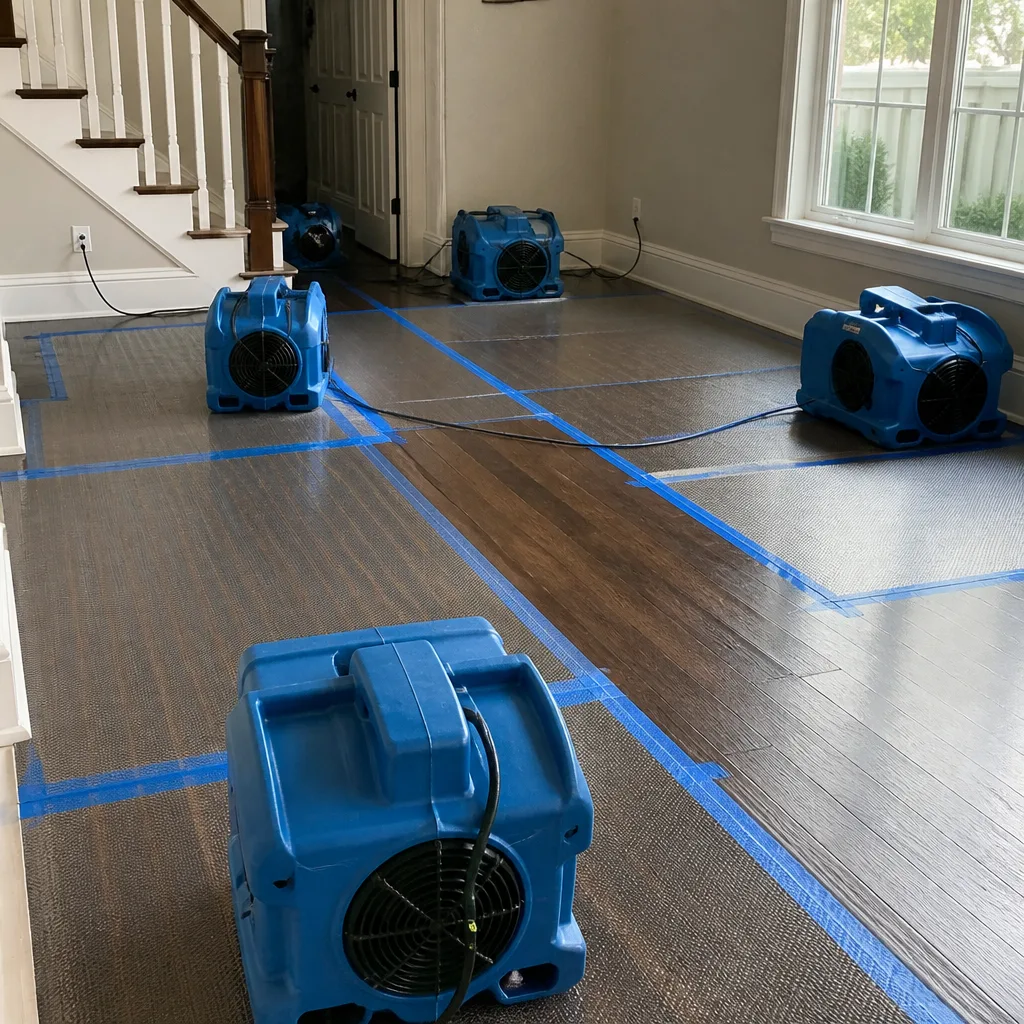
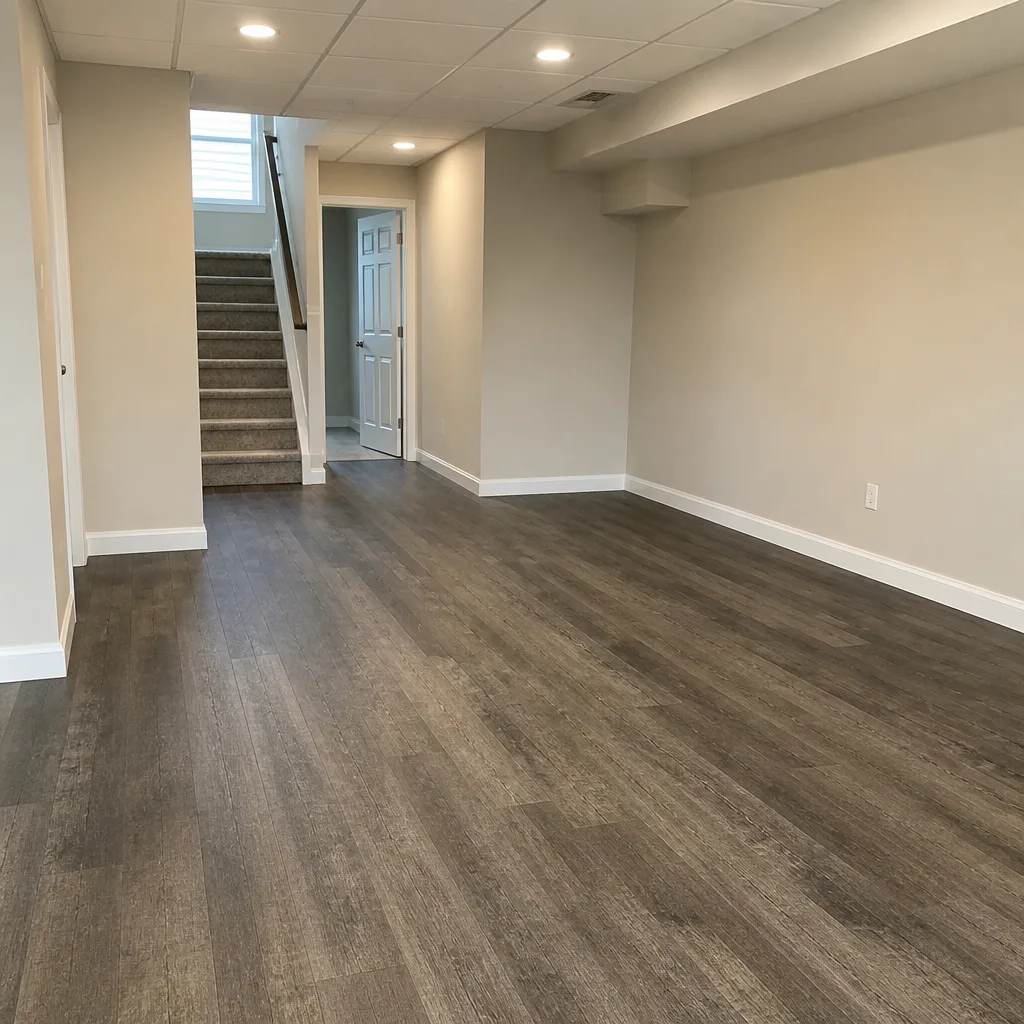
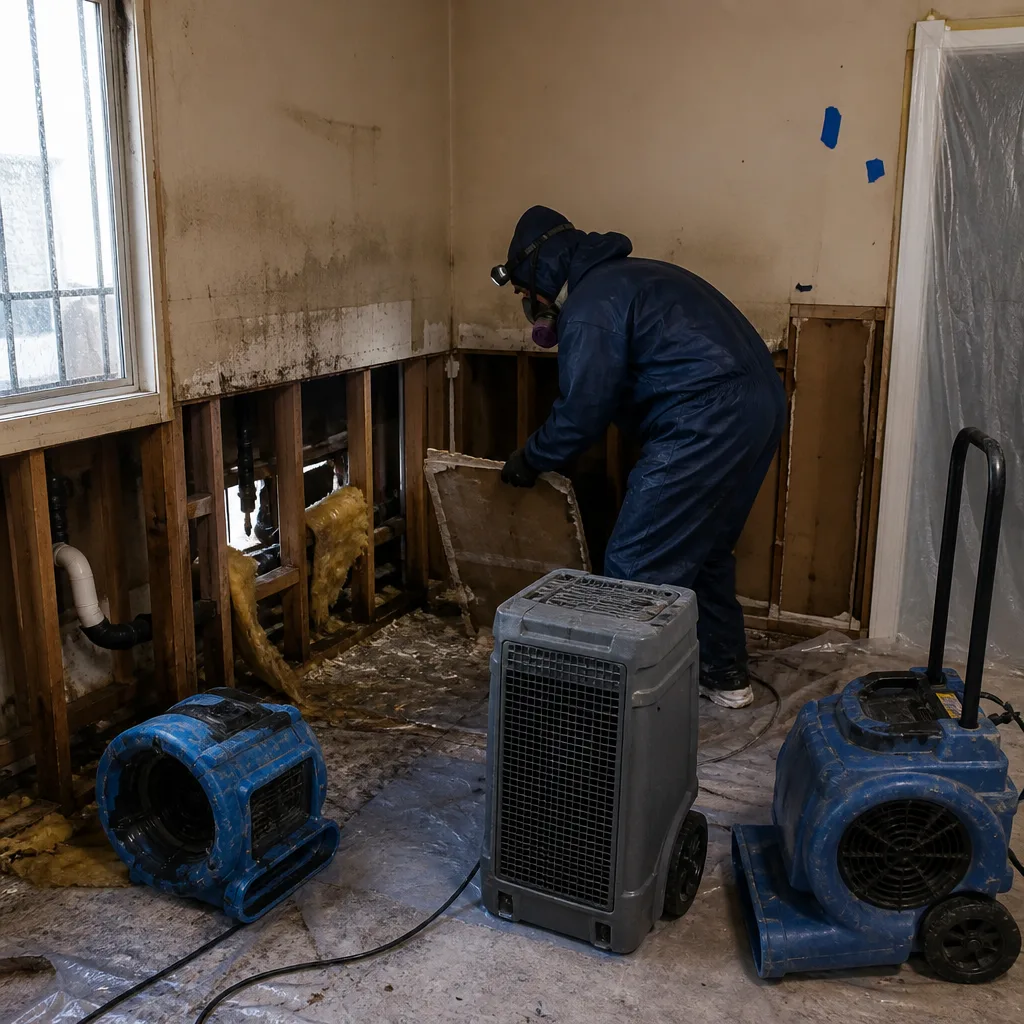 Before
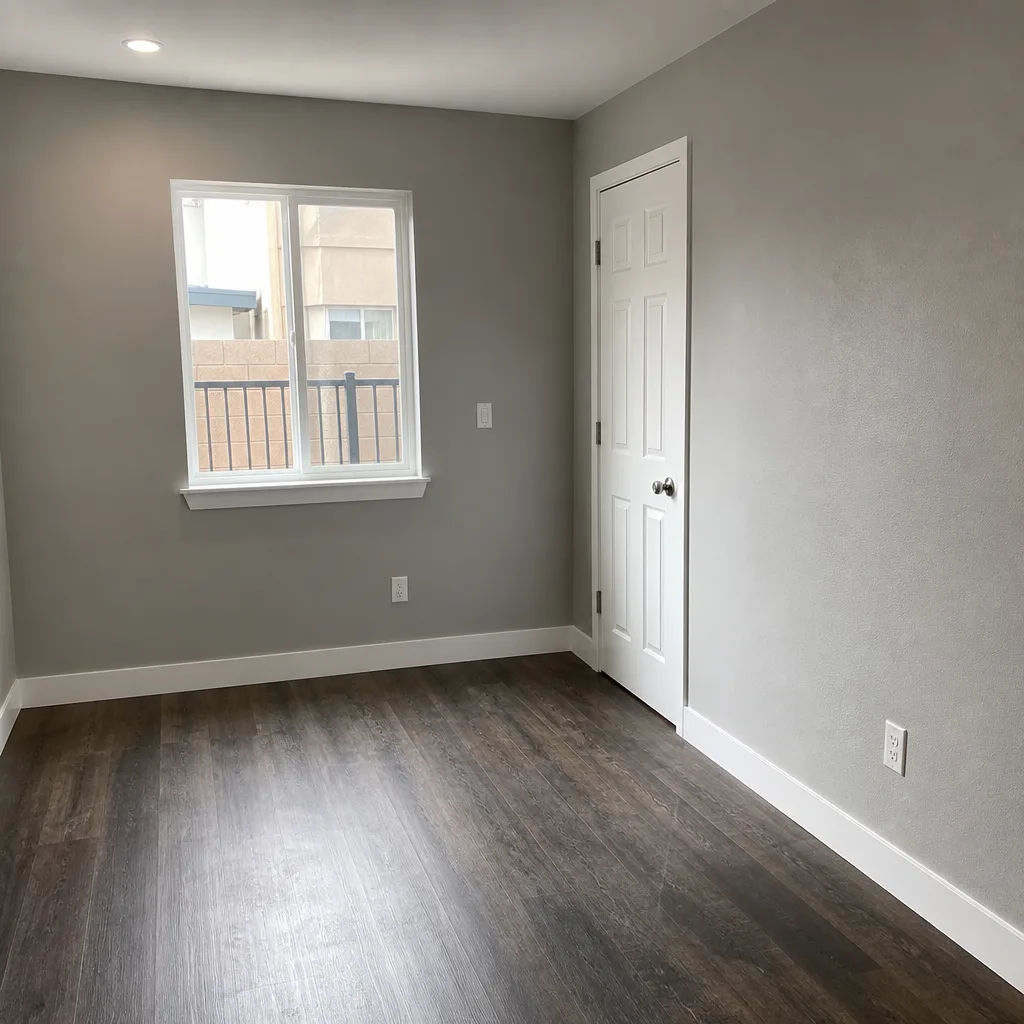 After
After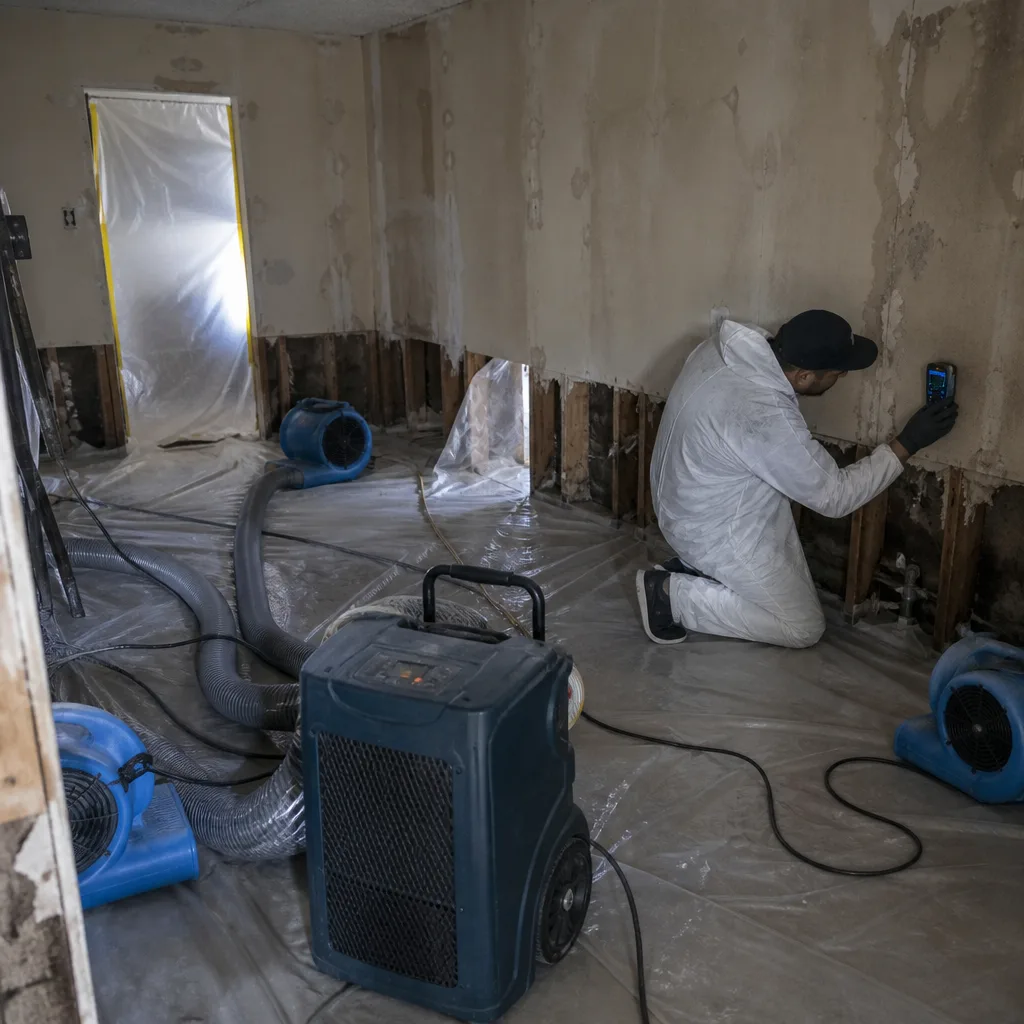 Before
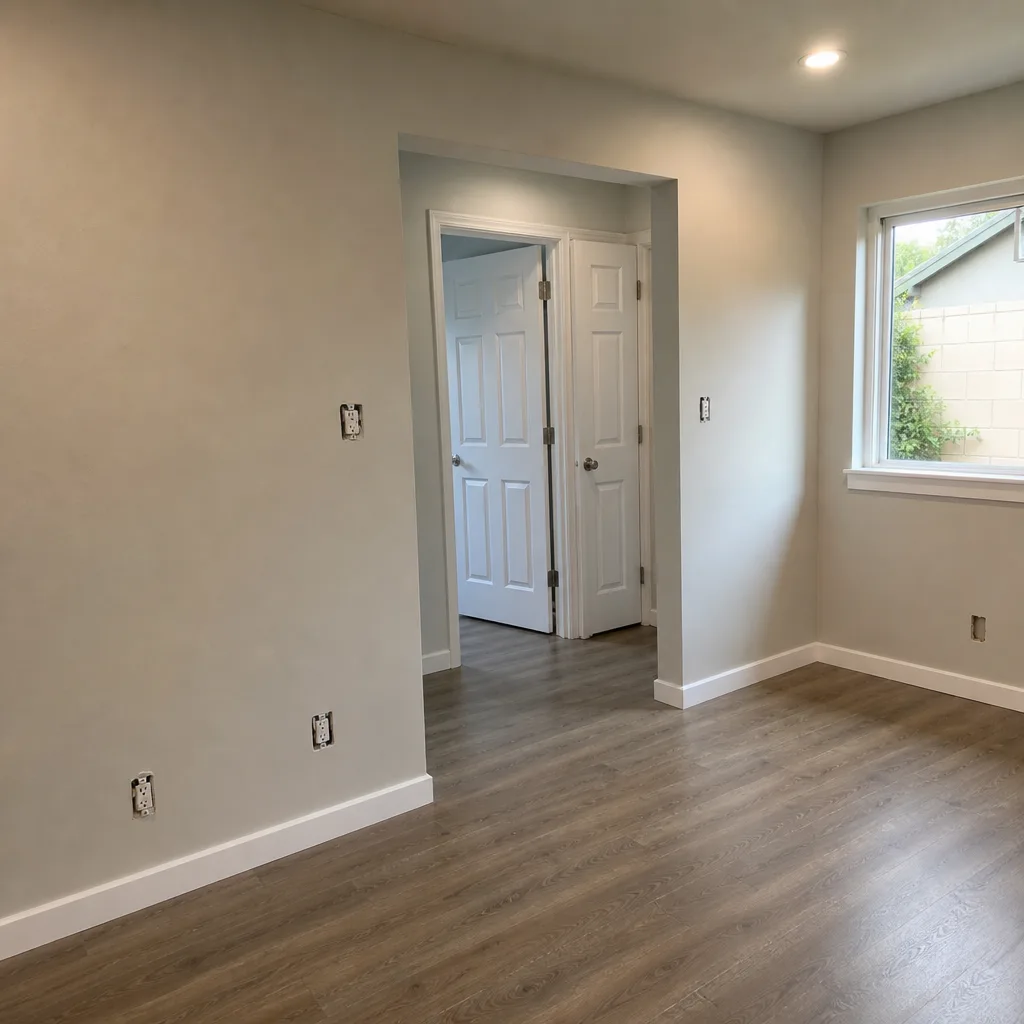 After
After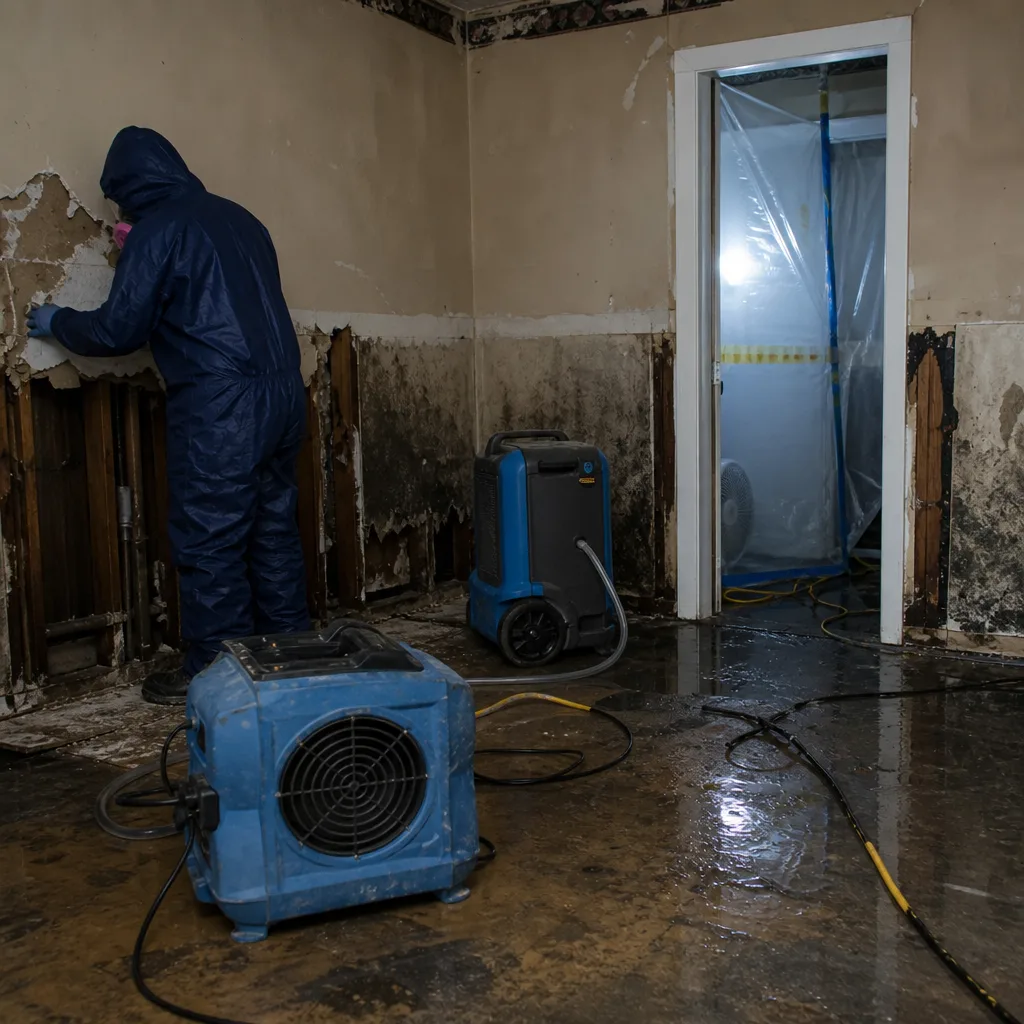 Before
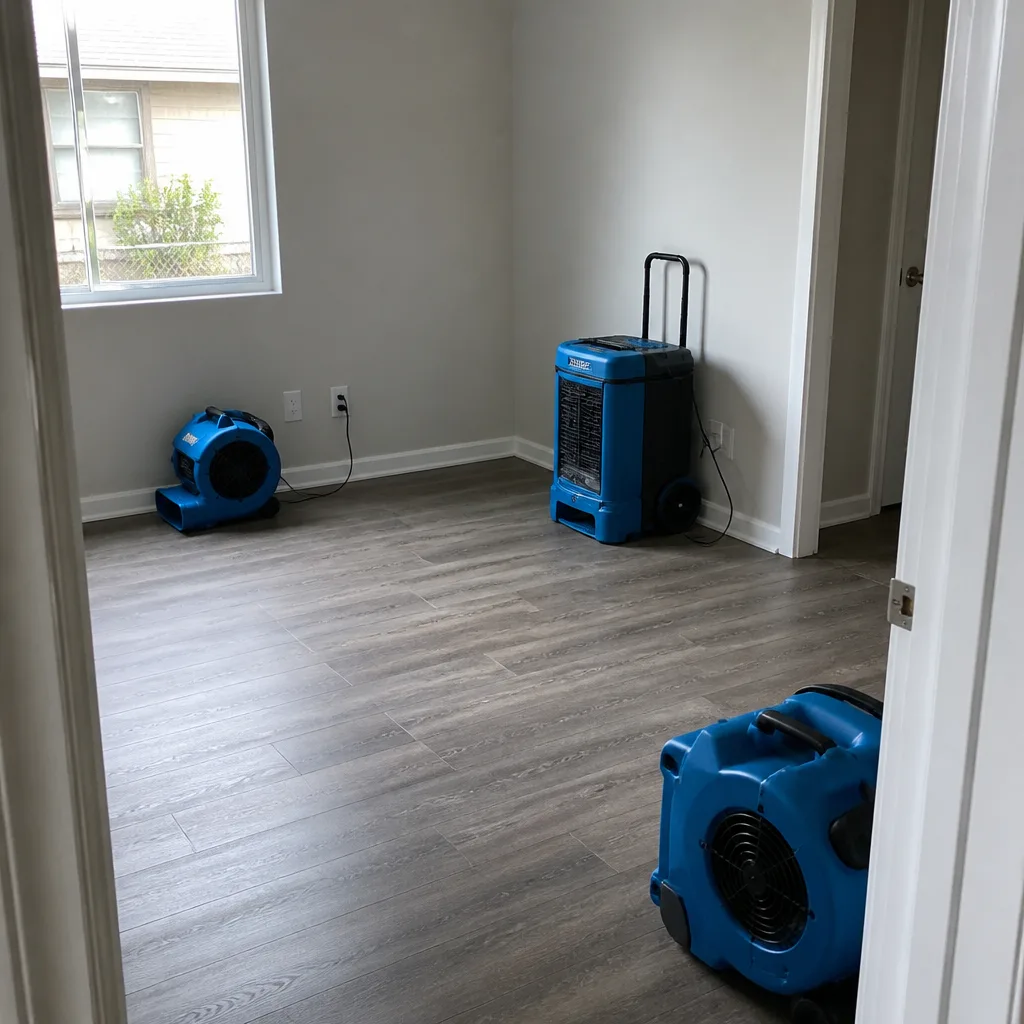 After
AfterHow to Hire a Damage Restoration Contractor in Compton: A Step-by-Step Guide
California’s CSLB license lookup takes 30 seconds, but it won’t tell you whether a contractor’s written scope will hold up when an insurer sends an independent adjuster to verify line items. That gap is where most Compton claims get cut. In our experience restoring homes across this market since 2011, we’ve seen homeowners lose thousands on valid claims because the contractor they hired produced a one-page invoice with no equipment serial numbers, no daily moisture logs, and no photo record of what was wet and what was dry. This guide walks you through the hiring process that protects your property and your claim, and you can explore more guides & resources on our blog.
Quick Answer
To hire a damage restoration contractor in Compton, verify five documents before anyone enters your home: a written scope of work, a line-item price, an equipment list with serial numbers, a drying protocol with daily moisture targets, and a photo schedule documenting every visit. A valid CSLB license and certificate of insurance are necessary but not sufficient; the paperwork that survives an adjuster’s audit is what determines whether your insurer pays the full claim.
Table of Contents
- Why Documentation Beats Credentials Alone
- The Five Documents Every Contractor Must Produce Before Work Begins
- How to Read a Certificate of Insurance
- Red Flags: Post-Storm Contractor Surge in Compton and South LA
- Using CSLB Complaint History and Arbitration Records
- Interview Questions That Reveal Xactimate Competence
- Common Mistakes to Avoid
- When to Call a Professional
- Frequently Asked Questions
- The Bottom Line
BeforeAfterWhy Documentation Beats Credentials Alone
The standard advice for hiring a contractor in Compton starts and ends with the California State License Board. Check the license number, confirm it’s active, verify workers’ compensation coverage. This is sound practice. It’s also incomplete.
Here’s what we’ve learned from 12,000 homes restored since 2011: an active CSLB license tells you a contractor met the state’s minimum requirements at some point. It does not tell you whether that contractor’s documentation will survive the audit that follows 60 to 90 percent of water damage claims in Los Angeles County. Insurers do not pay invoices. They pay documented scopes that match their pricing software line by line.
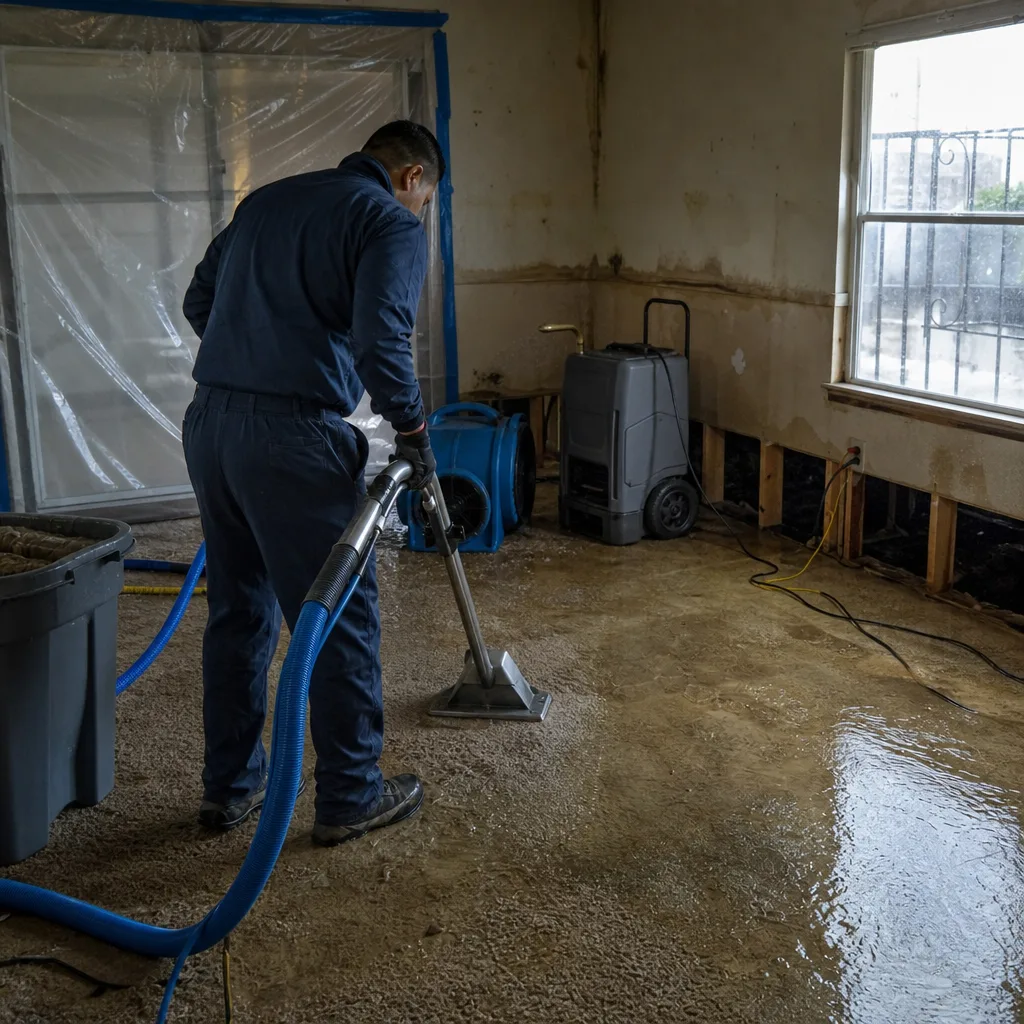
When an independent adjuster reviews your claim, they open Xactimate, the industry-standard estimating platform, and compare your contractor’s invoice against benchmark unit costs for every action taken. If your contractor billed for 12 air movers but only photographed 8, the line gets cut. If they charged for three days of dehumidification but the drying log shows relative humidity hit target on day two, the third day gets disputed. If there is no drying log at all, the entire invoice becomes negotiable.
The Compton market compounds this problem. Many homes here were built between 1945 and 1975 with original plaster and lath, hardwood subfloors, and minimal vapor barriers. These assemblies dry differently than modern drywall-over-insulation construction. A contractor who documents “drywall removal, 12 square feet” without noting the plaster substrate and lath condition is setting up a supplement request that will delay your claim by weeks. The adjuster will ask: was the lath salvageable? Was a moisture barrier present? Your contractor’s photo record should already answer these questions.
This is why we built DryMark Restoration Compton around The Haven Standard. Every job starts with a written price before work begins - Haven Standard, Clause 1. Every visit produces a photo record. Every drying log tracks psychrometric data, which is the measurement of temperature, relative humidity, and vapor pressure that determines when materials are actually dry, not just surface-dry. These documents turn restoration invoices into claims that insurers pay without a fight.
The Five Documents Every Contractor Must Produce Before Work Begins
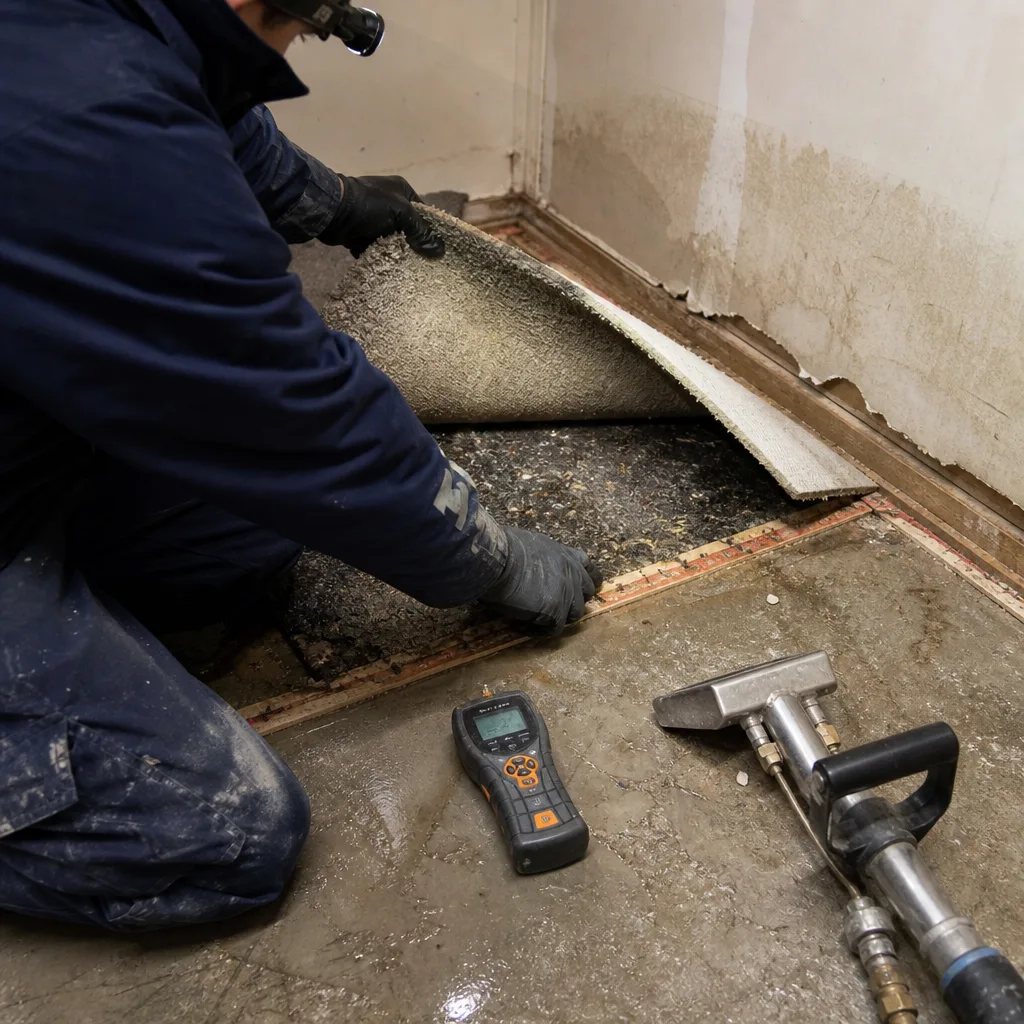
Before any crew enters your Compton home, request these five documents. Their presence or absence predicts your claim outcome with near-certainty.
1. Written Scope of Work
This is not an estimate. A scope defines exactly what will be done, room by room, material by material. For water damage, it specifies which building assemblies are affected, which will be dried in place, and which require removal. For mold remediation in Compton, it identifies the square footage of visible growth, the classification of the water source (Category 1, 2, or 3 per IICRC S500), and the containment strategy.
A proper scope for a Compton bungalow with plaster walls reads differently than one for a 1990s tract home with drywall. The plaster scope notes: “Hydroscopic material - extended drying timeline required. Monitor for efflorescence and substrate integrity.” The drywall scope notes: “Standard gypsum panel, 1/2 inch, removal to 24 inches above visible water line.” If your contractor’s scope doesn’t distinguish between these, they don’t understand what they’re drying.
2. Line-Item Price
Haven Standard, Clause 1: a written price before work starts, every time, with no exceptions. This price must be line-itemed, not lump-sum. “Water damage restoration: $4,500” is not a line-item price. “Air mover, standard, per day: $X; Dehumidifier, LGR, per day: $Y; Moisture mapping and documentation, per visit: $Z” - this is what an adjuster can verify against Xactimate benchmarks.
We deliver our written prices in this format because it’s the format adjusters use. When your contractor speaks the same language as your insurer’s software, disputes drop and payment speeds up.
3. Equipment List with Serial Numbers
Professional-grade drying systems from Dri-Eaz, Phoenix, XPOWER, B-Air, and Injectidry are standard in this industry, as detailed in our Water Damage Restoration Maintenance Checklist for Compton Homeowners. What’s not standard is documenting which specific units are deployed on your job. Serial numbers matter because they prove the equipment was actually on-site, not just billed. Photo the serial plate. Match it to the invoice. This single step eliminates a common source of claim disputes.
Injectidry systems, for example, are used for hardwood floor drying and wall-cavity injection. A contractor who bills for Injectidry equipment but only shows axial fans in photos has a documentation problem that will cost you.
4. Drying Protocol with Daily Moisture Targets
The drying protocol specifies the target moisture content for each material class and the psychrometric conditions required to reach it. Wood framing in Compton’s climate typically targets 12-15% moisture content. Drywall targets below 1% above baseline for that structure. The protocol also defines the drying class (1 through 4 per IICRC S500) and the anticipated timeline.
Without daily moisture readings documented to IICRC, RIA, and IFA standards, your contractor cannot prove they dried your home; they can only claim they did. Daily drying logs are the evidence that transforms a claim from argument to fact.
5. Photo Schedule Documenting Every Visit
Our standard deliverable includes a photo record on every visit - never an upsell. The schedule should specify: pre-loss documentation, moisture mapping, equipment placement, progressive drying shots, and post-verification readings. Each photo is time-stamped and geotagged. This is not excessive. This is what prevents an adjuster from reducing your claim by 30% for “insufficient documentation.”
How to Read a Certificate of Insurance
Every legitimate restoration contractor in Compton carries general liability and workers’ compensation insurance. Fewer carry the coverage types that actually matter for your specific loss. Here’s how to read the certificate without missing the gaps.
General Liability: Verify the policy is active and the aggregate limit meets or exceeds $1 million. Check whether the policy includes “completed operations” coverage - this protects you if a drying error (say, incomplete dehumidification) causes mold growth months later.
Pollution Liability: Standard general liability excludes mold, asbestos, and other biological contaminants. For mold remediation or sewage cleanup, your contractor needs a separate pollution liability policy or a pollution endorsement on their general liability. If the certificate doesn’t show this, and your job involves Category 3 water or visible mold, you’re exposed.
Workers’ Compensation: California requires this for any contractor with employees. Verify the policy is active and the employee count matches the crew size you’re expecting. An unlisted worker injured on your property becomes your homeowners insurance problem.
Additional Insured Endorsement: Request that you be named as additional insured on the policy for the duration of your project. This costs the contractor nothing and gives you direct rights under their policy if a claim arises.
Certificate Authenticity: Call the insurance agent listed on the certificate to confirm the policy is active. Do not accept a certificate older than 30 days. In the post-storm surge environment around Compton and South LA, we’ve seen contractors present expired or fraudulent certificates to homeowners under pressure.
Red Flags: Post-Storm Contractor Surge in Compton and South LA
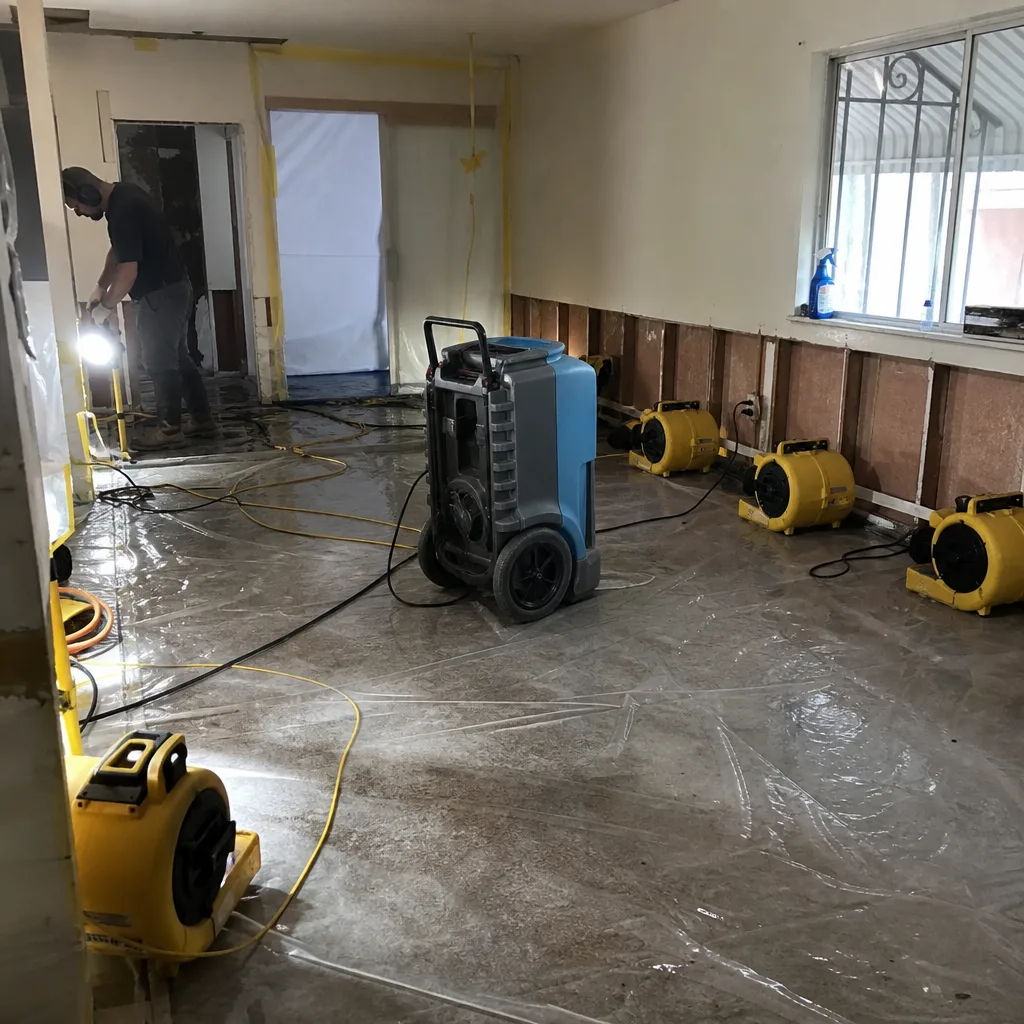
Compton’s location in the Los Angeles Basin makes it vulnerable to winter storm runoff, urban flooding from the Compton Creek watershed, and the occasional Santa Ana wind-driven fire season, all covered in The Complete Guide to Damage Restoration in Compton. Each event triggers a predictable pattern: out-of-state contractors arrive within 48 hours, set up temporary offices in rented suites, and start knocking on doors before FEMA has finished its damage assessment.
These surge contractors are not automatically dishonest. Many are legitimate operators responding to market demand. But the incentives are misaligned. They’re working on volume, not relationships. They’ll be gone before your claim is settled. Here’s what to watch for:
- Verbal-only change orders. Any scope modification must be in writing, with a revised price, before work proceeds. Haven Standard, Clause 1 applies to changes too. Surge contractors often discover “additional damage” mid-job and demand immediate payment for work already started. This is a documented pattern in CSLB complaints following the 2023 California winter storms.
- Out-of-state license plates on work vehicles. Not definitive proof of anything, but a prompt to verify: is this contractor licensed in California, or are they operating under a temporary registration that expires before your warranty does?
- Pressure to sign assignment of benefits. This document transfers your insurance claim rights to the contractor. It’s legal in California but heavily regulated. Never sign under pressure. A legitimate contractor completes the work, documents it thoroughly, and lets you or your insurer pay the invoice.
- No local referenceable jobs from before the current event. Ask for three Compton-area jobs completed in the past 12 months, with homeowner contact information. A contractor with no local history has no local reputation to protect.
- Requests for large upfront deposits. California limits down payments to $1,000 or 10% of the contract price, whichever is less, for home improvement contracts. Restoration work is sometimes structured differently, but any demand for full payment before work completion is a violation of standard practice and often a prelude to abandonment.
The Compton climate adds a specific wrinkle: our combination of winter rainfall and summer heat creates ideal conditions for secondary mold growth if initial drying is incomplete. A surge contractor who dries to “looks dry” instead of documented moisture content leaves you with a problem that manifests in July, long after they’ve returned to Texas or Florida.
Using CSLB Complaint History and Arbitration Records
The Contractors State License Board maintains two tools that go beyond the basic license lookup most homeowners use. Learning to read them properly filters out contractors whose documentation problems will become your claim problems.
CSLB Instant License Check
Start at cslb.ca.gov. Enter the license number. Verify:
- License status is “Active”
- Workers’ compensation insurance is on file (required for contractors with employees)
- License bond is current ($25,000 minimum for active licenses)
- No pending disciplinary action
But don’t stop here. The basic lookup doesn’t show complaint history.
CSLB Complaint History
Request the contractor’s disclosure of complaints. California law requires contractors to provide this on request. The disclosure lists:
- Complaints filed with CSLB in the past 10 years
- Judgments or arbitration awards against the contractor
- Pending legal actions
Focus on the pattern, not the count. A single complaint resolved in the contractor’s favor is different from five complaints alleging the same documentation failure. Look specifically for complaints about “incomplete or inadequate documentation,” “failure to provide written estimate,” or “dispute over scope of work.” These map directly to the claim problems we’re describing.
Arbitration Records
CSLB offers mandatory arbitration for disputes under $50,000. Arbitration records are public and reveal how contractors behave when claims go wrong. Search the contractor’s name in Los Angeles County Superior Court records and CSLB arbitration decisions. A contractor with multiple arbitration losses for documentation failures is unlikely to produce the paperwork your insurer requires.
In Compton specifically, check whether the contractor has done work in your neighborhood association or with your insurance carrier’s preferred vendor program. Local familiarity with Compton’s building stock - the plaster-and-lath construction in Richland Farms, the post-war slab foundations in Sunny Cove, the newer developments near the Gateway Towne Center - translates to more accurate scopes and fewer claim supplements.
Interview Questions That Reveal Xactimate Competence
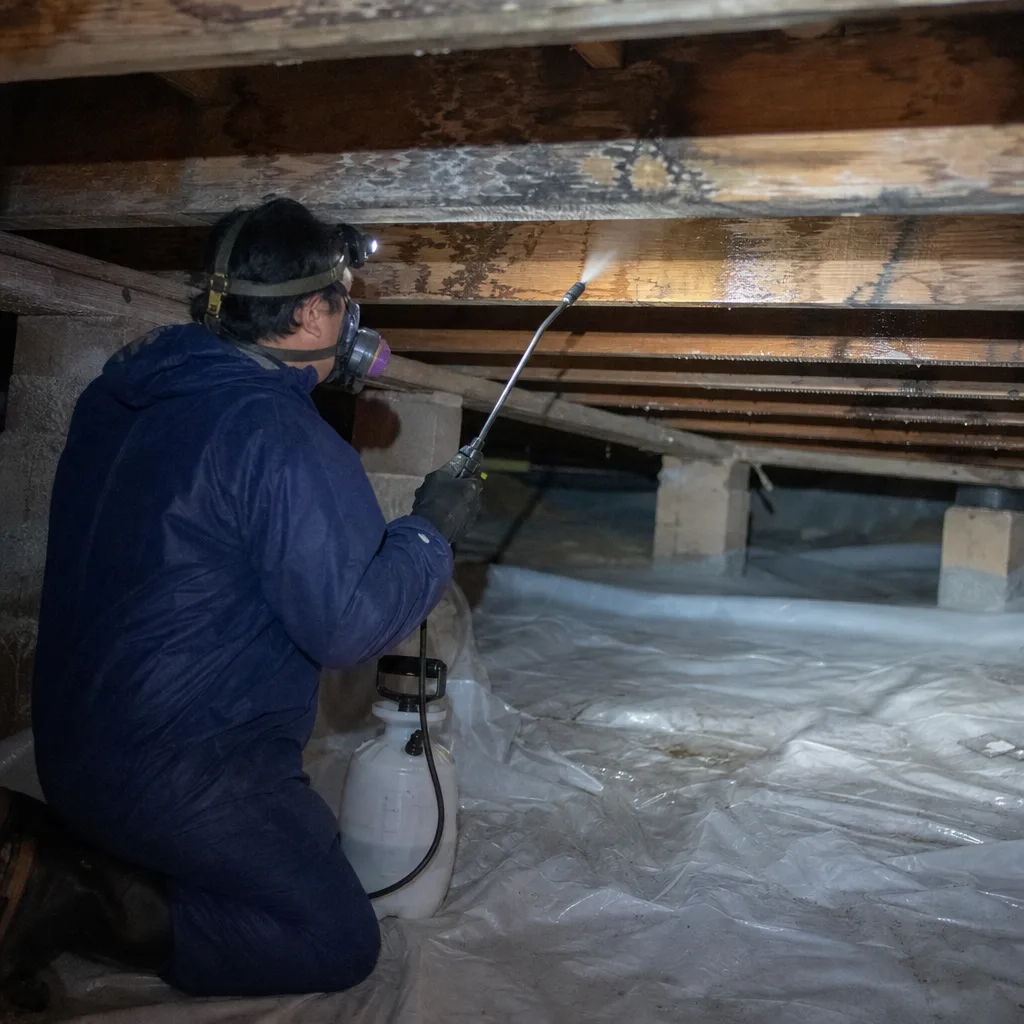
Xactimate is the pricing software used by most major insurers to benchmark restoration costs. A contractor who cannot defend their scope in Xactimate line items is a contractor whose invoice will be reduced. These questions reveal whether they speak the language your adjuster will use.
Question 1: “How do you document equipment charges?”
Competent answer: “We bill per Xactimate line items - DRYAIR for air movers, DEHUM for dehumidifiers - with daily rates supported by our drying logs. Each unit is photographed with serial number visible.”
Concerning answer: “We charge a flat rate for drying.” Or: “We estimate based on experience.” This contractor will struggle when the adjuster requests line-item justification.
Question 2: “What’s your protocol for category and class determination?”
Competent answer: “We classify water per IICRC S500 - Category 1, 2, or 3 based on source and contamination level. We classify the loss structure per Class 1 through 4 based on percentage of wet area and material permeability. This determines equipment count and drying timeline, which Xactimate prices accordingly.”
Concerning answer: “We just dry it out.” Or any confusion between water category and structural class. These are distinct variables with distinct pricing implications.
Question 3: “How do you handle supplemental items discovered during demolition?”
Competent answer: “We document with photos, write a supplemental scope with line-item pricing, and submit to you and your adjuster before proceeding. Haven Standard, Clause 1 applies to supplements - written price before additional work starts.”
Concerning answer: “We just fix it and bill later.” This is how $8,000 jobs become $18,000 disputes.
Question 4: “Can you provide a sample drying log?”
Any contractor documented to IICRC, RIA, and IFA standards should be able to produce a sanitized example showing: date and time of reading, room location, material tested, moisture content percentage, relative humidity, temperature, dew point, and vapor pressure differential. Vapor pressure differential, by the way, is the force that drives moisture from wet materials into the air; it’s the measurement that tells you whether your drying system is actually working or just running.
If they cannot or will not provide this, they are not producing the documentation your claim requires.
Question 5: “What’s your experience with my specific insurance carrier?”
This matters because different carriers audit differently. Some require photo documentation of every moisture reading. Some accept summary logs. Some have preferred drying protocols for specific building types. A contractor who has worked with your carrier before knows the documentation standard that gets claims paid.
At DryMark Restoration Compton, we document to the highest common standard across all major carriers, so our paperwork survives any audit.
Common Mistakes to Avoid
- Hiring based on speed of arrival alone. The contractor who arrives first after a Compton flood is often the contractor who was already in the neighborhood looking for work, not the one best prepared to document your claim properly. Ask for their documentation standard before you ask for their ETA.
- Accepting a verbal estimate over the phone. No legitimate restoration scope can be assessed without moisture mapping and visual inspection. A phone estimate is a marketing tool, not a contract. Insist on an on-site assessment with written deliverables.
- Neglecting to verify pollution liability for mold or sewage jobs. General liability does not cover biological contamination. We’ve seen Compton homeowners discover this gap only after a mold remediation invoice was denied.
- Signing contracts with blank sections. Any contract with blank price fields, blank scope fields, or open-ended “as needed” language violates Haven Standard, Clause 1 and exposes you to unlimited cost escalation.
- Failing to photograph the loss before cleanup begins. Your own photo record, independent of the contractor’s, establishes the baseline that prevents disputes about pre-existing conditions. Document every affected room, every damaged item, every water line on walls before anyone moves anything.
- Assuming your insurance adjuster will catch contractor errors. Adjusters review hundreds of claims. They do not verify every line item unless a discrepancy is flagged. The burden of proper documentation falls on you and your contractor. A sloppy scope that passes initial review can still be clawed back in a subsequent audit.
When to Call a Professional
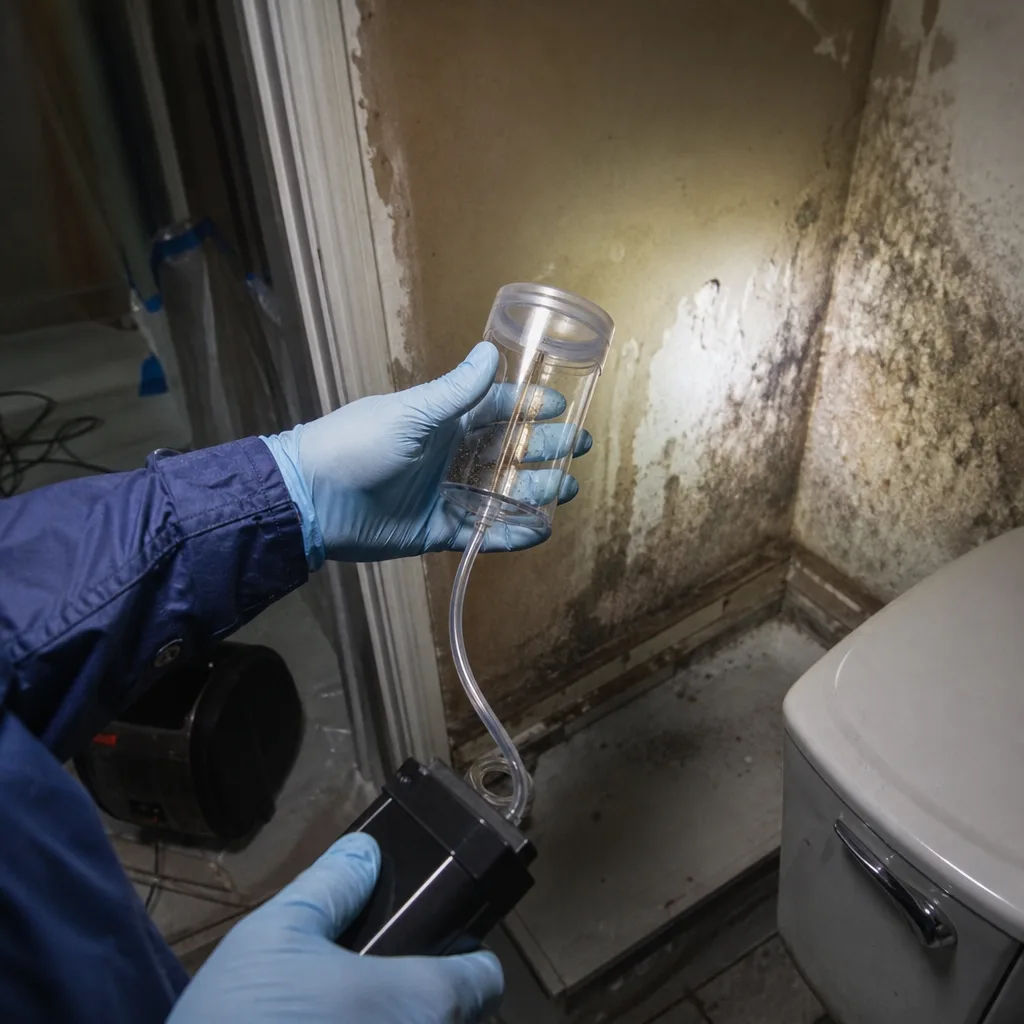
Some situations in Compton demand immediate professional response regardless of your DIY capabilities. Category 3 water - sewage backup, flooding from Compton Creek overflow, or any water that has passed through ground or waste systems - carries bacterial and viral contamination that requires trained handling and proper disposal. Water damage restoration involving electrical panels, gas lines, or structural compromise also exceeds safe homeowner intervention.
Fire and smoke damage presents similar boundaries. Smoke particulates penetrate HVAC systems and wall cavities in ways that surface cleaning cannot address. Without professional-grade air scrubbers and thermal fogging, odors persist and particulate contamination continues.
DryMark Restoration Compton offers free estimates in Compton - call (628) 226-1011. Every assessment includes a written scope, line-item pricing, and documentation of our findings before any work is proposed. If you have a competitor’s written estimate, we provide a free second opinion at no charge.
Frequently Asked Questions
Water damage restoration in Compton typically ranges from $1,200 for limited Category 1 drying to $8,000+ for extensive Category 3 losses with demolition and reconstruction. Mold remediation averages $15-$30 per square foot of affected area, with Compton’s older plaster-and-lath homes often requiring more extensive containment than modern drywall construction. Fire and smoke restoration varies widely based on structural involvement and contents cleaning requirements. Call (628) 226-1011 for a written estimate specific to your loss - estimates are free, and we deliver the price before any work begins under Haven Standard, Clause 1.
Most homeowners policies cover sudden and accidental water damage, fire damage, and storm damage, but coverage varies by cause and policy language. Gradual leaks and maintenance-related issues are typically excluded. The single biggest factor in claim approval is documentation quality - adjusters pay claims with clear photo records, drying logs, and line-item scopes; they dispute or reduce claims without them. We coordinate directly with adjusters and provide the Xactimate-formatted documentation they require. Bring your policy declaration page to our assessment and we’ll identify coverage questions before work starts.
For active water damage, speed matters because moisture migration continues until the source is stopped and drying begins. DryMark Restoration Compton maintains live phone coverage 24 hours a day, 7 days a week with no voicemail on emergency lines. Response time depends on current call volume and your location within our Compton service area, but we dispatch for active water losses as rapidly as road conditions allow. For reconstruction and non-emergency work, we schedule assessments during business hours and deliver written scopes within 24 hours of inspection.
This depends on the contamination level and affected materials. Category 1 clean water on hard surfaces may require only extraction and drying. Category 2 gray water or any porous material contact typically requires removal of affected building materials. Category 3 black water and visible mold growth always require full remediation with proper containment and disposal. We classify your loss per IICRC S500 standards and show you the moisture readings and contamination evidence that drive our recommendation. Our written scope specifies exactly what requires removal and what can be dried in place, with the price for each.
We do, if you authorize us. Our documentation - photo records, drying logs, equipment serial numbers, and line-item scopes - is formatted for direct adjuster submission. We attend adjuster meetings on request, defend our scope against benchmark reductions, and provide supplemental documentation when hidden damage is discovered. You remain the policyholder and final decision-maker, but our involvement reduces the administrative burden and improves claim outcomes. We never accept assignment of benefits; you retain control of your claim and payment flows directly from insurer to you, or from you to us after your approval.
Stop the water source if safely possible - locate your main shutoff valve, typically near the street or in a garage wall box in Compton homes. Turn off electrical circuits to affected areas if you can do so without standing in water. Remove small valuables and documents from wet areas. Do not enter rooms with sagging ceilings or compromised electrical systems. Photograph everything before moving anything. And do not start demolition - improper cuts can spread contamination and eliminate the documentation baseline your claim requires.
The Bottom Line
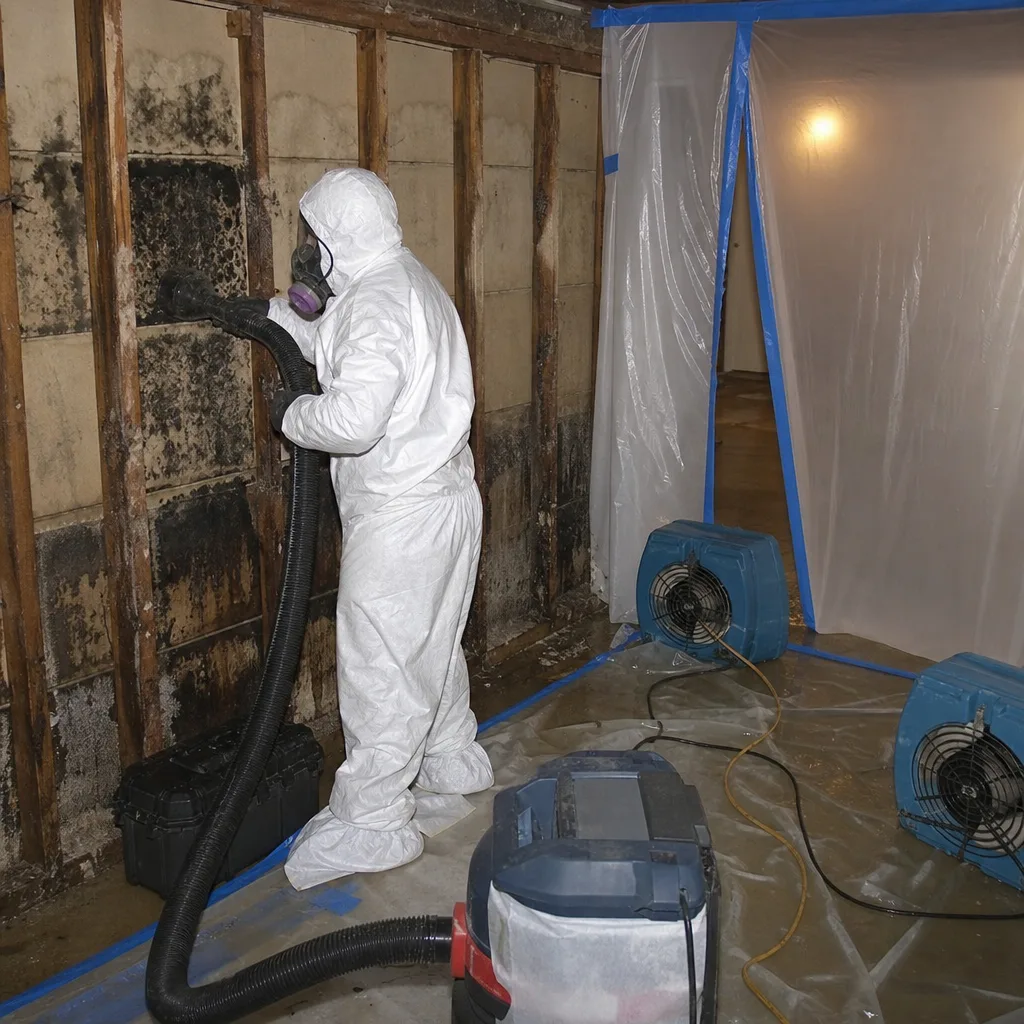
Hiring a damage restoration contractor in Compton is not primarily a credentials check. It’s a documentation evaluation. The CSLB license, insurance certificate, and equipment inventory are table stakes. The documents that determine your claim outcome are the written scope, line-item price, equipment list with serial numbers, drying protocol with daily targets, and photo schedule - produced before work begins and maintained throughout the project.
Contractors who treat these as standard deliverables, not upsells, are contractors who’ve learned what insurers actually pay for. Contractors who resist them are contractors whose invoices will be disputed, reduced, or denied. In a market like Compton, where older construction, seasonal flooding, and complex insurance dynamics intersect, this distinction matters more than speed of arrival or years in business.
We built our practice on this understanding. Every job gets a written price before work starts, every visit produces a photo record, and every drying log is documented to the standards that turn restoration into payable claims. The 365-Day Done Right Promise, backed by The Haven Standard, means if it’s not done right, we make it right - in writing, not as a marketing line.
Call (628) 226-1011 for a free estimate in Compton. Bring a competitor’s written quote and we’ll review it at no charge.
Written by Alicia Brennan, Owner at DryMark Restoration Compton, serving Compton since 2011.