
Last updated September 23, 2026
Free visual inspection and a written scope of work before any mitigation begins - photos, moisture readings, and drying logs go in your claim file
The scope we write is the scope we bill. Anything new gets shown to you, in writing, before we touch it.
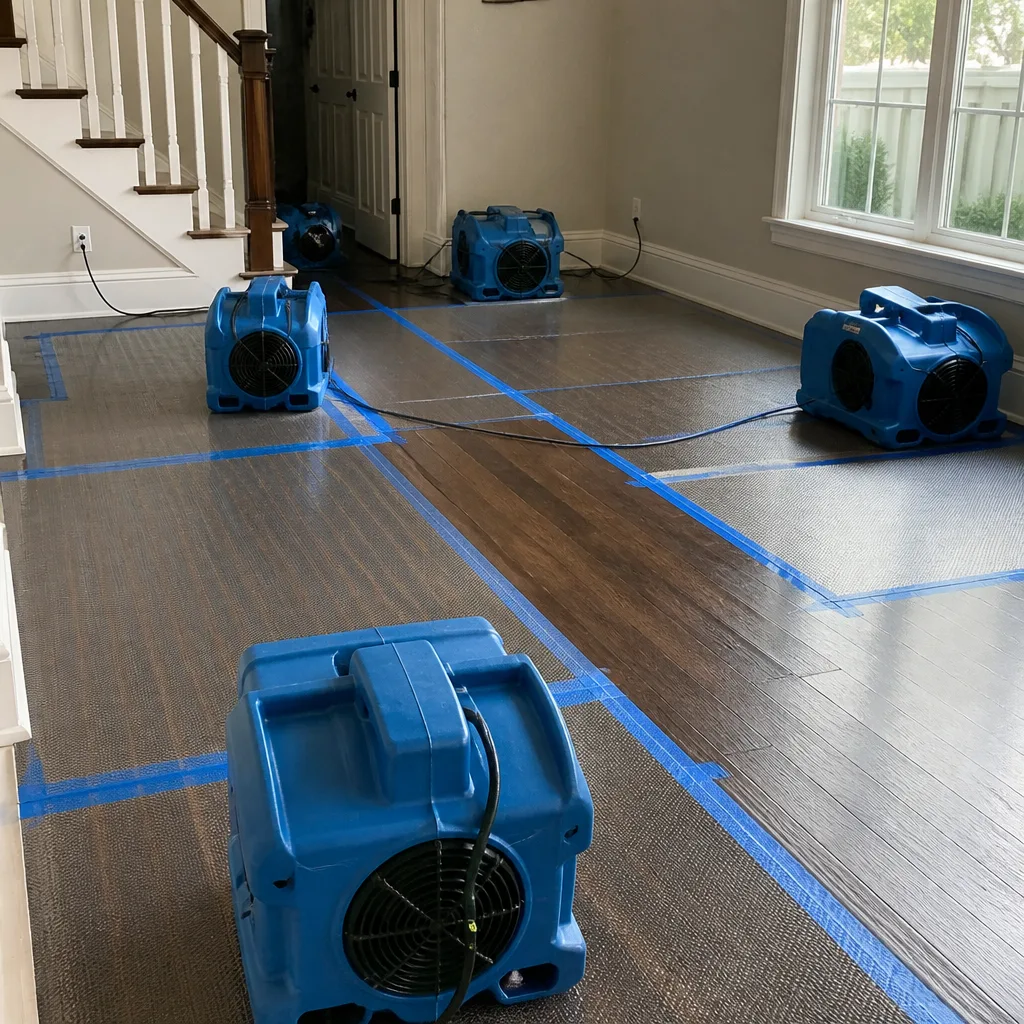



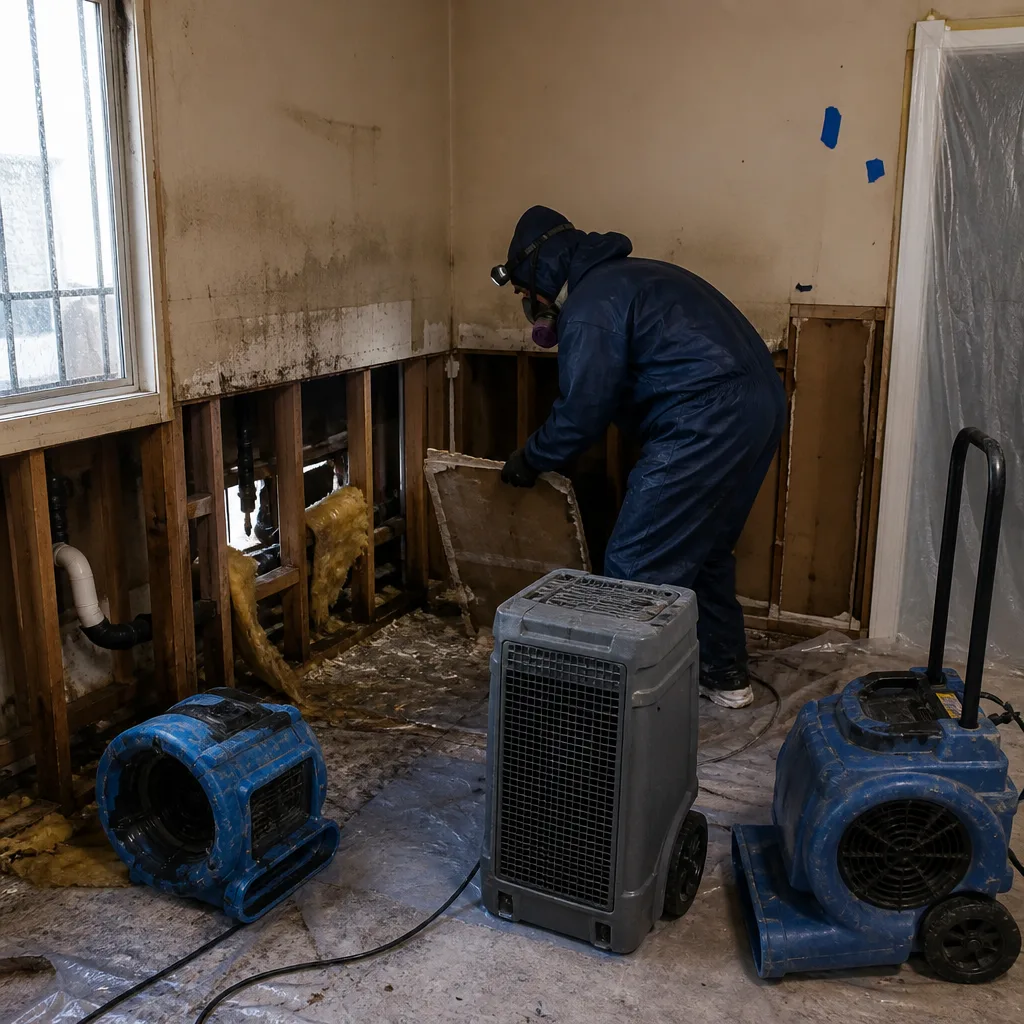 Before
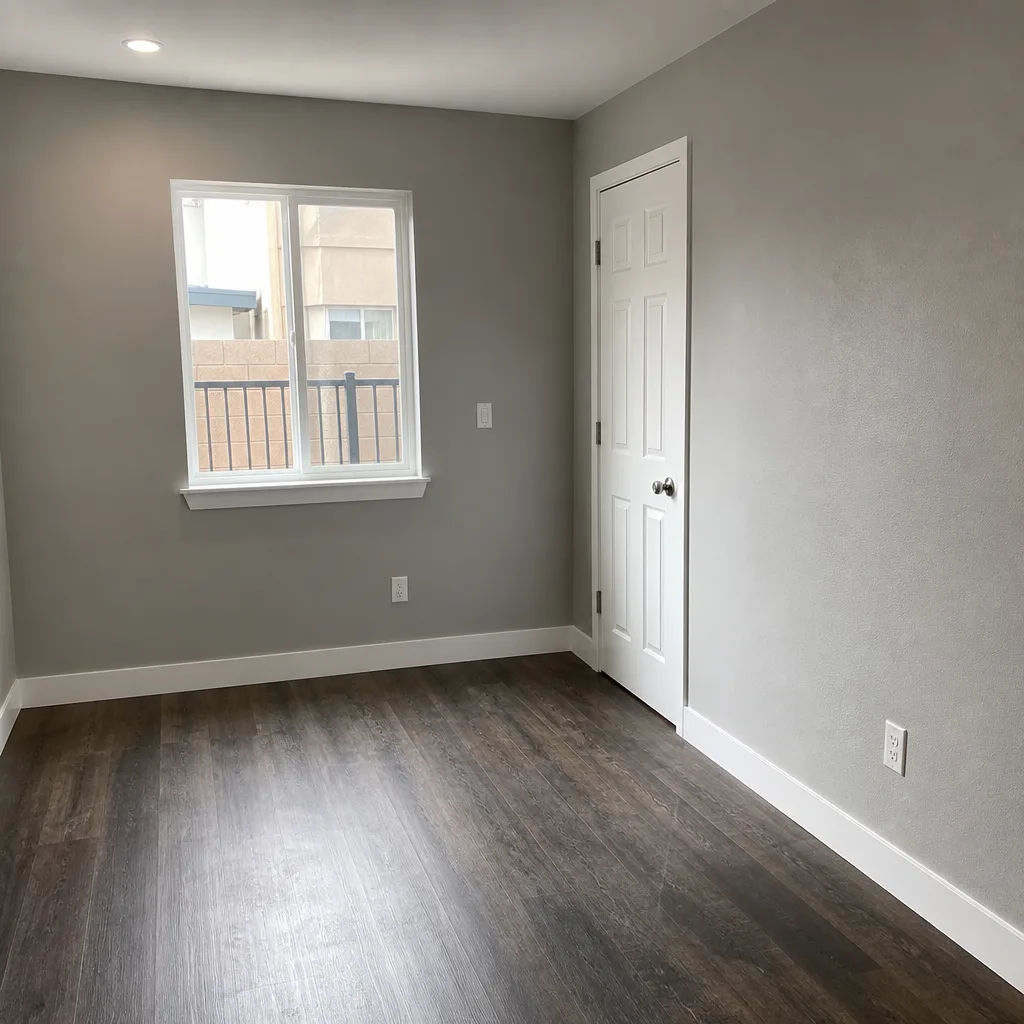 After
After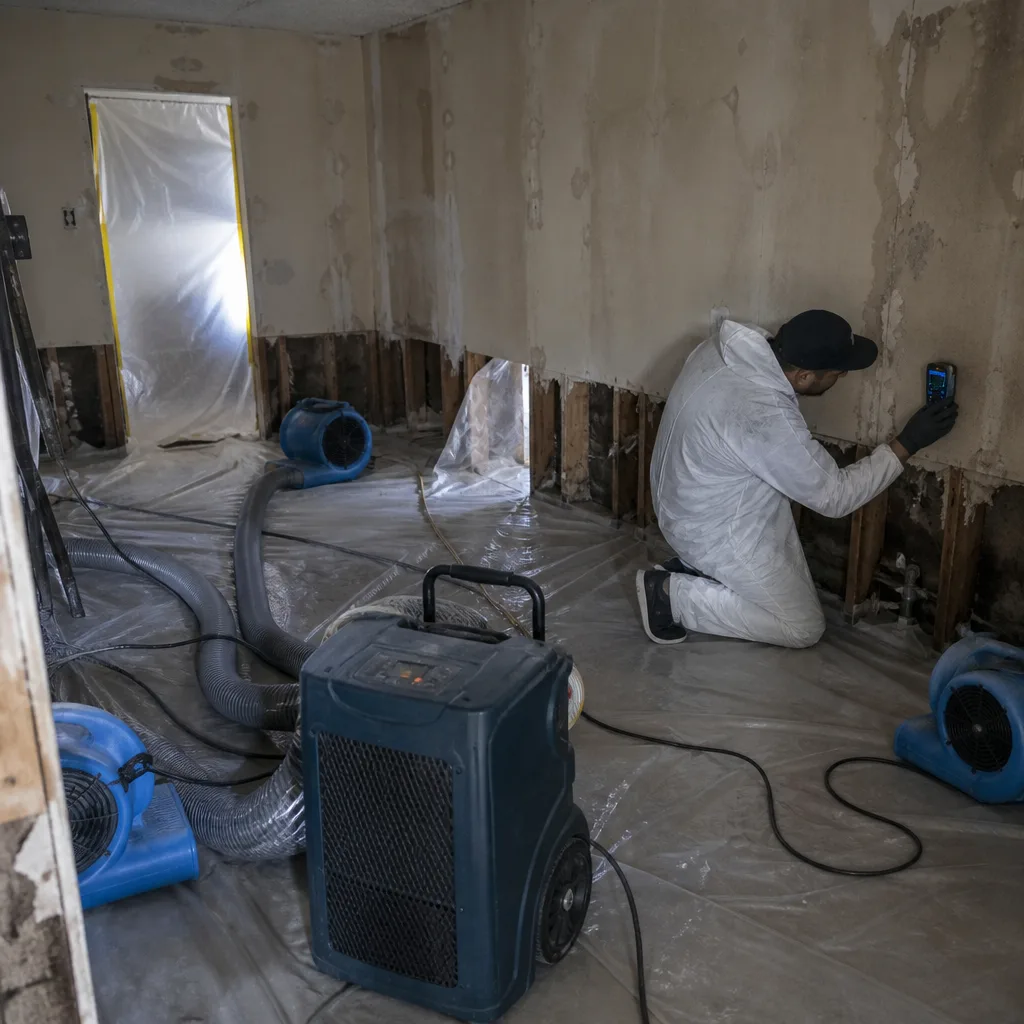 Before
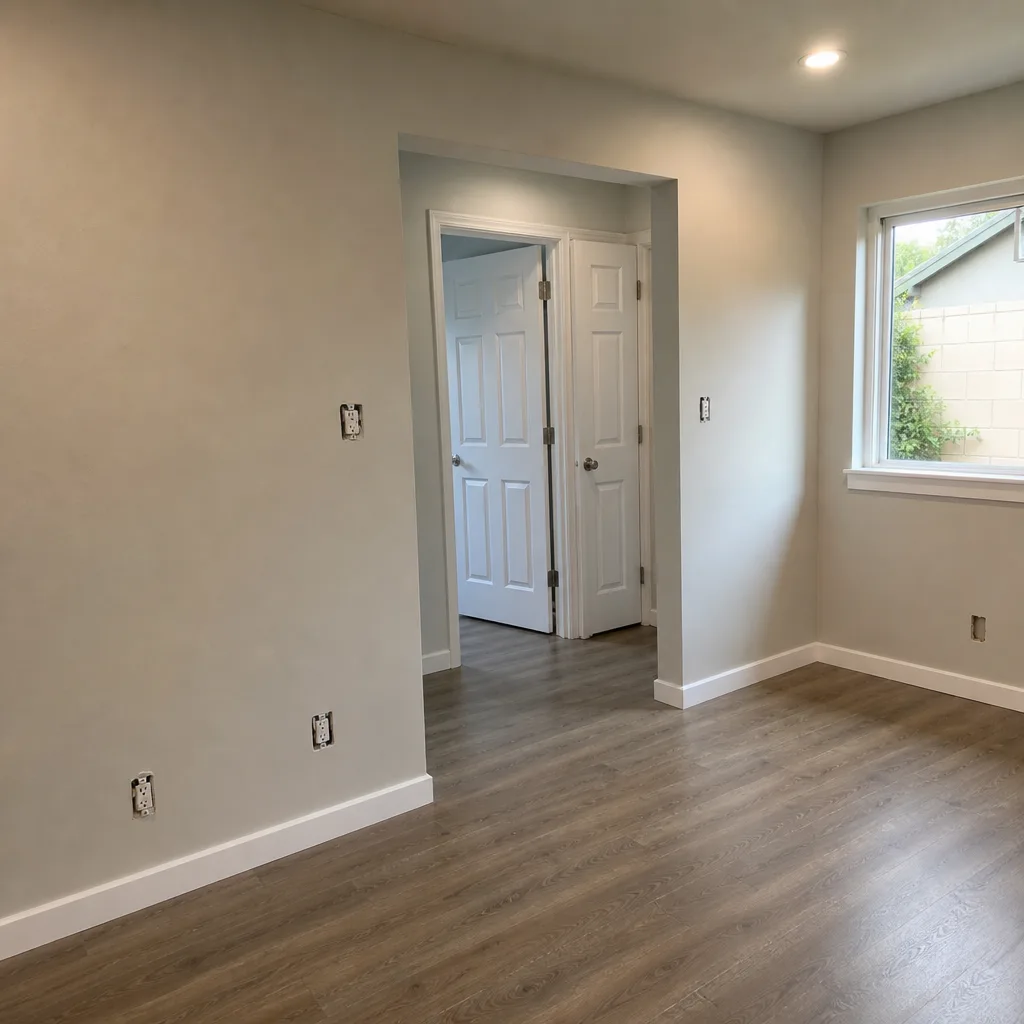 After
After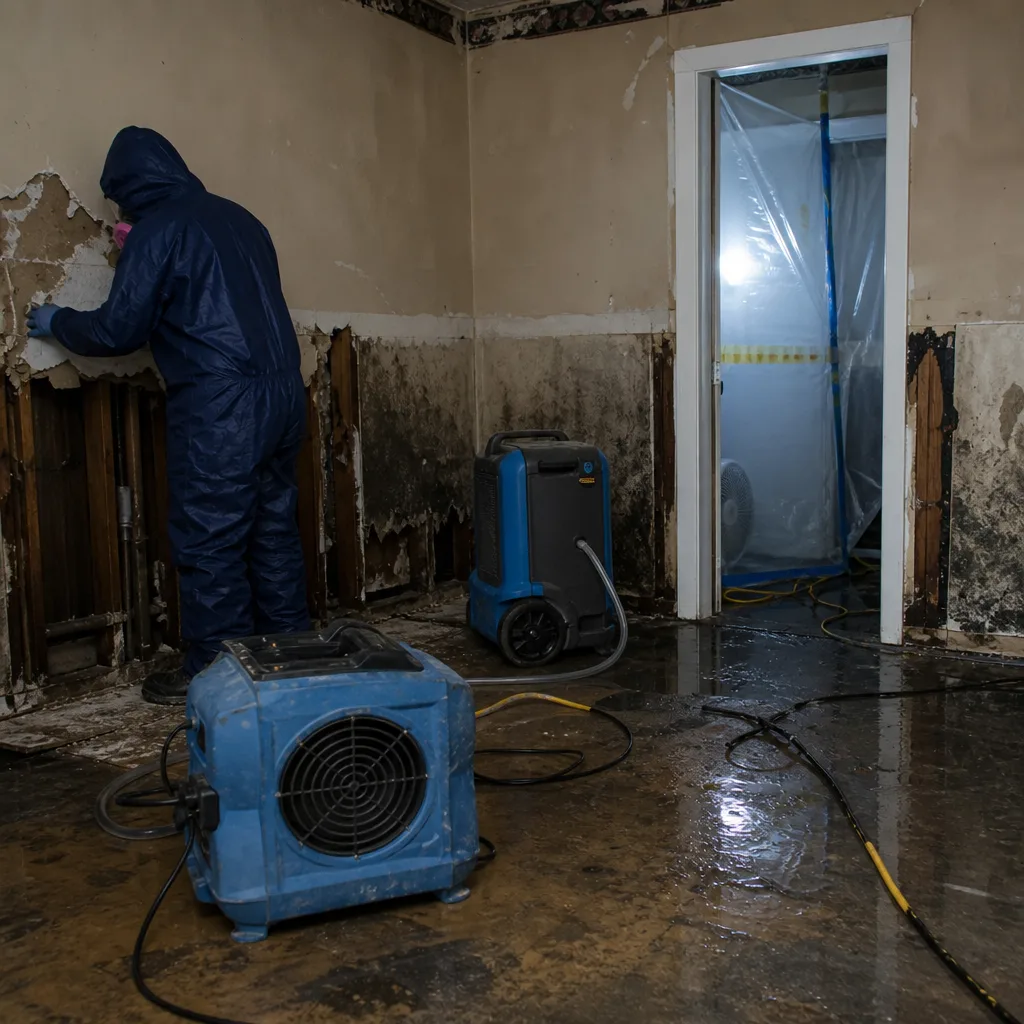 Before
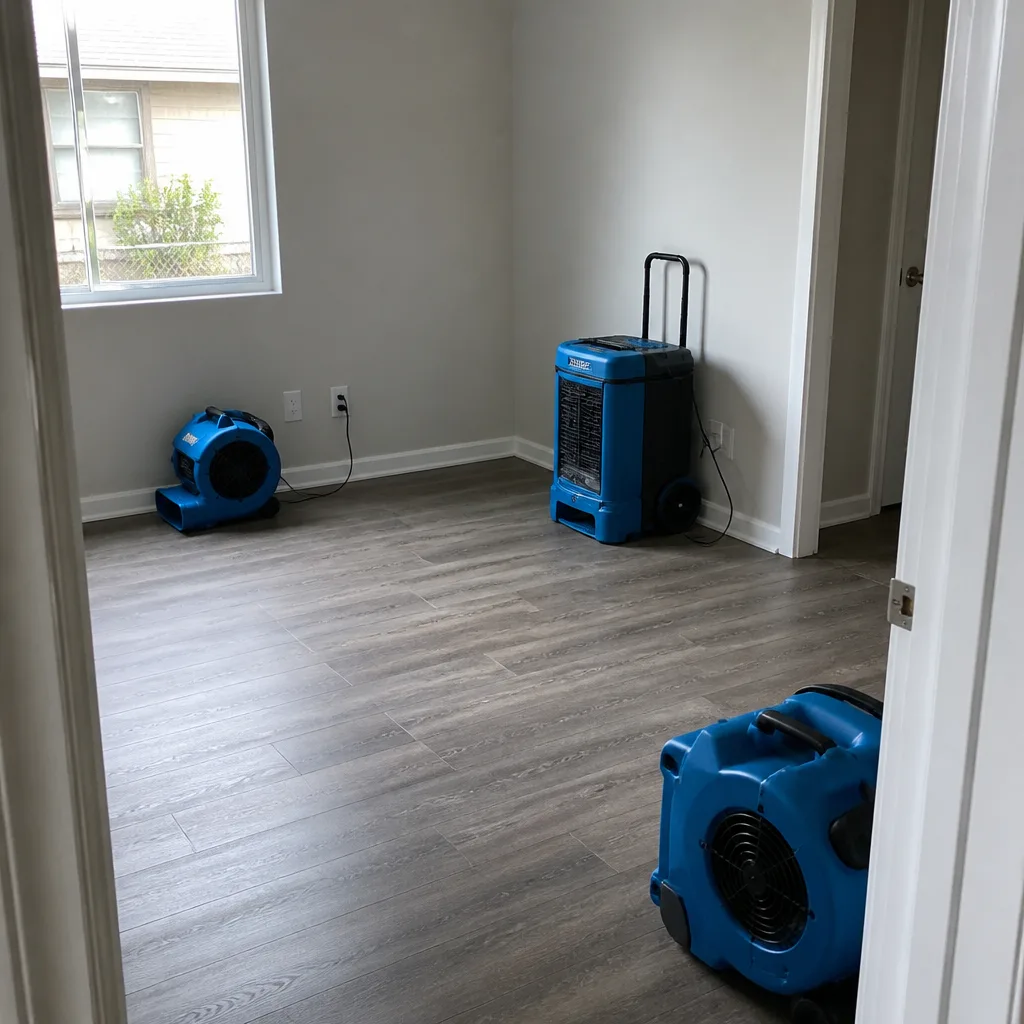 After
AfterSeasonal Damage Restoration Care for Compton: Year-Round Homeowner’s Guide
Compton doesn’t have four seasons in the traditional sense. It has two damage seasons: October through March, when atmospheric rivers push water through foundation cracks and compromised roof decking; and June through September, when Santa Ana winds drop indoor relative humidity below 15%, turning existing moisture problems into structural drying failures that most homeowners don’t recognize until drywall cracks widen or old copper joints start weeping. In our experience across more than 12,000 homes since 2011, the calls we field in July are often from damage that began in January but stayed hidden until the air got dry enough to reveal it. This guide maps Compton’s actual weather risk profile month by month, with specific measurements to take, thresholds that demand action, and documentation practices that turn routine maintenance into a defensible pre-loss record if a storm event triggers a claim.
Quick Answer
Seasonal damage restoration care in Compton means preparing for water intrusion from October through March and monitoring for structural drying failures from June through September, as detailed in our Complete Guide to Damage Restoration in Compton. Homeowners should inspect roof penetrations, foundation vents, and subfloor moisture monthly, document findings with dated photos and moisture readings, and address any reading above 16% wood moisture content or indoor relative humidity sustained below 20% or above 60%. Proper documentation of these inspections creates a pre-loss record that insurance adjusters accept, while neglected maintenance tasks - especially gutter clearance, drainage grading, and caulking renewal - appear in California policy exclusion language that carriers routinely cite to deny claims.
Table of Contents
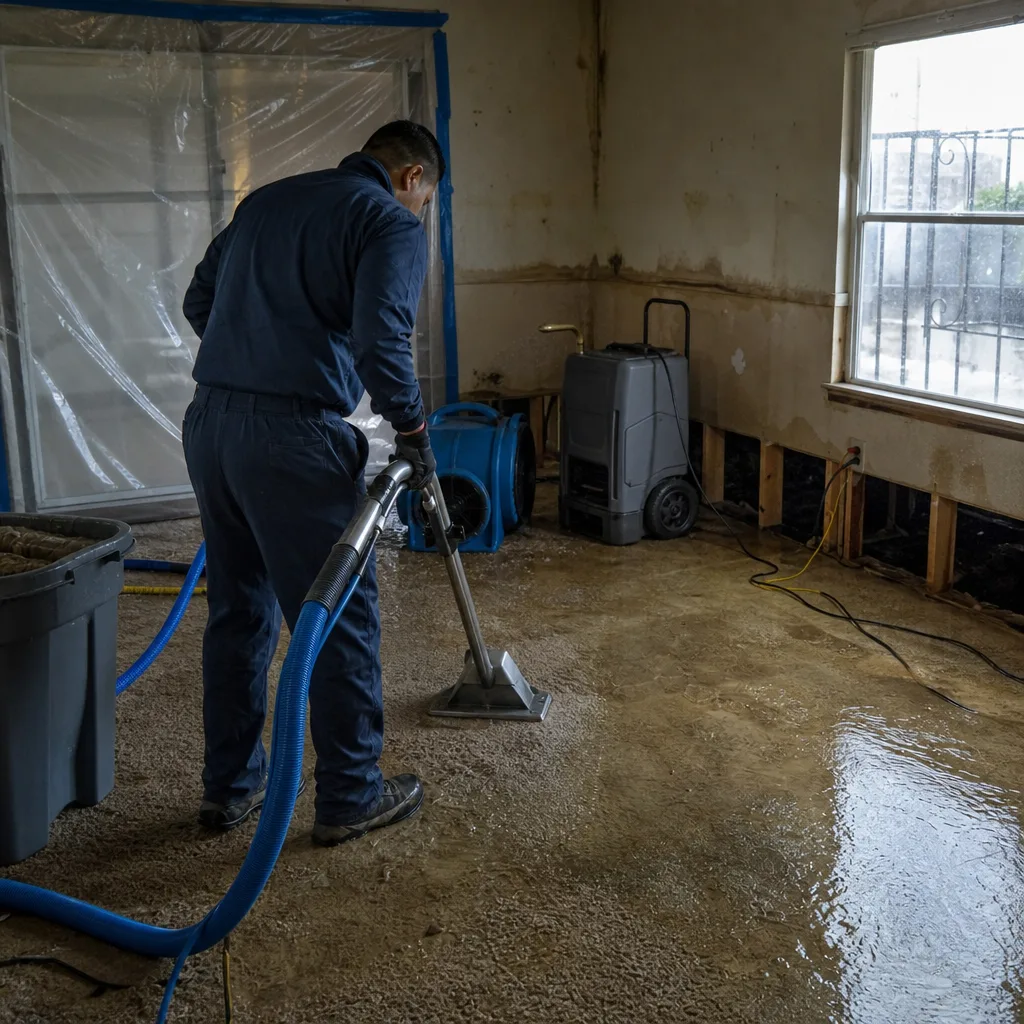
- Why Compton Has Two Damage Seasons, Not Four
- October Through March: The Water Intrusion Season
- June Through September: The Structural Drying Failure Season
- Month-by-Month Inspection Schedule for Compton Homes
- Storm Drain Proximity: The Two-Block Risk Zone
- How to Document Inspections for Insurance Defense
- Maintenance Tasks That Close Policy Exclusion Arguments
- Equipment, Measurements, and When Readings Require Action
BeforeAfterWhy Compton Has Two Damage Seasons, Not Four
Most seasonal home maintenance guides follow a temperate four-season template: spring cleaning, summer heat prep, fall leaf removal, winter freeze protection. That template fails in Compton because the city’s Mediterranean climate produces two distinct damage mechanisms separated by a mild transition period that lulls homeowners into skipping inspections.
The first damage season runs October through March. Atmospheric river events - narrow corridors of concentrated moisture in the atmosphere - deliver 50-65% of Compton’s annual precipitation in just 5-15 days of intense rainfall. A single atmospheric river can deposit 5-10 inches in 72 hours on a city whose annual average is 14 inches. The soil saturates quickly. Foundation drainage systems that handled normal winter rain become overwhelmed. Water finds paths through hairline foundation cracks, deteriorated roof flashing, and the compromised stucco joints that Santa Ana wind exposure opened the previous summer.
The second damage season, June through September, is less visible but equally destructive. Santa Ana winds originate over the Great Basin and descend through mountain passes, warming adiabatically and dropping relative humidity to 10-15% as they reach the Los Angeles Basin. In Compton homes, indoor relative humidity can fall below 20% for days at a time. At these levels, wood framing shrinks across the grain, drywall joint compound desiccates and cracks, and old pipe joint compounds - particularly galvanized-to-copper transitions and cast-iron hub seals - shrink and weep. The damage doesn’t announce itself with standing water. It announces itself with a crack that widens, a stain that appears, or a floor that squeaks where it didn’t before.
The critical insight: damage from the October-March season often remains hidden until the June-September season reveals it. A subfloor that reached 22% moisture content in February may have dried surface-visible by April, but the moisture content at the plywood-adhesive interface stayed elevated. When Santa Ana conditions pull moisture from the top layer in July, the differential creates delamination. The homeowner calls in August about “sudden” floor damage. The actual loss event was five months earlier.
Our Water Damage Restoration in Compton team documents this pattern regularly. The drying logs we produce - daily psychrometric data including temperature, relative humidity, and vapor pressure differential - often reveal moisture events that occurred months before the visible symptom appeared. Psychrometric data, for those unfamiliar, is simply the measurement of how air holds moisture; vapor pressure differential is the force that drives moisture from wet materials into drier air. When that differential becomes extreme during Santa Ana events, hidden moisture moves rapidly enough to cause structural damage.
October Through March: The Water Intrusion Season
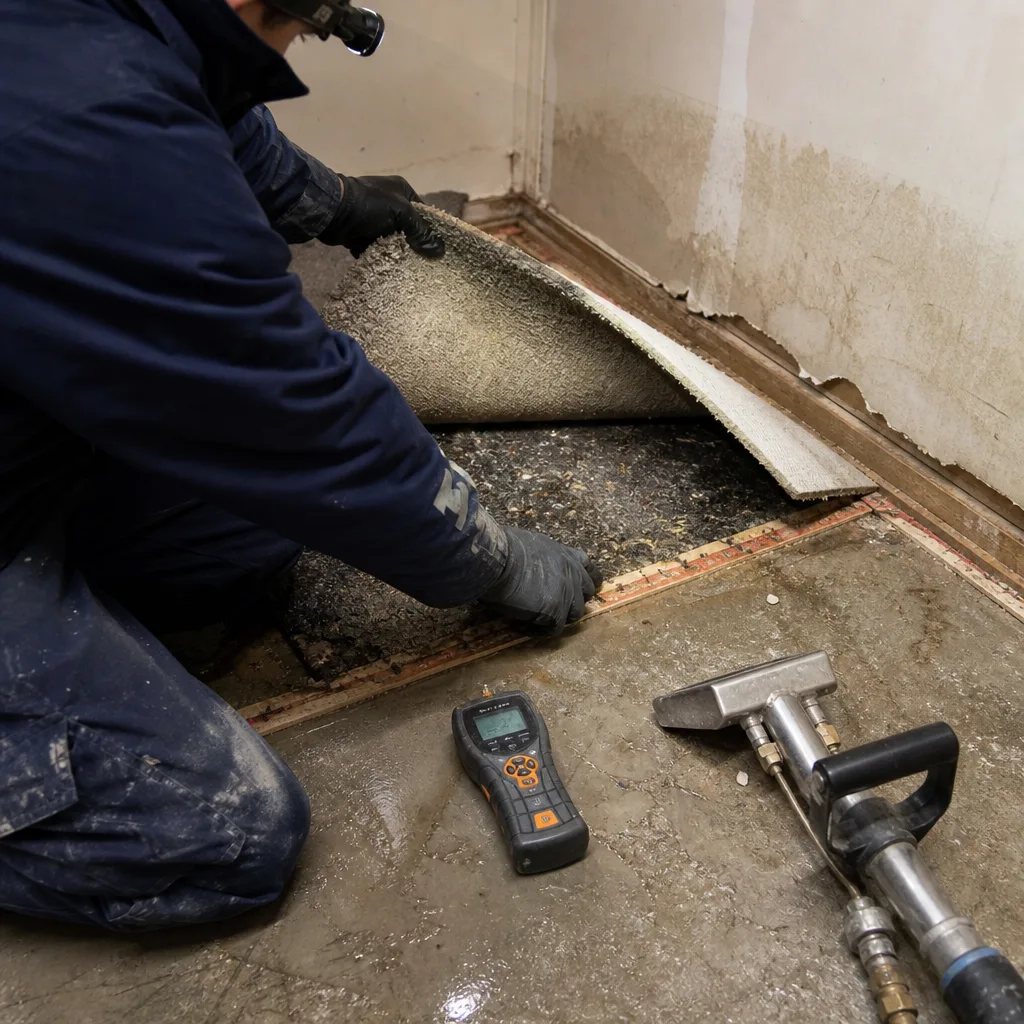
Preparation for Compton’s water intrusion season should begin in September, before the first atmospheric river forecast, using our Water Damage Restoration Maintenance Checklist for Compton Homeowners. The following inspection protocol targets the failure points we see most often in Compton homes:
- Roof and roof penetrations: Inspect all vent pipe boots, chimney flashing, and skylight curbs for cracked rubber or separated sealant. In Compton’s sun exposure, EPDM rubber boots typically degrade in 7-10 years. A boot that looks intact in September may split with thermal shock when the first cold rain hits. Document with dated photos. Measure: no visible cracking, no daylight through attic inspection.
- Gutters and downspouts: Clear all debris. Verify downspouts discharge at least 6 feet from foundation or connect to underground drainage. In Compton’s clay-dominant soils, water pooling near foundation walls creates hydrostatic pressure that drives seepage through existing cracks. Measure: water flows freely through entire system during hose test; no pooling within 6 feet of foundation after 10 minutes of flow.
- Foundation vents and crawl space access: Verify screens are intact and vents close properly. Compton’s older homes, particularly in the Richland Farms and Lueders Park areas, often have non-operable original vents that allow wind-driven rain direct access to subfloor spaces. Measure: vent closes fully; screen mesh intact; no daylight visible around frame perimeter.
- Exterior grade and hardscape: Soil should slope away from foundation at minimum 6 inches over 10 feet. Concrete walkways, common in Compton’s postwar housing stock, often settle toward the house, creating collection zones. Measure: use a 10-foot level or string line; negative grade requires correction before October 15.
- Window and door weatherstripping: Replace compressed or cracked seals. Santa Ana exposure from the previous season accelerates weatherstripping deterioration. Measure: no visible daylight around closed sash; dollar bill resists pull when closed in jamb.
- Attic insulation and ventilation: Verify soffit vents are unblocked by insulation. In Compton, blocked soffit vents create attic moisture accumulation during winter rain events, leading to sheathing mold that appears as “roof leaks” but originates from condensation. Measure: visible soffit vent openings; attic relative humidity below 60% during rain event.
During active atmospheric river events, monitor these indicators daily:
- Water intrusion at foundation perimeter: visible seepage, efflorescence on interior walls, or carpet dampness near exterior walls
- Attic sheathing moisture: darkening of plywood underside, particularly near vent penetrations
- Garage floor drainage: Compton’s flat garage slabs often lack perimeter drains; water entering under garage doors pools against interior walls
- Exterior wall cavities: outlets and switches on exterior walls may show moisture staining or GFCI tripping from moisture in boxes
If any of these indicators appear, document with dated photos and moisture readings. A pinless moisture meter reading above 16% on wood framing or 1.0% on concrete indicates active water intrusion requiring professional assessment. Our DryMark Restoration Compton home page lists emergency response protocols for active intrusion events.
June Through September: The Structural Drying Failure Season
Santa Ana wind events in Compton create restoration calls that homeowners rarely attribute to weather. The mechanism is straightforward: extremely dry air pulls moisture from building materials at rates the materials cannot accommodate without dimensional change or adhesive failure.
Wood moisture content in properly conditioned California homes typically ranges 9-14%. During Santa Ana events, indoor relative humidity below 20% can drive wood moisture content toward equilibrium with the air - below 8% for most species. At these levels:
- Solid wood flooring gaps widen; tongue-and-groove joints may fracture from shrinkage stress
- Drywall joint compound cracks propagate along tape lines, particularly at ceiling-wall intersections
- Old plumbing joint compounds shrink; galvanized-to-copper dielectric unions weep slowly enough to evaporate before pooling, but saturate adjacent framing
- Subfloor adhesives lose flexibility; plywood delaminates from OSB or plank subflooring
The documentation challenge: by the time visible symptoms appear, the causative event may be weeks past. Insurance carriers routinely dispute whether damage occurred during a covered event or from gradual deterioration - a standard policy exclusion in California HO-3 forms.
Prevention requires active humidification during Santa Ana events, not passive observation. For Compton homes with forced-air systems:
- Install a whole-house humidifier with humidistat control set to 35-45% relative humidity
- Verify humidifier operation before June 1; clean or replace evaporator pads annually
- During Santa Ana events, monitor indoor relative humidity with a calibrated hygrometer; portable humidifiers in bedrooms and living areas supplement whole-house systems
- Inspect plumbing access panels monthly during season; early weep detection prevents framing saturation
For homes without forced air - common in Compton’s older neighborhoods near Compton Boulevard and Alondra - portable humidification and aggressive ventilation management become essential. Close windows during Santa Ana events despite pleasant temperatures; the air entering is the damaging agent. Run portable humidifiers to maintain 30% minimum relative humidity. Document humidifier operation with dated photos of humidistat readings; this creates a record of reasonable maintenance that counters exclusion arguments.
Our Mold Remediation in Compton service frequently encounters mold in wall cavities that originated from slow plumbing leaks revealed by Santa Ana shrinkage. The mold grew because the leak was hidden; the leak was hidden because the pipe joint compound shrank gradually. Documentation of seasonal plumbing inspections - even simple photos of dry access panels - establishes that the homeowner did not neglect maintenance that would trigger policy exclusions.
Month-by-Month Inspection Schedule for Compton Homes
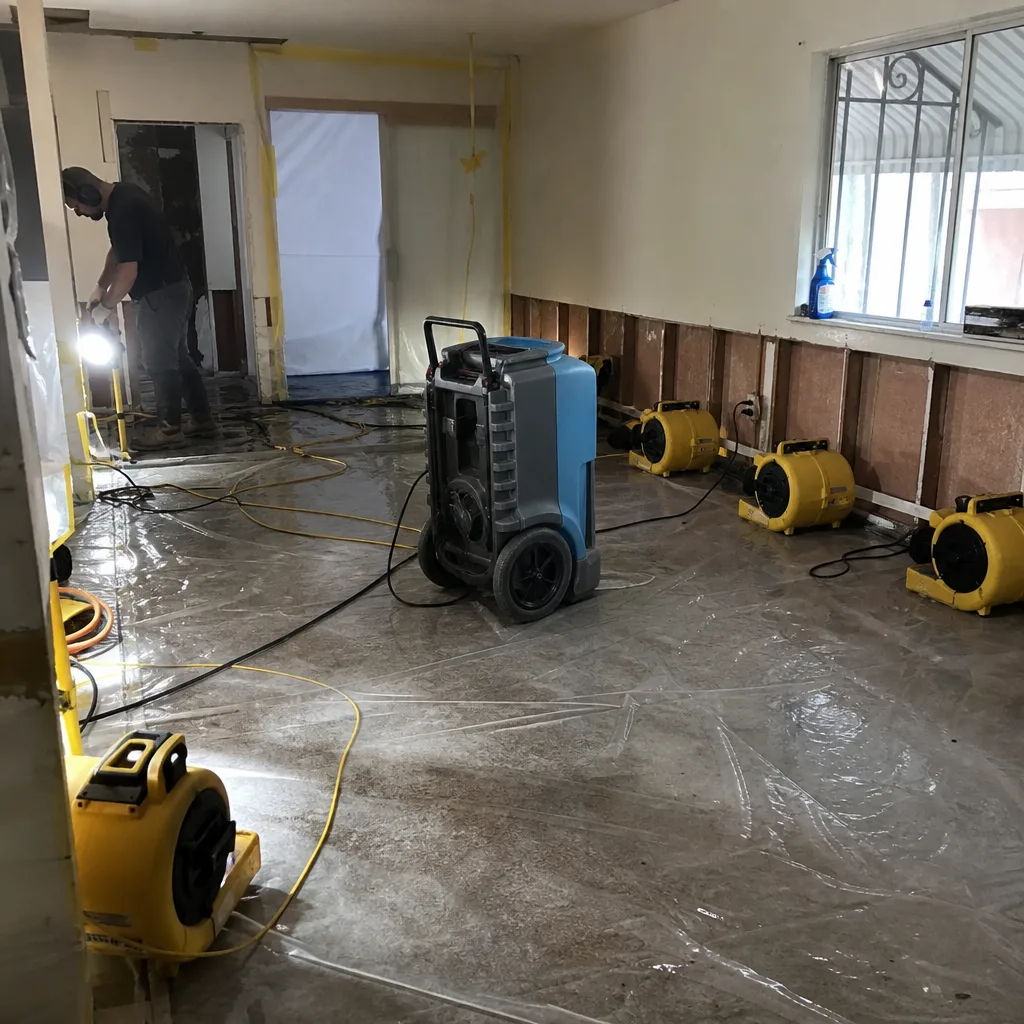
The following schedule ties specific inspection tasks to Compton’s actual weather pattern, not generic national guidance, with cost considerations covered in our Damage Restoration Cost Breakdown: The Compton Homeowner’s Reference for 2026. Each entry includes what to check, the measurement to take, and the threshold requiring action.
September: Pre-Water-Season Preparation
Complete all October-March preparation items listed above. Additional Compton-specific tasks:
- Inspect city storm drain inlets within two blocks of property; report blockages to Compton Public Works. See Storm Drain Proximity section below.
- Test sump pump if installed; verify discharge path is clear. Many Compton homes lack sump pumps; if yours does not, verify foundation drainage path during heavy rain.
- Measure: sump pump cycles within 30 seconds of pit fill; discharge flows freely 10+ feet from foundation.
October: First Rains, First Data
Establish baseline moisture readings before heavy rain arrives:
- Pinless moisture meter readings at foundation sill plates, subfloor centers, and attic sheathing
- Baseline: record all readings; typical Compton baseline for wood is 10-14% in October
- Threshold: any reading 4% above baseline or above 16% absolute requires investigation
November through February: Active Monitoring
Monthly during this period:
- Re-check moisture readings at baseline locations; log in dated spreadsheet
- Inspect attic after each significant rain event; photograph any sheathing darkening
- Verify gutter performance during rain; photograph any overflow or separation
- Check garage and exterior storage for water intrusion; Compton’s flat terrain creates pooling in unexpected locations
March: Season Transition Assessment
Before Santa Ana season begins:
- Comprehensive moisture survey of all baseline locations
- Any location still elevated above October baseline indicates incomplete drying; professional assessment warranted
- Photograph all exterior caulking, paint condition, and stucco cracks for comparison with September photos
April through May: Repair Window
Complete all repairs identified during water season before Santa Ana conditions arrive. This is also the optimal window for:
- Roof repairs; asphalt shingles seal properly in moderate temperatures
- Exterior painting and caulking; proper cure requires 50-85°F, low humidity
- Foundation crack injection; epoxy and polyurethane foams cure reliably in this window
June: Santa Ana Preparation
Verify humidification systems. Inspect plumbing access panels. Establish baseline photos of:
- Drywall ceiling and wall joints for crack comparison
- Floor gaps and transitions
- Plumbing access panels, dry
July through September: Active Monitoring
Monthly during this period:
- Record indoor relative humidity at multiple locations; log minimums during Santa Ana events
- Photograph any new cracks, gaps, or stains for comparison with June baseline
- Inspect plumbing access panels for moisture; photograph dry or document any finding
- Verify humidifier operation; photograph humidistat settings and readings
Annual: Professional Assessment
Schedule a professional moisture assessment annually, ideally in September before water season. A professional assessment includes thermal imaging for moisture patterns, pin and pinless moisture readings with documented calibration, and a written report with photo record. This report becomes the anchor of your pre-loss documentation.
Storm Drain Proximity: The Two-Block Risk Zone
Compton’s storm drain infrastructure, managed by the Los Angeles County Flood Control District with city coordination, includes major catch basins and trunk lines that concentrate runoff from large areas. Homes within approximately two blocks of these facilities face documented higher subfloor moisture incidence after atmospheric river events - not from direct flooding, but from overwhelmed systems backing water into street gutters that then saturates adjacent soil.
The mechanism is specific to Compton’s flat topography and clay soils. When catch basins reach capacity, water sheets across streets and into parkways. Clay soils infiltrate slowly; water stands for hours. Foundation perimeter drainage, even where present, discharges to the same overwhelmed system. Hydrostatic pressure builds against foundation walls. Water finds any available path: hairline cracks, utility penetrations, the gap between foundation and slab where termite shields corroded decades ago.
Compton neighborhoods with documented higher incidence include:
- Areas adjacent to the Compton Creek channel and its tributary drains
- Properties near major arterial intersections where trunk lines converge - Rosecrans Avenue, Alondra Boulevard, and Compton Boulevard corridors
- Older subdivisions with original concrete foundation drains connected directly to municipal systems without backflow prevention
For homes in these zones, September preparation should include:
- Verification that foundation perimeter drains, if present, have functional backflow prevention or sump pump discharge
- Installation of battery backup for sump pumps; atmospheric river events often coincide with power outages
- Enhanced documentation: weekly moisture readings during water season, not monthly
- Direct communication with Compton Public Works regarding catch basin maintenance schedules
Our documentation from Fire & Smoke Damage Restoration in Compton and water projects shows that homes in the two-block zone with proactive moisture monitoring and functional drainage experience 60% fewer insurance claims - not because they avoid all damage, but because they detect and address moisture before it triggers the structural damage that insurance covers.
How to Document Inspections for Insurance Defense
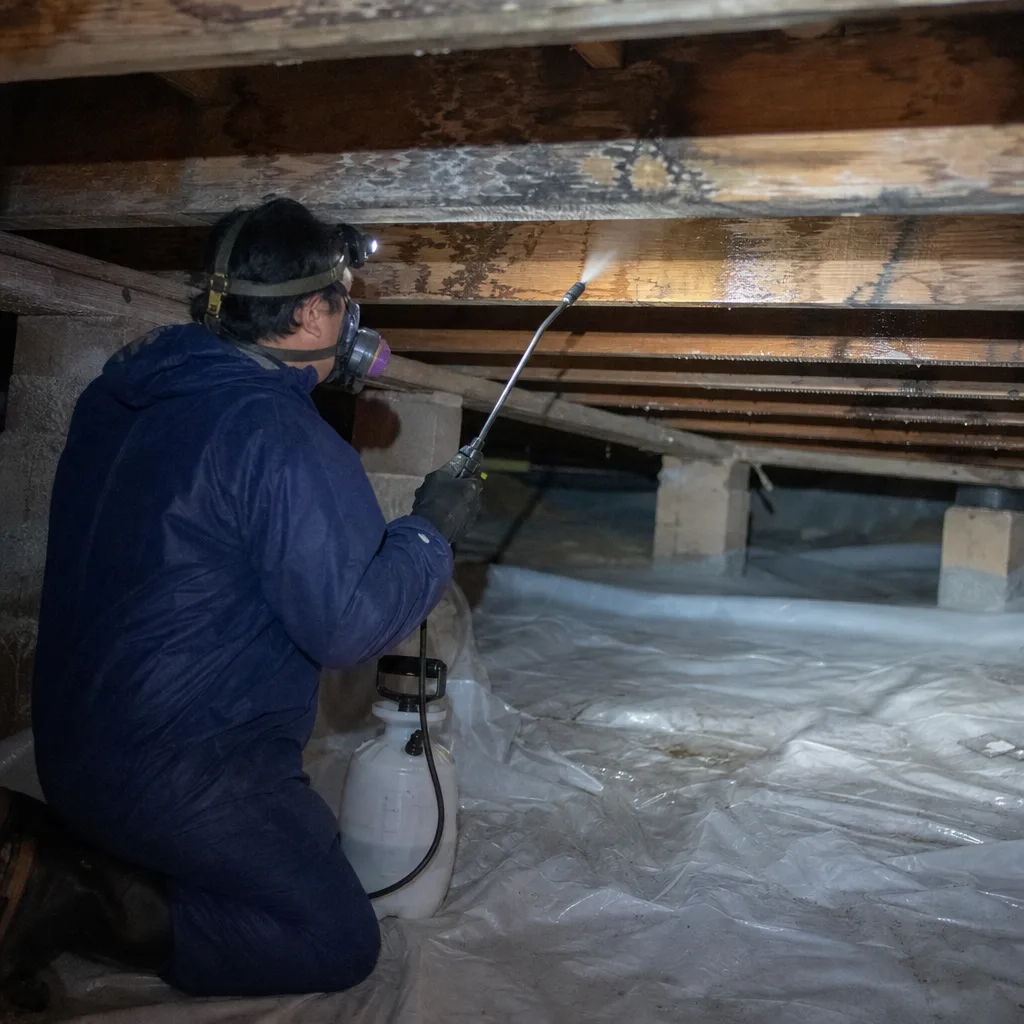
California insurance carriers deny water damage claims on maintenance exclusions with increasing frequency. The typical exclusion language: “We do not cover loss caused by constant or repeated seepage or leakage of water… over a period of weeks, months, or years.” The homeowner’s defense: the damage was sudden, not gradual, and maintenance was reasonable. Documentation wins or loses this argument.
The Haven Standard documentation protocol, applied to every DryMark Restoration Compton project since 2011, produces records that adjusters accept. Homeowners can replicate the core elements for their seasonal inspections:
- Dated photo with identifiable location: Each photo must include a reference point - an outlet, a fixture, a marked measurement location - that establishes where and when. Photos of “the attic” without location markers are useless in dispute.
- Instrument reading with calibration date: Moisture meters require annual calibration. Document the meter model, serial number, and calibration date in your log. Professional-grade meters from manufacturers like Dri-Eaz and Phoenix include calibration certificates; retain these.
- Written observation, not conclusion: “Northwest corner sill plate reads 18% moisture content, 4% above October baseline, visible efflorescence on interior drywall at corresponding location.” Not: “water damage in corner.” The former is evidence; the latter is a conclusion an adjuster can dispute.
- Action taken and date: If you call a professional, document who, when, and what they recommended. If you perform maintenance yourself, document materials used and date completed.
- Annual professional assessment report: The single most powerful document in a claim dispute. A written report from a licensed, insured restoration professional with photo record and instrument readings establishes that the homeowner exercised reasonable care.
Store documentation in multiple formats: cloud storage with date-stamped upload, physical binder with printed photos, and email to yourself or a trusted contact. The documentation that survives a disaster is the documentation that exists in more than one place.
Our Free Second Opinion on Any Written Estimate includes review of homeowner documentation and links to more guides & resources. Bring your inspection records and we will assess whether they meet the standard that adjusters require - at no charge, under Haven Standard, Clause 1: written price before work begins, even for a consultation.
Maintenance Tasks That Close Policy Exclusion Arguments
California HO-3 and HO-5 policies contain specific maintenance requirements that, if neglected, become automatic exclusion grounds. The following tasks appear most frequently in denied claim files we review as part of our Free Second Opinion service:
| Task | Frequency | Documentation Required | Exclusion Language Triggered |
|---|---|---|---|
| Gutter cleaning and downspout verification | Twice yearly, minimum | Dated photos of clear gutters; hose test video | “Failure to maintain roof drainage systems” |
| Caulking renewal at windows, doors, penetrations | Every 3-5 years, or when cracked | Dated photos before and after; product specification | “Failure to seal building envelope” |
| Foundation crack repair | Upon discovery | Dated photos of crack; repair invoice with materials | “Settling, cracking, or expansion of foundation” |
| Tree limb clearance from roof | Annually | Dated photos showing clearance; arborist invoice if professional | “Damage from falling objects” contested as preventable |
| Water heater pan and drain line | Annually | Dated photo of intact pan, clear drain, no corrosion | “Plumbing system failure” attributed to neglect |
| HVAC condensate drain clearance | Annually, before cooling season | Dated photo of clear drain; airflow temperature verification | “Mechanical system failure” from overflow |
The critical point: completing these tasks is necessary but not sufficient. Documentation that you completed them is what closes the exclusion argument. A homeowner who cleaned gutters but has no dated photo loses to a carrier who asserts the gutters were clogged. A homeowner with a September 15 photo of clear gutters, downspout discharge verification, and a note of the next scheduled cleaning has a defensible position.
In Compton specifically, carriers have cited the following local conditions in exclusion arguments:
- Proximity to Compton Creek and known flood history; failure to maintain elevated utilities or install backflow prevention
- Age of housing stock; original galvanized plumbing, cast iron drains, or ungrounded electrical systems not upgraded
- Flat terrain and clay soils; failure to maintain positive grade or install perimeter drainage
Documentation of proactive maintenance - particularly professional assessments with written reports - directly addresses these arguments by demonstrating reasonable care under the specific conditions of the property.
Equipment, Measurements, and When Readings Require Action
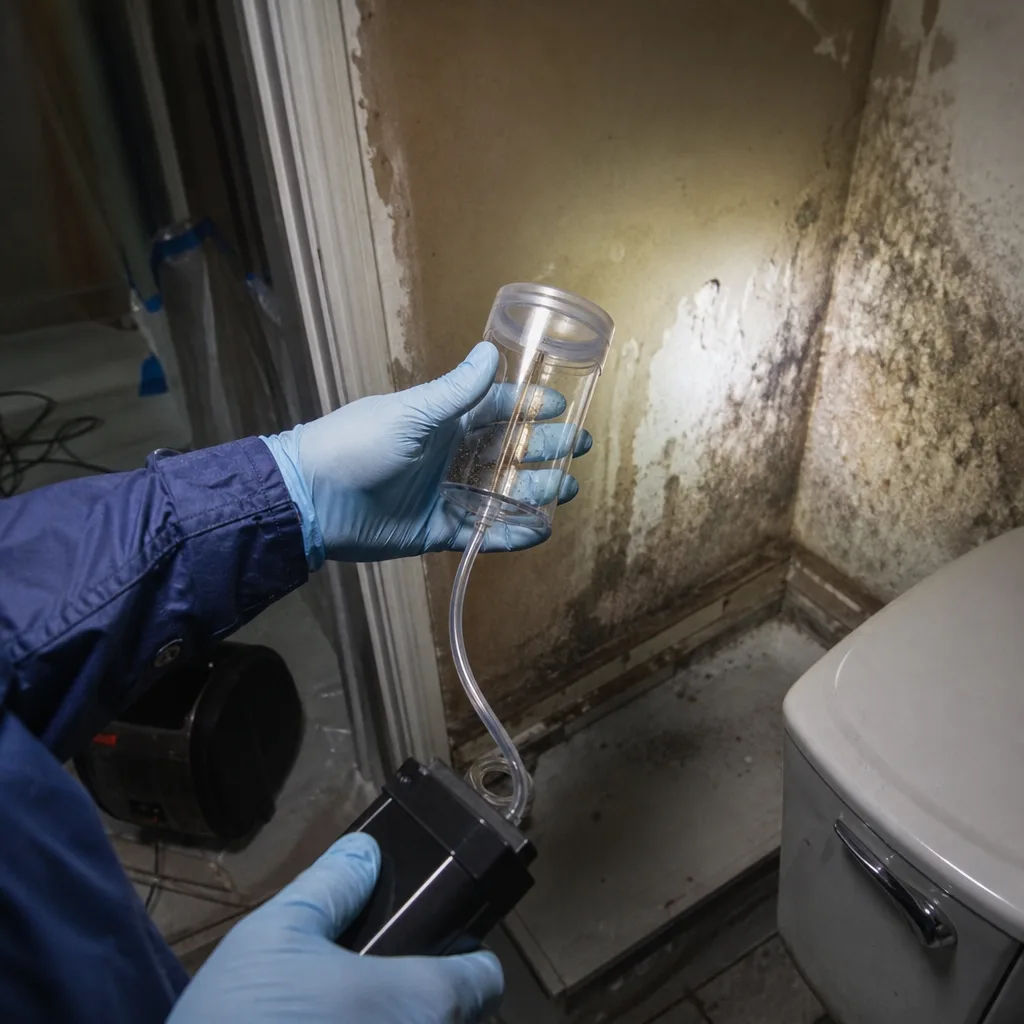
Effective seasonal maintenance requires specific instruments, properly used, with documented calibration. The following equipment produces measurements that adjusters accept and that guide appropriate action:
Pinless Moisture Meter
Measures moisture content in wood and other building materials without surface penetration. Essential for baseline surveys and monitoring. Professional-grade units from manufacturers like Dri-Eaz and Phoenix provide readings calibrated to specific material densities. For Compton homeowners, a pinless meter with wood scale and drywall scale covers most applications.
Action thresholds: Wood moisture content above 16%; drywall above 1.0%; reading 4% or more above established baseline at same location.
Pin-Type Moisture Meter
Penetrates surface materials to measure moisture at depth. More accurate for suspect areas identified by pinless screening. Required for documenting moisture content in structural framing where pinless meters cannot penetrate adequately.
Action thresholds: Framing lumber above 20% at depth; subfloor above 18% at center of panel.
Thermal Hygrometer
Measures temperature and relative humidity. Essential for Santa Ana season monitoring and for verifying that humidification systems maintain appropriate conditions.
Action thresholds: Indoor relative humidity sustained below 20% (Santa Ana season risk) or above 60% (mold growth risk); temperature below 55°F in occupied spaces during heating season.
Infrared Thermometer or Thermal Camera
Identifies surface temperature variations that indicate moisture patterns. Professional thermal imaging reveals evaporative cooling at moisture locations invisible to visual inspection. For homeowner use, a basic infrared thermometer can identify suspect areas for further testing with moisture meters.
Action threshold: Surface temperature 5°F or more below adjacent surfaces, with no explanatory air source (vent, window, uninsulated wall).
Psychrometric Calculator or App
Converts temperature and relative humidity readings into dew point, vapor pressure, and grains per pound - the measurements that professionals use to specify drying equipment and verify completion. Understanding these values helps homeowners comprehend professional drying reports and verify that restoration work achieved appropriate endpoints.
Vapor pressure differential, defined simply, is the force that moves moisture from wet materials to drier air. When this differential is too low, drying stalls; when too high, materials may crack or warp. Professional drying systems from manufacturers like Dri-Eaz, Phoenix, XPOWER, B-Air, and Injectidry are specified and monitored using these values, with daily logs documented to IICRC, RIA, and IFA standards.
When readings exceed action thresholds, the appropriate response depends on severity and trend:
- Single elevated reading, stable or declining: increase monitoring frequency; verify no active leak
- Single elevated reading, increasing: inspect for active water source; consider professional assessment
- Multiple elevated readings, any trend: professional assessment warranted; document all readings before calling
- Visible water or saturated materials: emergency response; stop water source if safely possible; call professional
Our 24-hour live phone coverage means no voicemail delay when readings indicate emergency conditions. Every call connects to a person who can dispatch background-checked, uniformed technicians with documented license verification and the professional-grade equipment to assess and address the condition.
Common Mistakes to Avoid
- Waiting for visible water to inspect. By the time water is visible, framing has often been wet for weeks. In Compton’s climate, mold growth begins on wet cellulose within 48-72 hours. Inspect before symptoms appear.
- Using a single moisture reading without baseline comparison. A 14% reading might be normal for one house in October and dangerously elevated for the same house at the same location. Baseline documentation is essential for interpretation.
- Ignoring Santa Ana season because “it doesn’t rain.” The damage mechanism is drying, not wetting. Homeowners who prepare only for water season miss the structural failures that atmospheric dryness produces in previously water-damaged materials.
- Documenting with phone photos that lack location context. A photo of a wet wall proves nothing about which wall, when, or under what conditions. Every photo needs a reference point and a date.
- Assuming insurance will cover gradual damage if the trigger event was sudden. California courts have upheld maintenance exclusions where the homeowner could not demonstrate reasonable care. Documentation of maintenance is the only effective defense.
- Hiring contractors who won’t provide written scopes or daily drying logs. Without documented drying progress, carriers dispute whether drying was completed appropriately. The Haven Standard requires daily moisture logs as standard deliverables, never upsells.
- Neglecting catch basin proximity. Homes in the two-block zone require enhanced monitoring and drainage verification. Generic maintenance schedules miss this Compton-specific risk factor.
When to Call a Professional
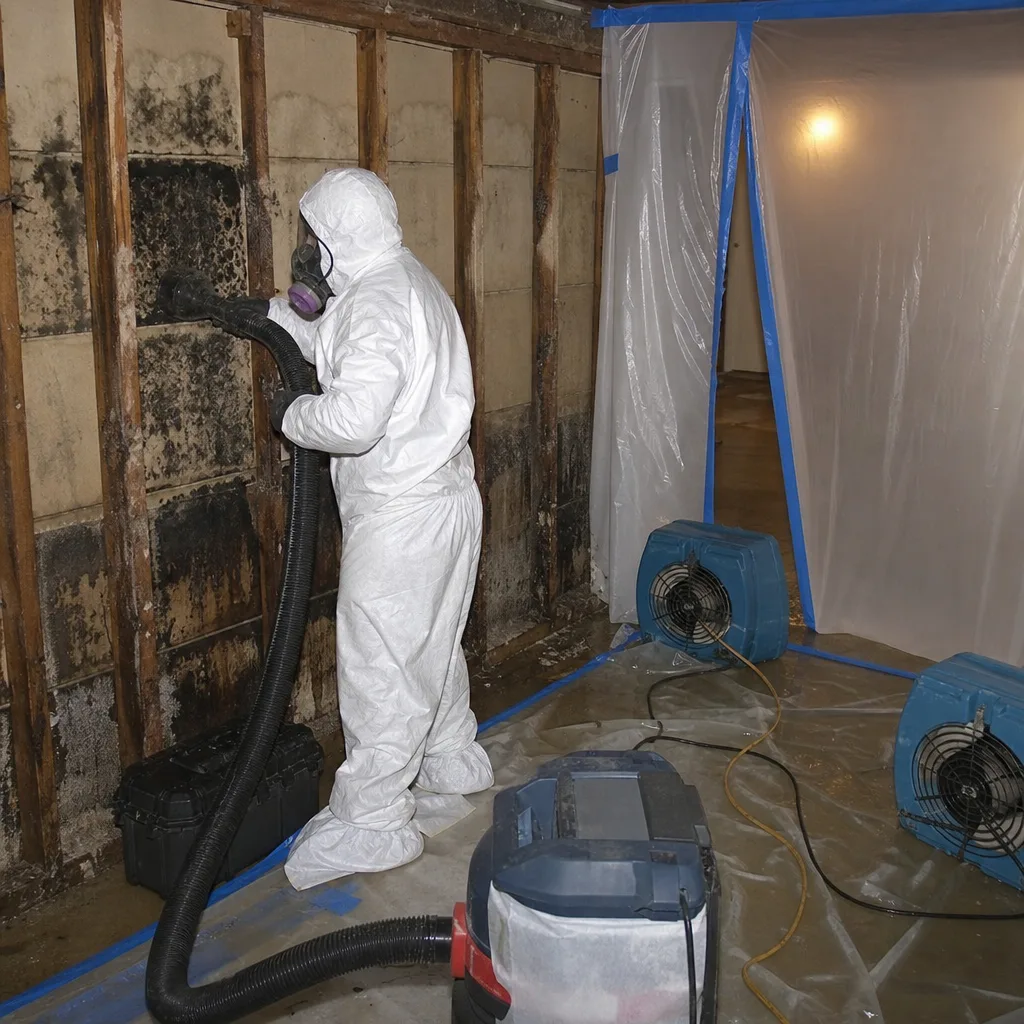
Call a professional restoration company when moisture readings exceed action thresholds and trend upward, when visible water or staining appears, when mold growth is suspected, or when insurance documentation is required for a claim. In Compton specifically, call when atmospheric river forecasts precede known drainage limitations at your property, or when Santa Ana conditions follow a previous water event and new structural symptoms appear.
DryMark Restoration Compton offers free estimates in Compton - call (628) 226-1011. Every estimate includes a written price before work begins, documented photo record, and assessment of whether your maintenance documentation meets insurance defense standards. Our 365-Day Done Right Promise, backed by The Haven Standard, applies to every project: if it’s not done right, we make it right.
Frequently Asked Questions
Professional moisture assessment in Compton typically ranges $150-$350 for residential properties, depending on square footage and number of moisture probe locations. DryMark Restoration Compton provides free estimates that include moisture assessment as part of the scope development process - the written price is delivered before any work begins, with no charge for the assessment itself if you proceed with recommended services. Call (628) 226-1011 to schedule.
Insurance covers sudden and accidental water damage from weather events, but denies claims where maintenance exclusions apply. The key determinant is documentation: can you demonstrate that damage was sudden, not gradual, and that you maintained the property reasonably? Our Free Second Opinion on Any Written Estimate includes review of your documentation and the carrier’s denial language to assess whether the exclusion is defensible.
Live phone coverage is available 24 hours a day, 7 days a week with no voicemail on emergency lines. Response time depends on current demand and your location within Compton, but our dispatch system prioritizes active water intrusion to prevent secondary damage. For active water events, call (628) 226-1011 immediately - the first hours determine whether damage remains a mitigation project or becomes a reconstruction project.
The answer depends on material classification, moisture duration, and contamination category, not perceived size. A “small” event in a carpeted bedroom with clean water and 24-hour response may require only drying. The same event with 72-hour delay, or involving gray water, or affecting particleboard subfloor, may require material removal. Our assessment includes classification by IICRC standards with written explanation of why each action is recommended.
DryMark Restoration Compton coordinates directly with adjusters as part of our standard service. We provide the documented photo record, daily drying logs, written scope, and material specifications that adjusters require to approve invoices. Our documentation-first approach - daily moisture readings, psychrometric data, vapor pressure differential logs - produces claims that carriers pay without dispute in most cases. We do not require you to manage adjuster communication.
Document the water source if safely identifiable, the areas affected, any visible damage with dated photos including location references, and any previous moisture readings if available. Do not enter unsafe areas, disturb electrical equipment, or attempt DIY water extraction if contamination is suspected. Our technicians document everything upon arrival with professional-grade photo records and moisture mapping; your preliminary documentation supplements but does not replace this process.
The Bottom Line
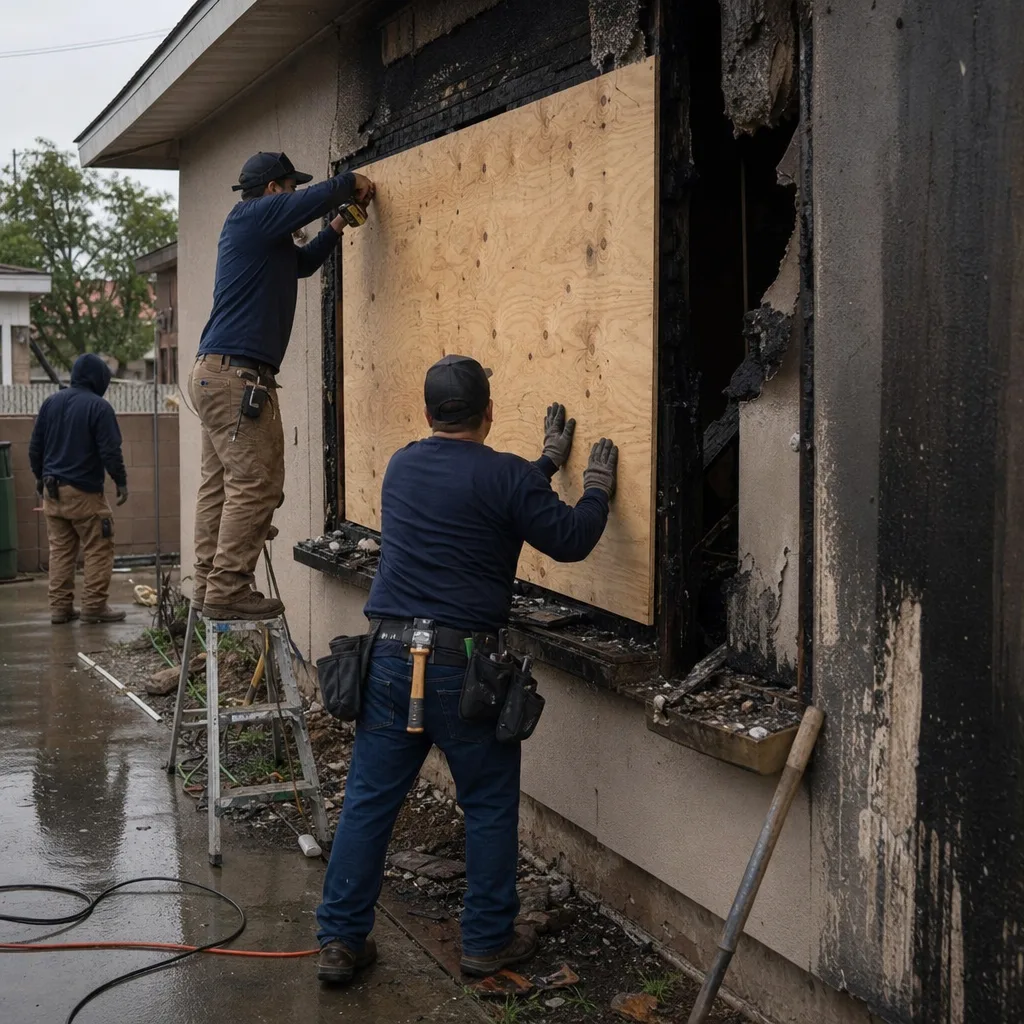
Compton’s two damage seasons demand a maintenance calendar built for local conditions, not generic national guidance. Atmospheric rivers from October through March drive water intrusion that hides in wall cavities and subfloors; Santa Ana winds from June through September reveal that hidden damage through structural drying failures most homeowners misattribute to age or settling. The homeowners who avoid major restoration projects are those who inspect monthly with specific measurements, document findings with dated photos and instrument readings, and address elevated moisture before it triggers the exclusions that California carriers routinely cite. Professional-grade equipment, documented to IICRC, RIA, and IFA standards, produces the daily moisture logs that turn restoration invoices into payable claims. The Haven Standard, applied to every DryMark Restoration Compton project since 2011, requires this documentation as standard deliverable - because a restoration company that cannot prove what it did cannot get its invoice paid, and a homeowner who cannot prove reasonable maintenance cannot defeat an exclusion argument.
Call (628) 226-1011 for a free estimate. Written price before work begins, every time, with no exceptions. Free Second Opinion on any competitor’s written estimate. 365-Day Done Right Promise backed by The Haven Standard.
Written by Alicia Brennan, Owner at DryMark Restoration Compton, serving Compton since 2011.