
Free visual inspection and a written scope of work before any mitigation begins - photos, moisture readings, and drying logs go in your claim file
The scope we write is the scope we bill. Anything new gets shown to you, in writing, before we touch it.
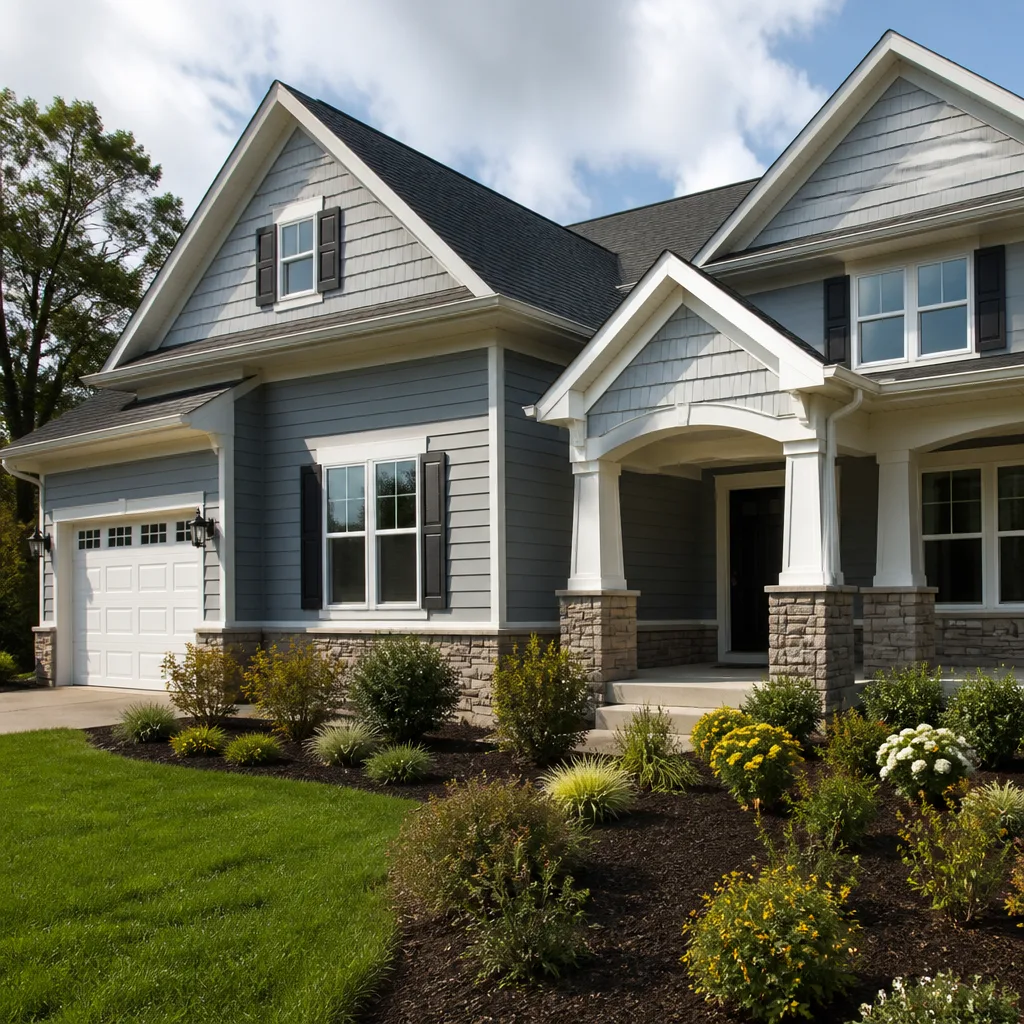
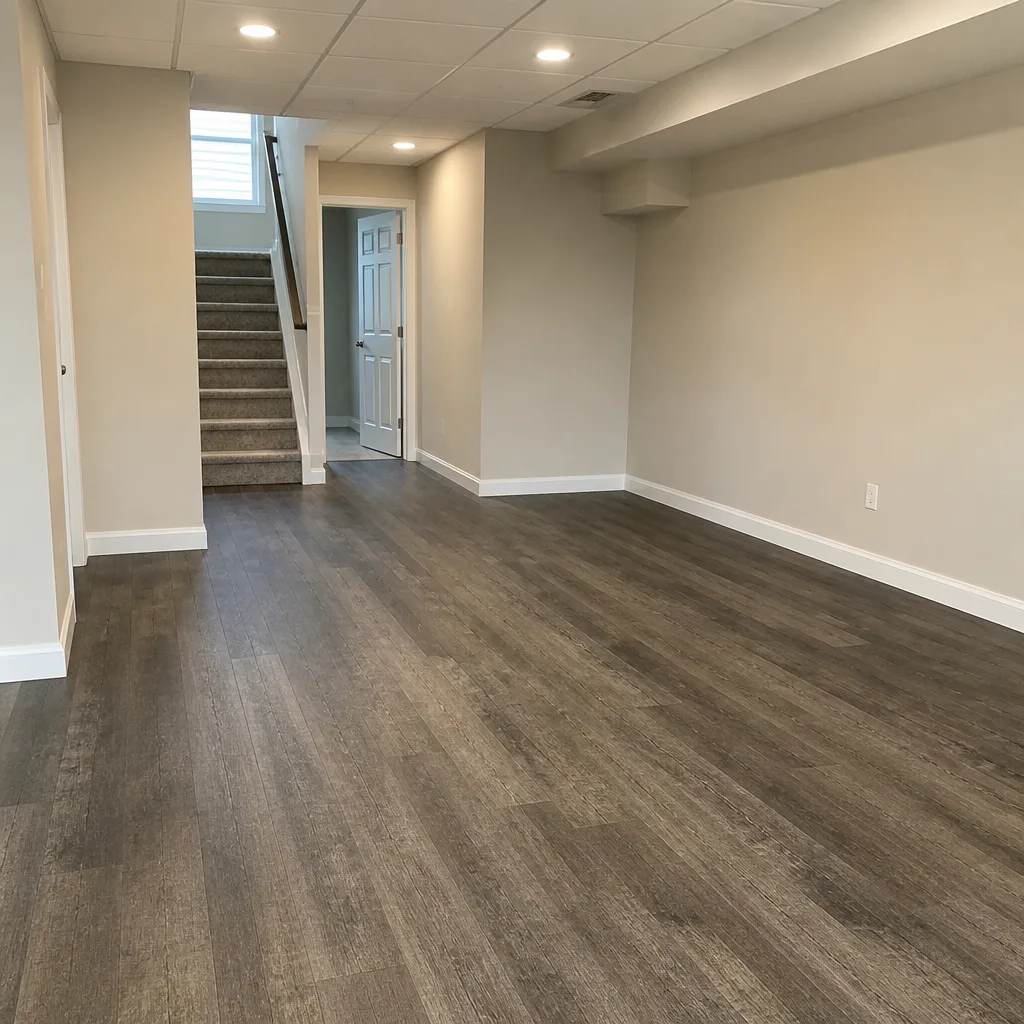
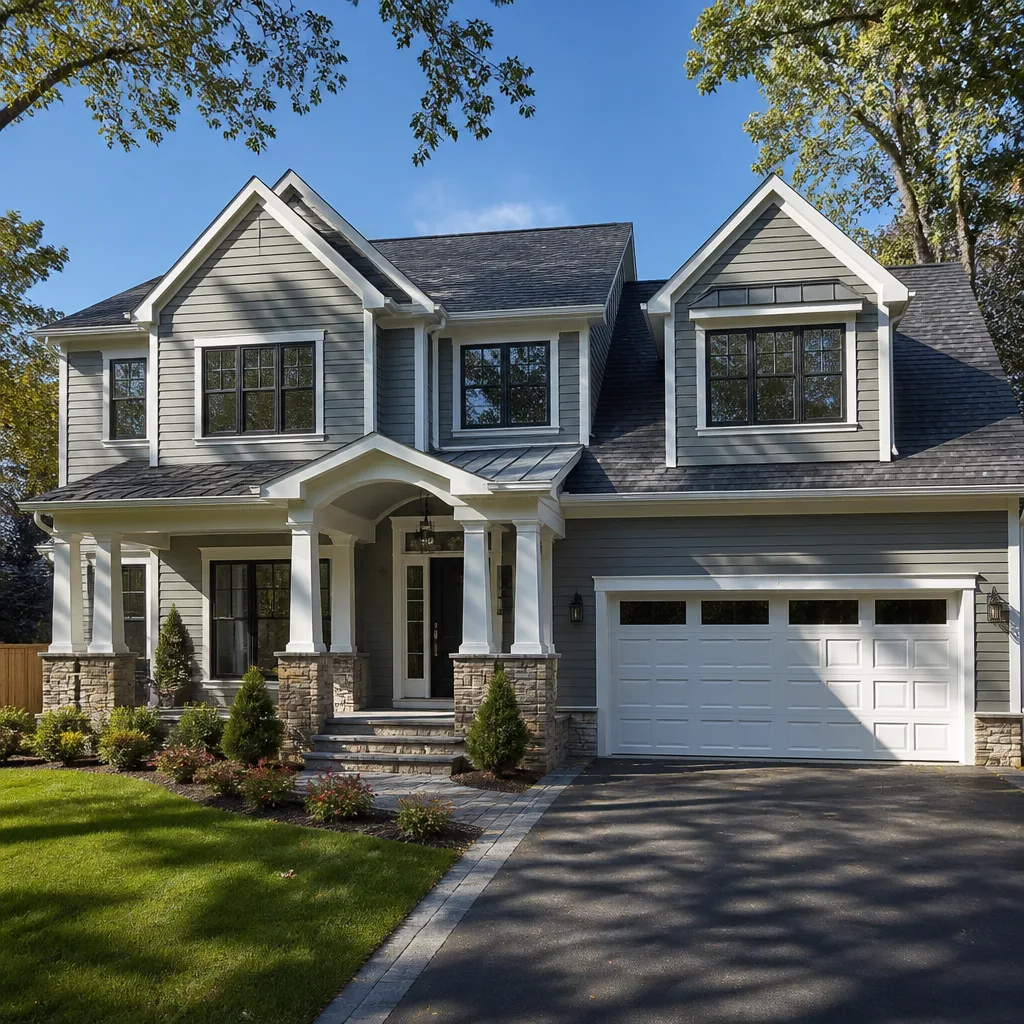
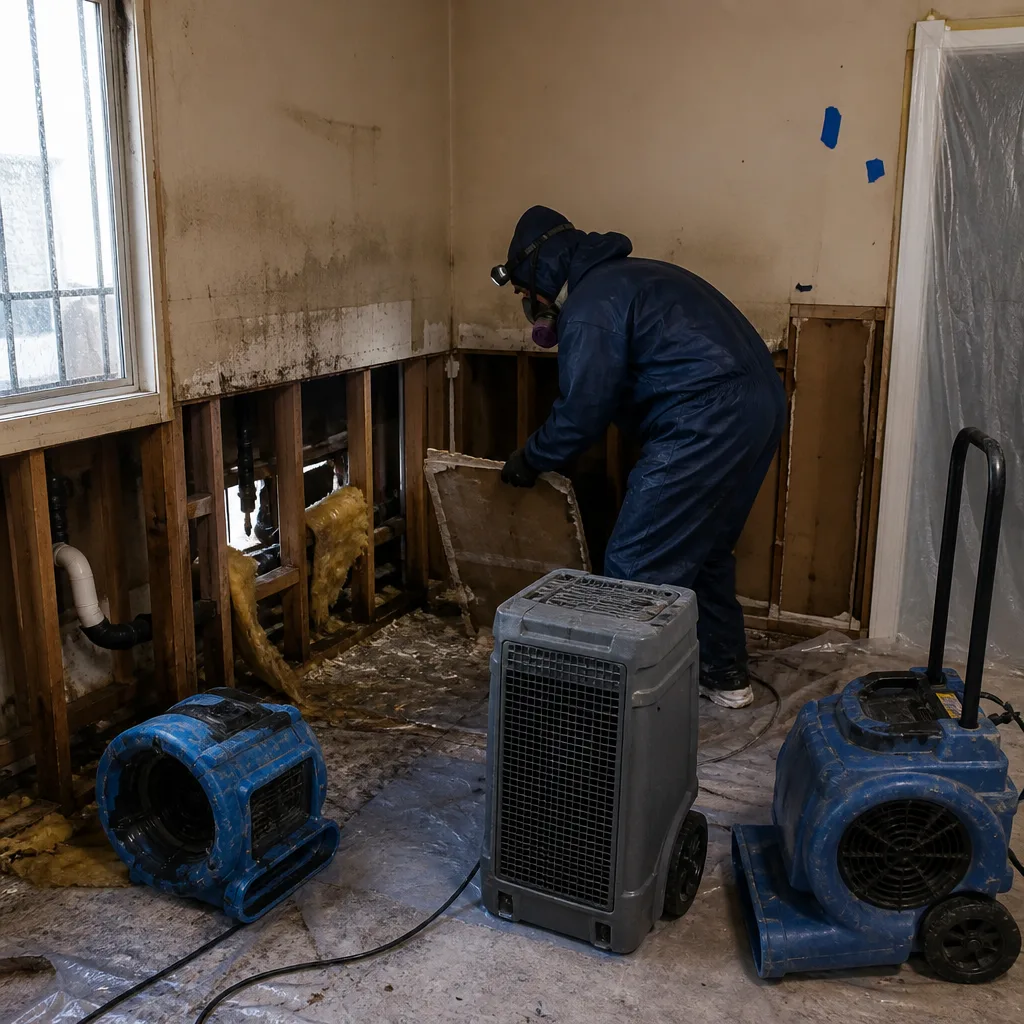 Before
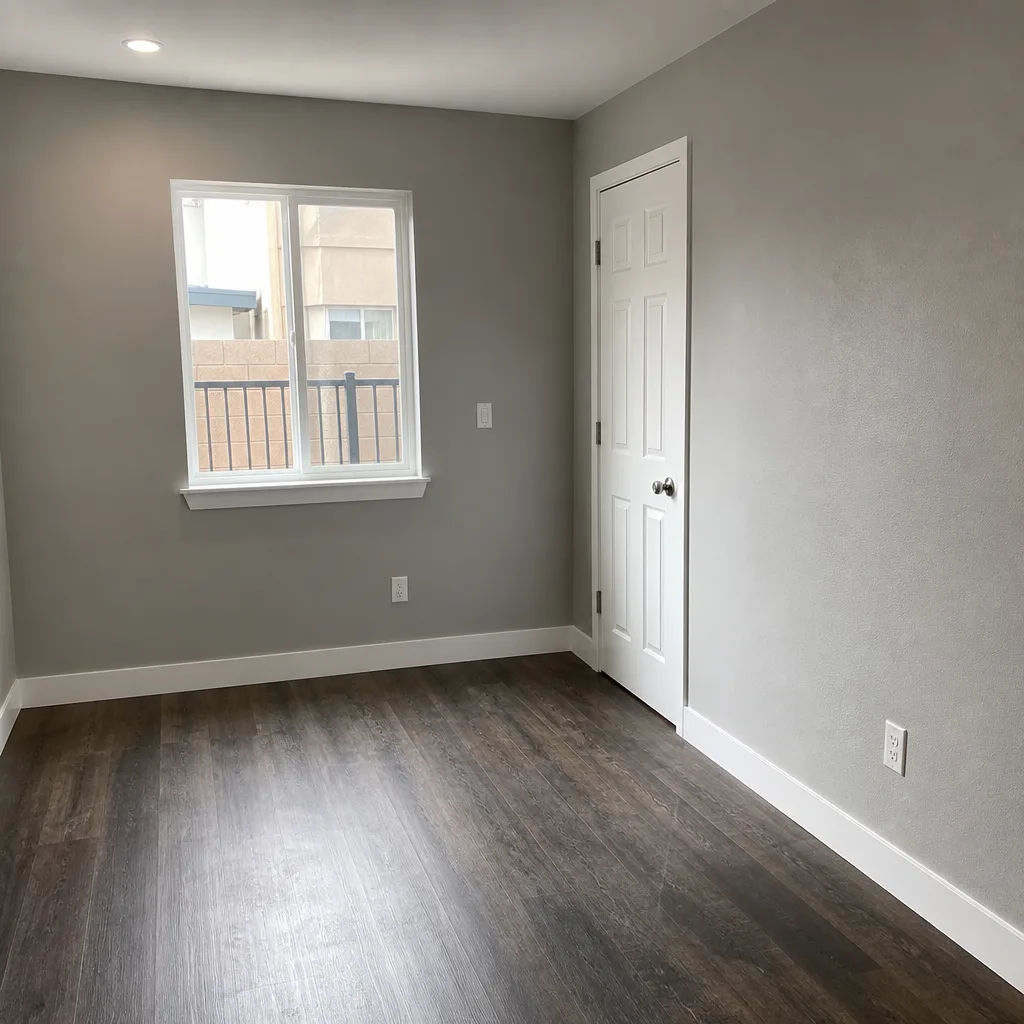 After
After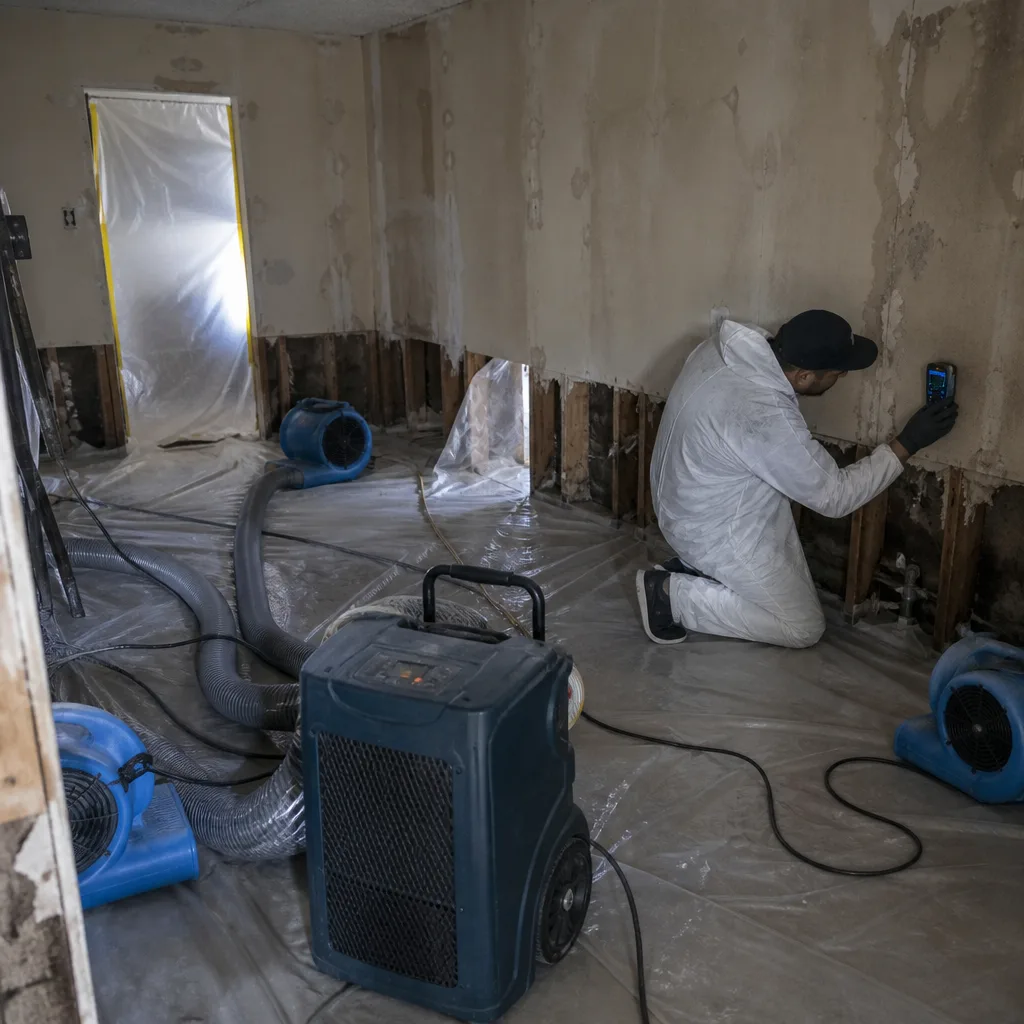 Before
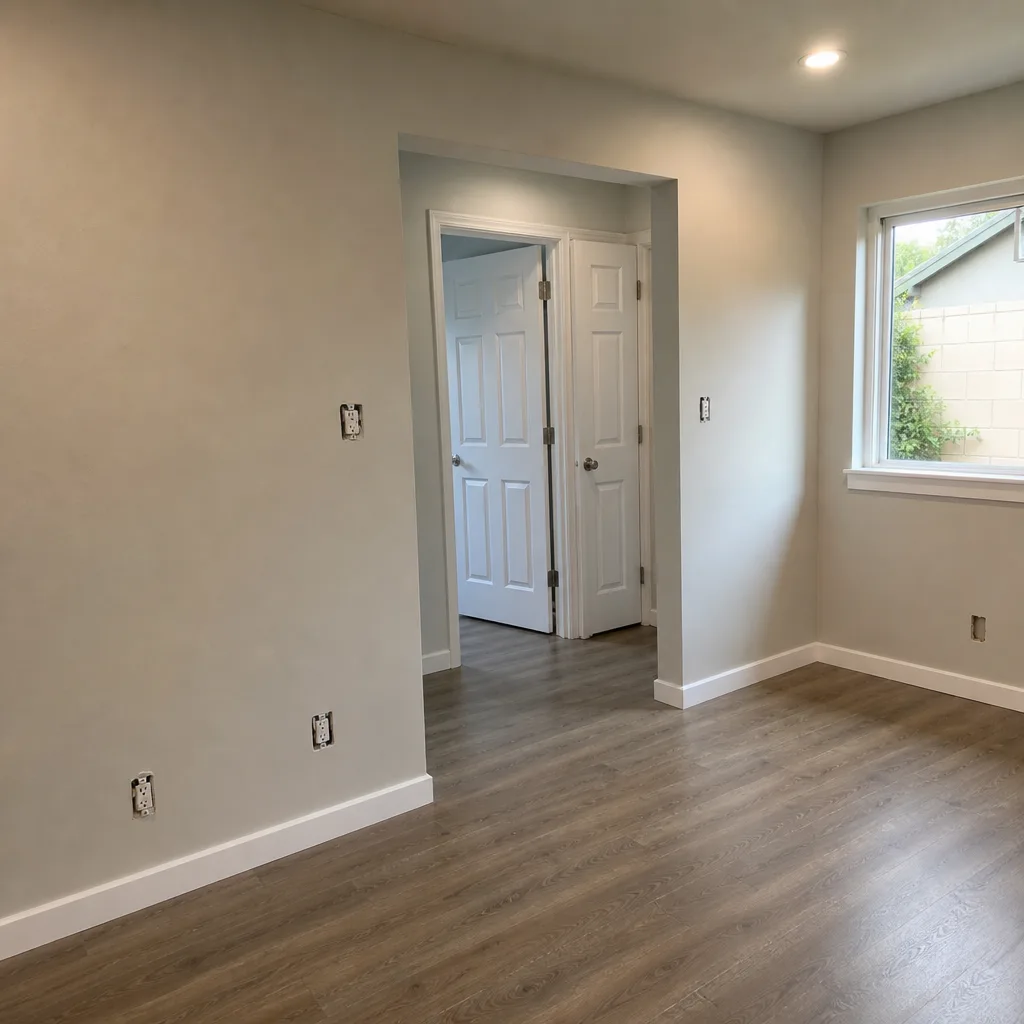 After
After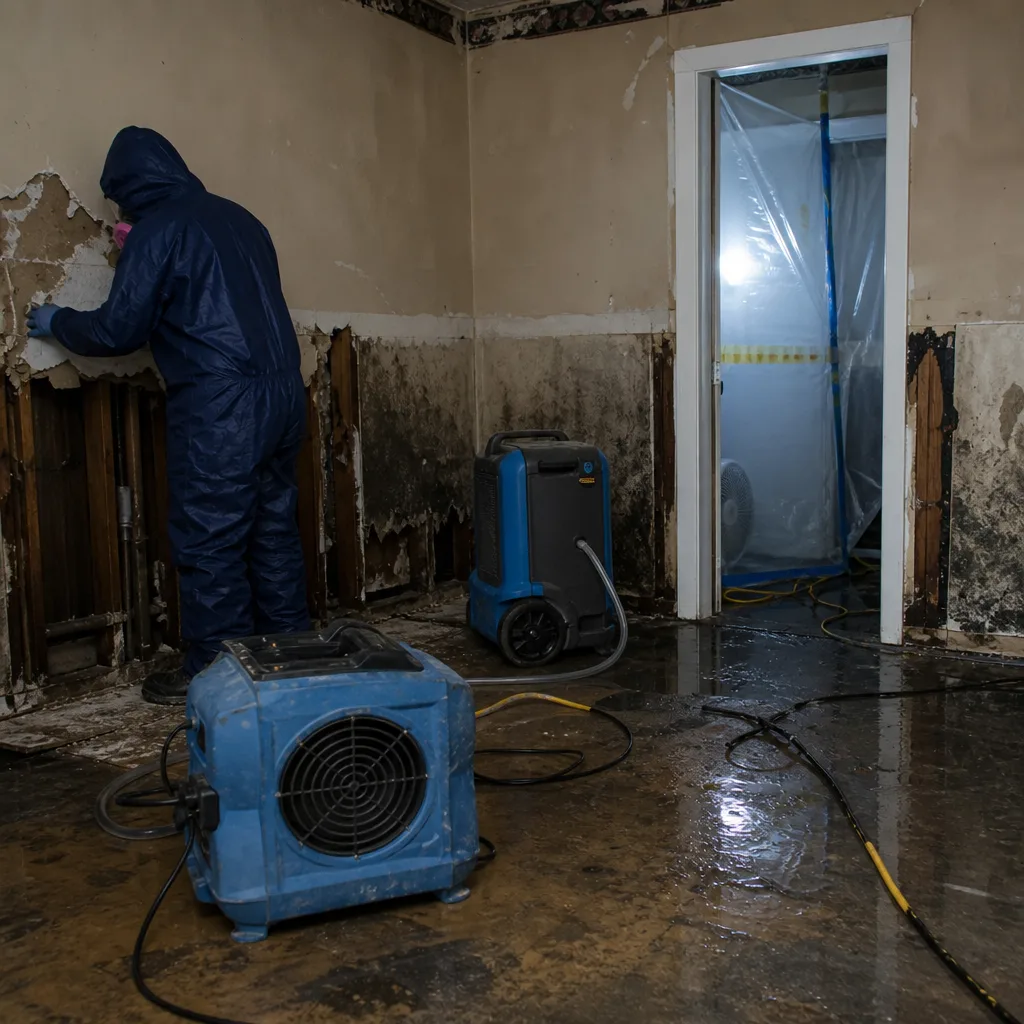 Before
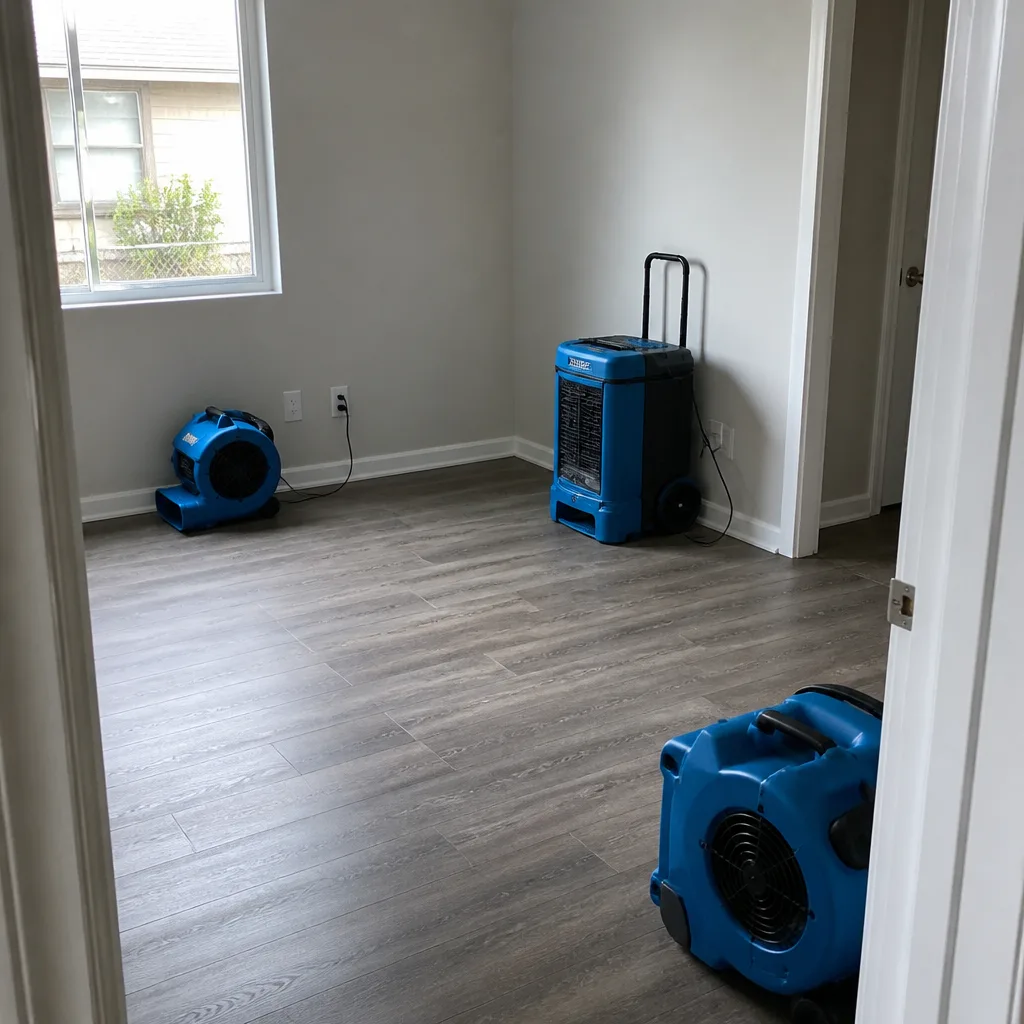 After
After24/7 Emergency Water Damage Restoration in Compton
Water damage restoration in Compton typically costs $2,800-$7,500 for a standard residential loss, with emergency extraction starting at $450-$950 and full structural drying running $1,800-$4,200 depending on square footage and contamination level. Most Compton Creek flood losses fall on the higher end due to mandatory pre-demolition testing. Call (628) 226-1011 now - we answer live, 24 hours a day, 7 days a week, with crews dispatched from our Los Angeles office to Compton addresses inside 45 minutes.
The first hour determines whether a water loss becomes a $3,000 extraction or a $15,000 mold remediation. In Compton’s pre-1960 housing stock, water moves fast through original plaster and lath, wicking into wall cavities where it won’t show on the surface for days. Our Water Damage Restoration team arrives with thermal imaging, moisture meters, and the documentation equipment to start your claim file from minute one.
Understanding Water Damage Restoration Severity in Compton Properties
Water damage falls into three categories, and Compton’s geography pushes most residential losses toward the more severe end. Category 1 is clean water from a burst supply line - rare here because corroded galvanized pipes in pre-1960 homes usually release sediment and rust, immediately elevating the classification. Category 2, gray water with chemical or biological contamination, covers most Compton plumbing failures and roof leaks. Category 3, black water with pathogenic or toxic agents, is standard for Compton Creek flood intrusion and any sewage backup.
Moisture mapping reveals what the eye cannot. In Compton’s slab-on-grade bungalows, we use non-invasive meters to trace water migration through plaster, original hardwood, and the concrete itself. Psychrometric data - temperature, relative humidity, and vapor pressure differential - tells us how aggressively to set our drying strategy. Tertiary drying, the final phase where we drop humidity to pre-loss equilibrium, takes longer in Compton Creek corridor homes because the water table keeps slab edges damp even when interior air reads normal.
The regulatory layer matters too. Any demolition of pre-1960 materials in Compton triggers California’s mandatory lead paint and asbestos abatement protocols. A Category 2 kitchen leak becomes a more complex job when the original popcorn ceiling and 9×9 vinyl tile test positive. We build this into our initial scope so your insurer sees it coming, not as a surprise add-on.
Why Compton Property Owners Choose DryMark Restoration Compton
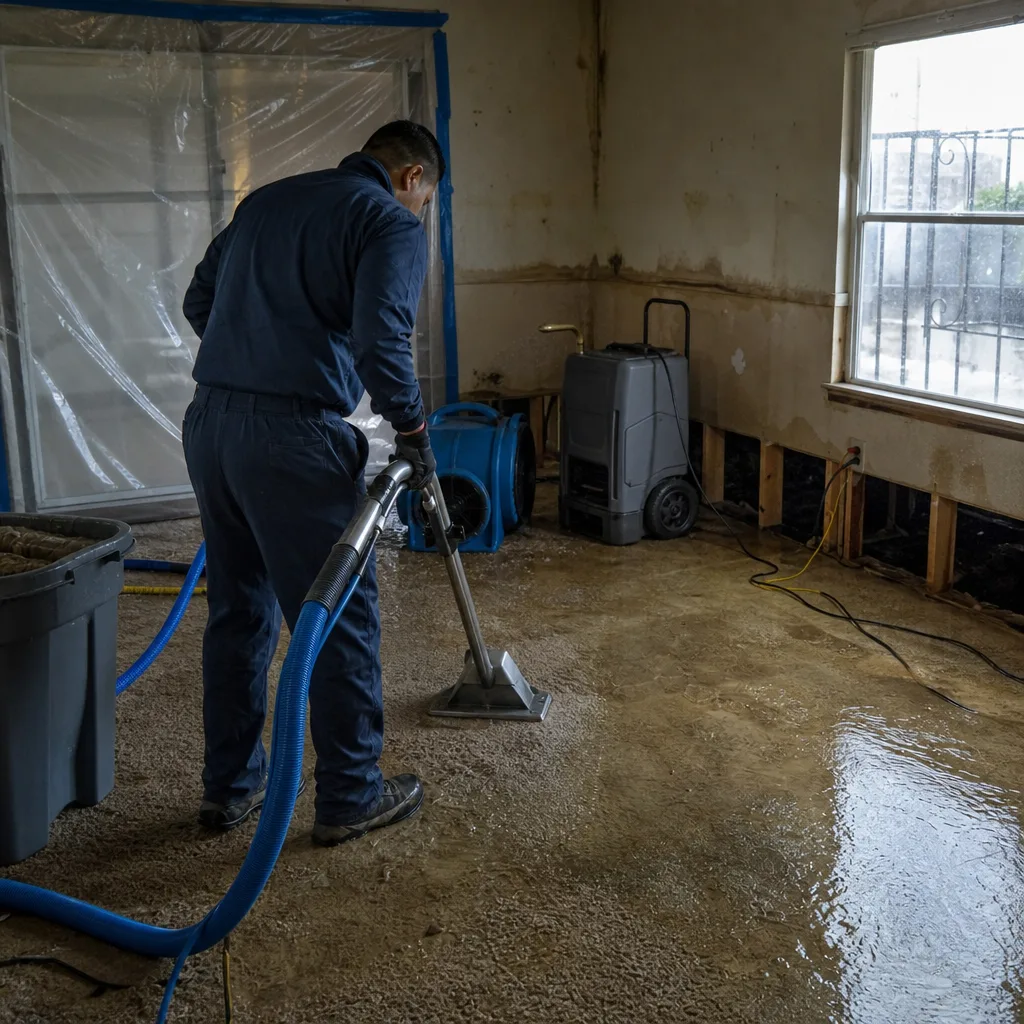
- 45-minute response commitment to Compton addresses - our Los Angeles office dispatches crews who know the creek corridor and the pre-1960 stock.
- 24/7 live answer, always a real person, never an automated system or voicemail tree while water is still moving through your walls.
- IICRC-certified crews holding WRT (Water Damage Restoration Technician) and AMRT (Applied Microbial Remediation Technician) credentials, with licenses verified before they arrive.
- Free visual inspection and moisture assessment - we document what we find before proposing any work.
- Direct insurance billing and adjuster coordination, with photo-documented drying logs that turn restoration invoices into payable claims.
- One team from extraction through reconstruction - no handoffs between mitigation and rebuild contractors, no gaps in documentation.
BeforeAfterOur Water Damage Restoration Process
1. Inspection & Assessment
We arrive with thermal imaging cameras, penetrating and non-penetrating moisture meters, and hygrometers to map the full extent of water migration. In Compton Creek corridor homes, we extend moisture mapping beneath the slab - the water table here stays elevated for weeks after surface water recedes, and missing this layer means mold behind baseboards two months later.
2. Water Extraction & Stabilization
Truck-mounted extraction units remove standing water from floors, carpets, and hard surfaces. For slab homes with no basement, we deploy weighted extraction tools that compress padding and carpet to pull water the pad holds. Every gallon we extract now is a gallon we don’t have to evaporate later, cutting drying time and cost.
3. Structural Drying & Dehumidification
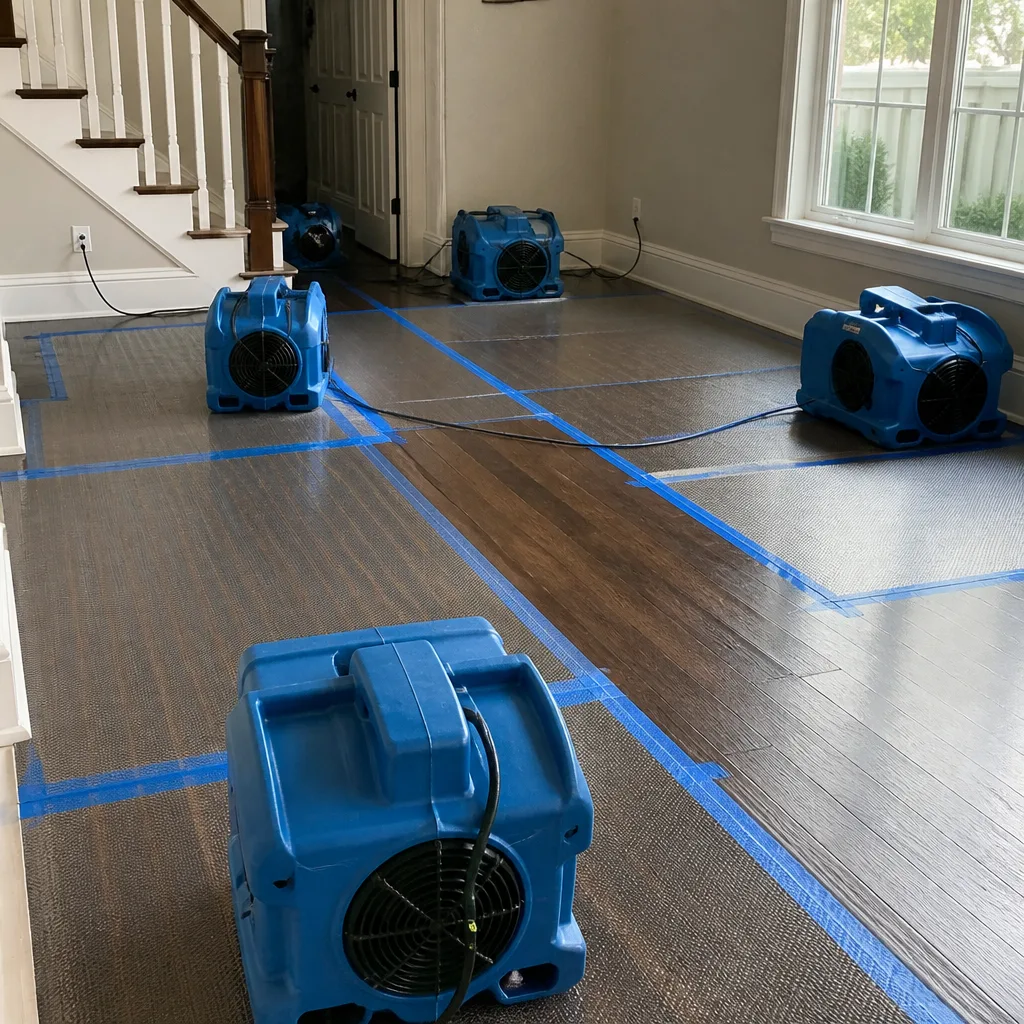
We deploy Dri-Eaz and Phoenix LGR dehumidifiers alongside B-Air axial air movers, positioned to create controlled airflow across wet surfaces. In Compton’s older homes with original plaster and lath, we use Injectidry systems to force dry air into wall cavities without destructive demo. Daily moisture readings document progress to IICRC standards.
4. Cleaning & Sanitization
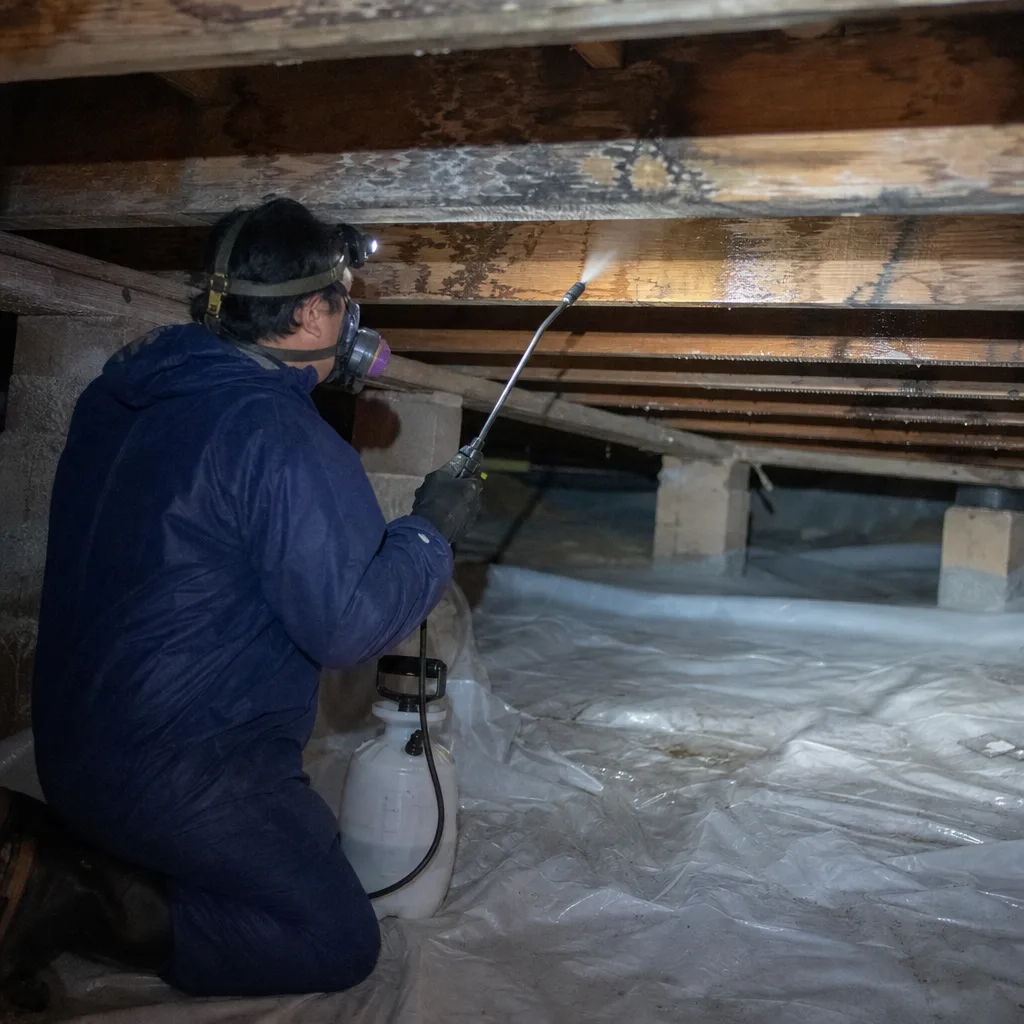
Category 2 and 3 losses receive antimicrobial treatment to affected surfaces, with HEPA air scrubbers running during the process to capture airborne particles. We clean to the condition safe for occupancy, not merely to appearance - what an adjuster can see and what a homeowner can safely breathe are different standards.
5. Lead & Asbestos Abatement Coordination
Pre-1960 Compton homes require certified abatement before demolition of affected materials. We coordinate licensed abatement contractors, schedule air clearance testing, and document every step for your insurer. Skipping this step exposes the job to regulatory shutdown and the homeowner to liability - we don’t let that happen.
6. Repairs & Restoration
Once drying targets are met and clearance is issued, our reconstruction team replaces drywall, flooring, trim, and fixtures to match pre-loss condition. The same crew that extracted the water scopes the rebuild, so nothing gets lost in translation. Every job closes with a signed 365-Day Done Right Promise under The Haven Standard.
Need Emergency Water Damage Restoration in Compton Now?
Crews minutes away, answering live 24 hours a day. The sooner we start, the less it costs.
Working With Your Insurance Company
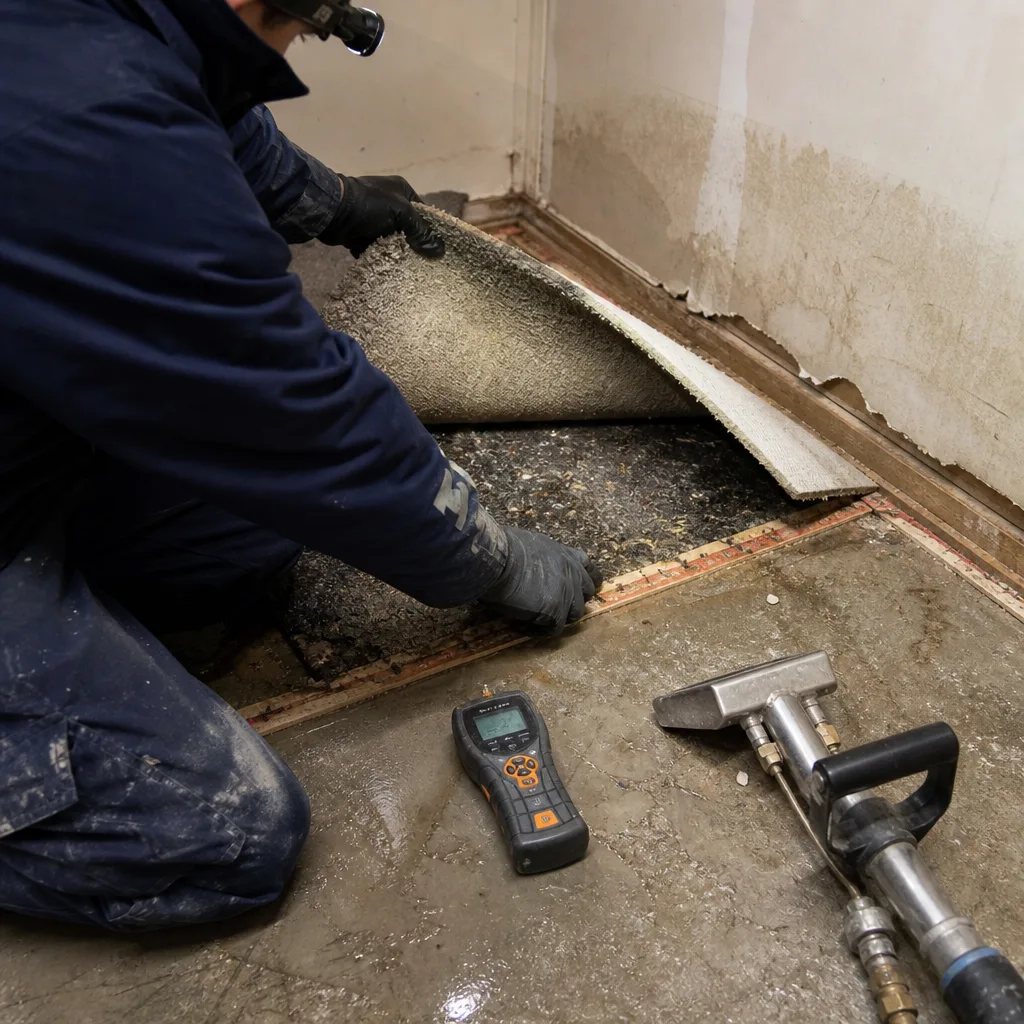
Insurance claims fail on documentation gaps. We close those gaps from the first hour. Every DryMark Restoration Compton job produces a photo record on every visit, daily moisture logs with psychrometric readings, and a detailed line-item scope written before any work begins. We speak adjuster because Alicia Brennan, who founded this company in 2011, spent years on the claims side and built our systems around what actually gets invoices paid.
We don’t hand you a stack of papers and wish you luck. We coordinate directly with your carrier, submit documentation through industry-standard platforms, and defend our scope when questions arise. The photo record, the drying log, the written price - these are standard deliverables on every job, never upsells.
What We Provide Your Insurer
- Thorough documentation of the loss
- Photos of all damage, room by room
- Moisture readings and drying logs
- A detailed, line-item scope of work
- Direct coordination with your carrier
Built for Compton’s Loss Calendar
Compton’s water damage season runs November through March, driven by El Niño-intensified winter storms that push Compton Creek over its channelized banks. January and February bring the heaviest losses - not from rainfall totals alone, but from concentrated downpours on saturated ground with nowhere to drain. The flat LA Basin topography means water pools rather than runs off, and slab-level homes along the creek corridor take the worst of it.
Spring brings secondary mold calls from winter floods that were dried superficially. Summer is quieter for water but busy for fire and smoke as Santa Ana winds drive ember risk through densely built wood-frame blocks. Fall’s early rain events catch homeowners who deferred roof maintenance through the dry season, sending water through deteriorated shingles into original plaster ceilings.
Deferred maintenance compounds every season. Corroded galvanized supply lines in Compton’s post-WWII stock fail without warning, often while residents are at work, turning a $400 plumbing repair into a $6,000 restoration before anyone discovers it.
Water Damage Restoration Across Compton’s Neighborhoods
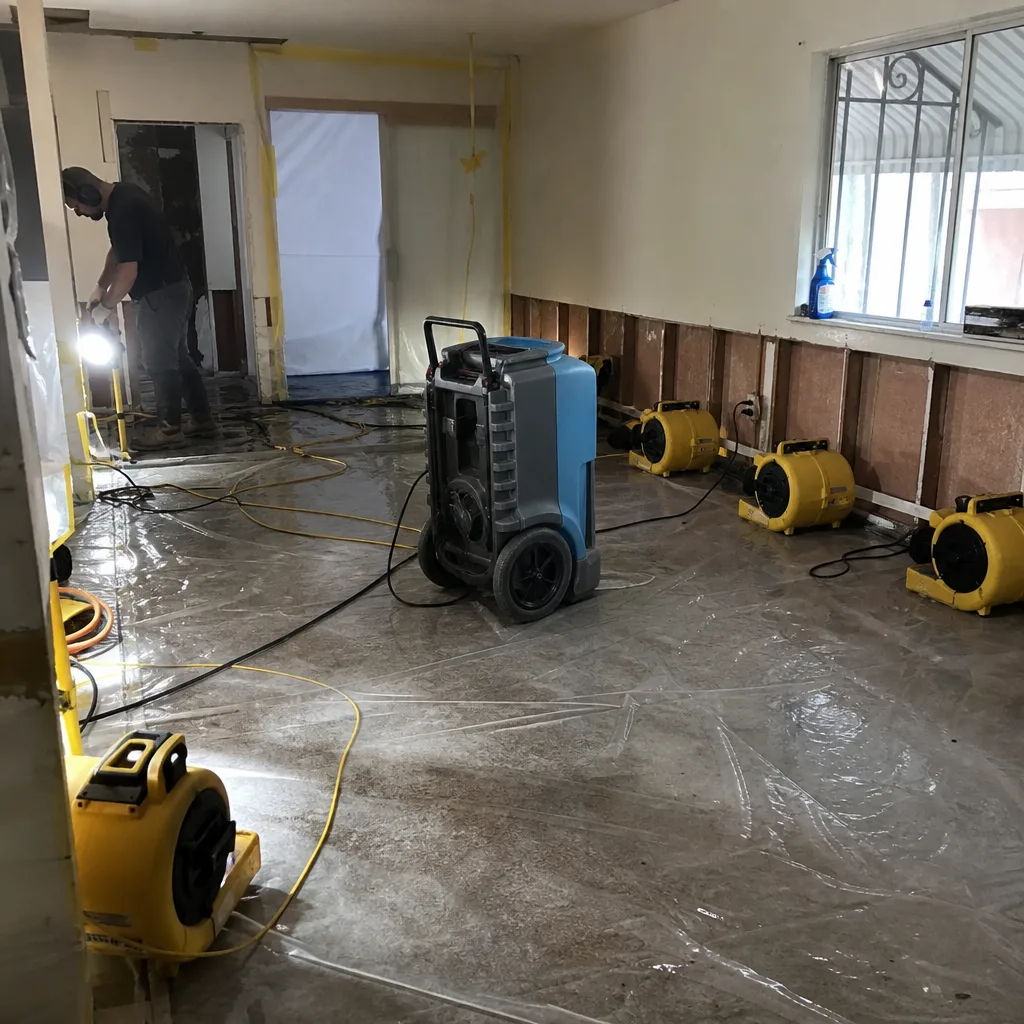
Compton Creek defines our response geography. The blocks flanking the creek between Alondra Boulevard and Rosecrans Avenue see the highest volume of flood-driven calls - slab homes with no elevation buffer, original construction, and the persistent sub-slab dampness that outlasts surface drying by weeks. We were called to a post-WWII bungalow on the blocks flanking Compton Creek after an El Niño storm pushed creek water into the street and across the slab. Surface water was gone by the time we arrived, but moisture readings below the slab stayed elevated for weeks, so we ran Injectidry and Dri-Eaz air movers under containment while treating the crawl edge with antimicrobial treatment. The homeowners had no visible sign of the problem until we found mold already established behind the baseboards in two rooms.
North Compton, toward Willowbrook Avenue and the 91 Freeway corridor, sees more supply-line and appliance failures in aging ranch homes with original copper or galvanized plumbing. The Dominguez Hills area, with its slightly newer 1960s stock, has fewer abatement triggers but more slab leak complexity - the concrete is newer and tighter, so water travels further before showing symptoms.
West Compton toward Athens and the Gardena border mixes industrial and residential, with commercial water losses from aging flat-roof warehouse conversions alongside the same residential stock we see citywide. Each zone gets a different equipment loadout and a different documentation emphasis for the adjuster.
Specialized Water Damage Restoration Services We Offer in Compton
Emergency Water Extraction
Standing water begins degrading to Category 2 within 48 hours and Category 3 within a week. Our truck-mounted extraction systems remove thousands of gallons per hour from Compton’s slab-level homes, with weighted tools that compress saturated carpet and pad to extract what gravity cannot drain. For Compton Creek flood losses, extraction is only the visible phase - we schedule immediate sub-slab moisture mapping to catch what extraction leaves behind.
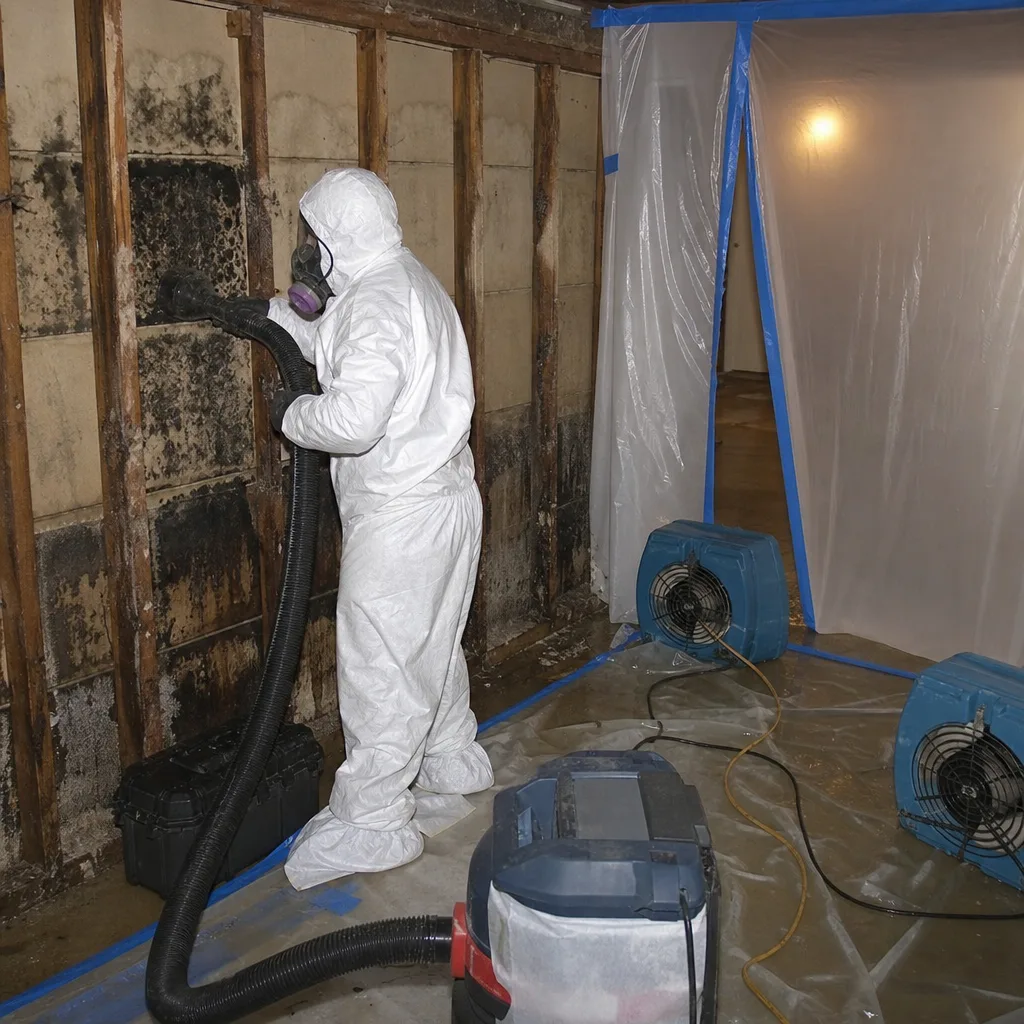
Structural Drying & Dehumidification
Drying a structure means controlling vapor pressure differential - the force that drives moisture from wet materials into dry air. We deploy Phoenix 200 HT dehumidifiers and B-Air Grizzly air movers in calculated ratios based on your home’s cubic footage and class of water loss. In Compton’s plaster-and-lath construction, standard drywall drying protocols fail; we adjust airflow velocity and temperature to pull moisture through dense, historic materials without cracking them.
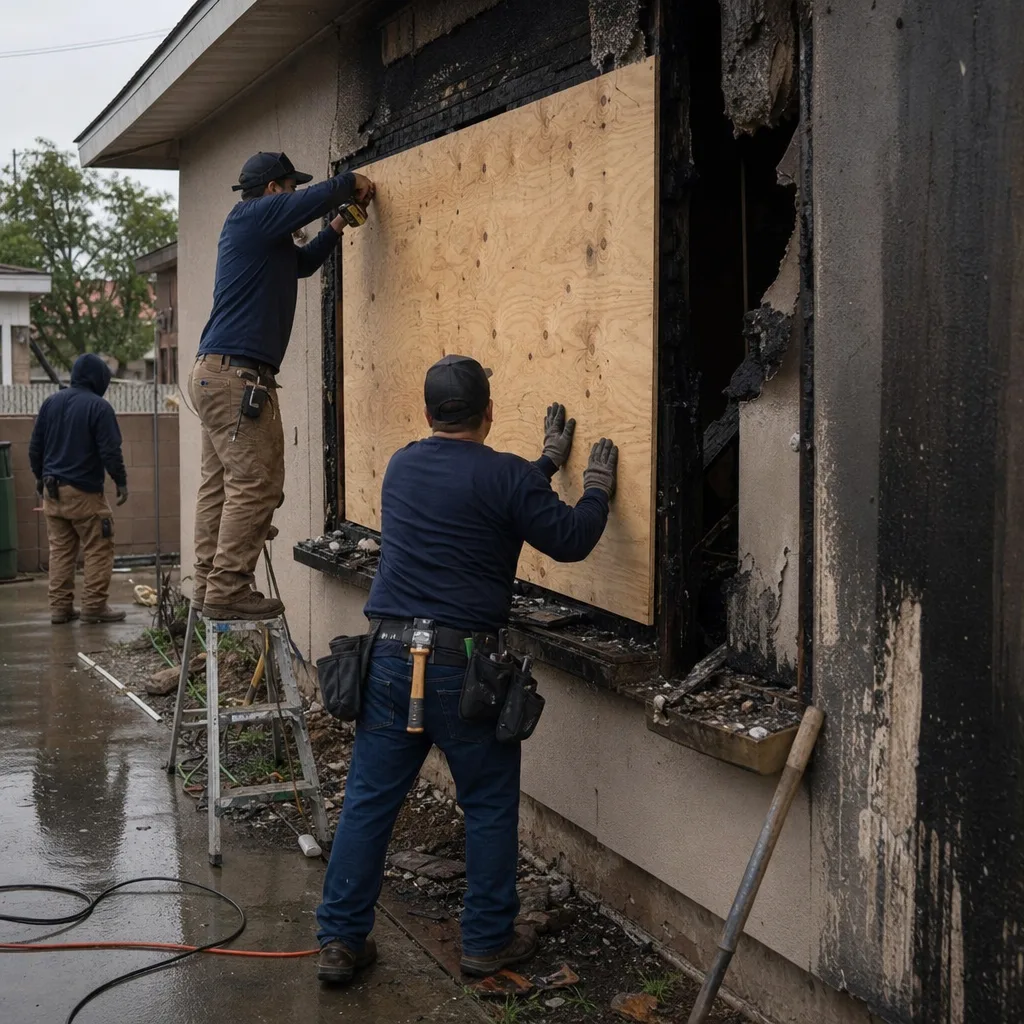
Flood Cleanup
Compton Creek floodwater is Category 3 by definition - urban runoff, possible sewage cross-contamination, and whatever the creek collected upstream. We treat it accordingly: full PPE for crews, antimicrobial treatment on all affected surfaces, and HEPA air scrubbing during the entire process. The regulatory layer adds lead and asbestos abatement for pre-1960 materials, which we coordinate before any demolition begins.
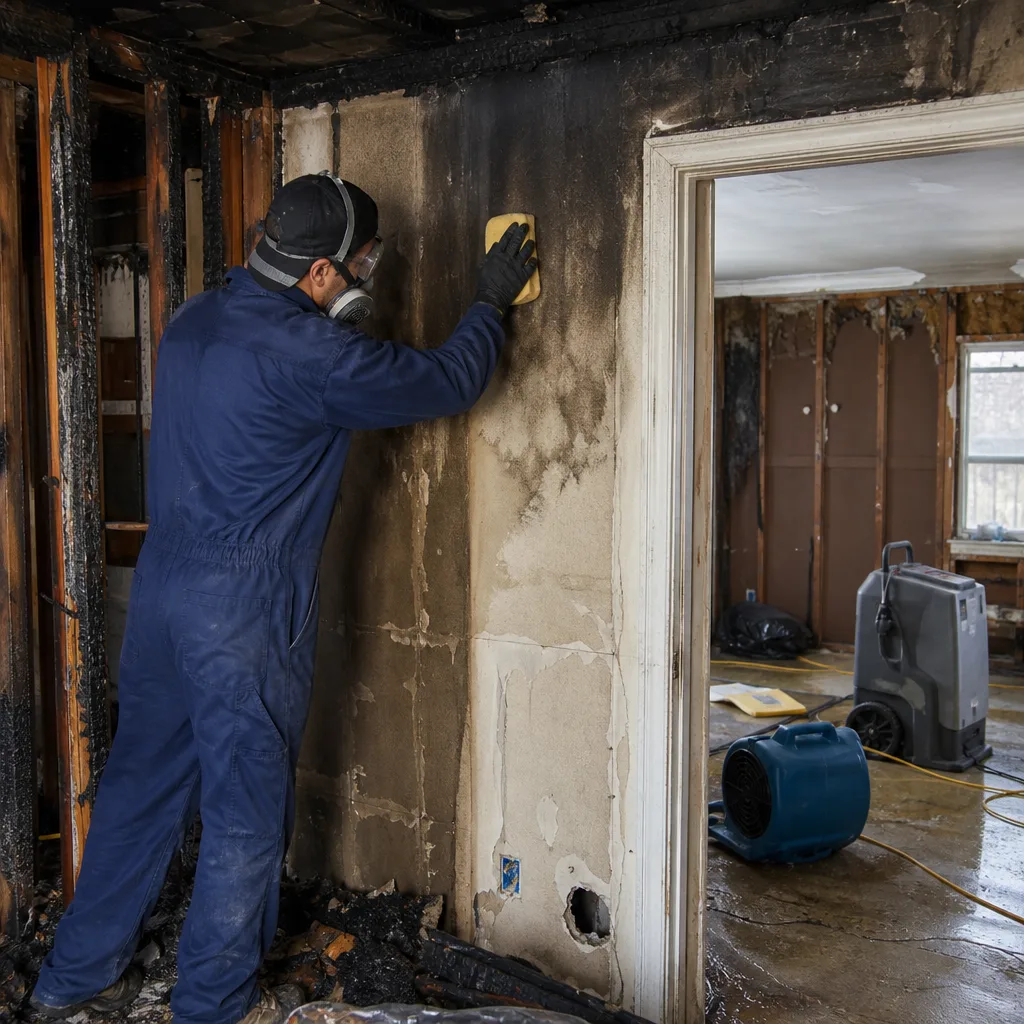
Burst Pipe Restoration
Galvanized steel supply lines in Compton’s post-WWII stock corrode from the inside, thinning until they fail without warning. A burst pipe at 2 AM can release 50 gallons per hour until the main is shut. We extract, dry, and document - but we also photograph the failed pipe and surrounding corrosion for your adjuster, distinguishing sudden accidental discharge from long-term maintenance issues that carriers may dispute.
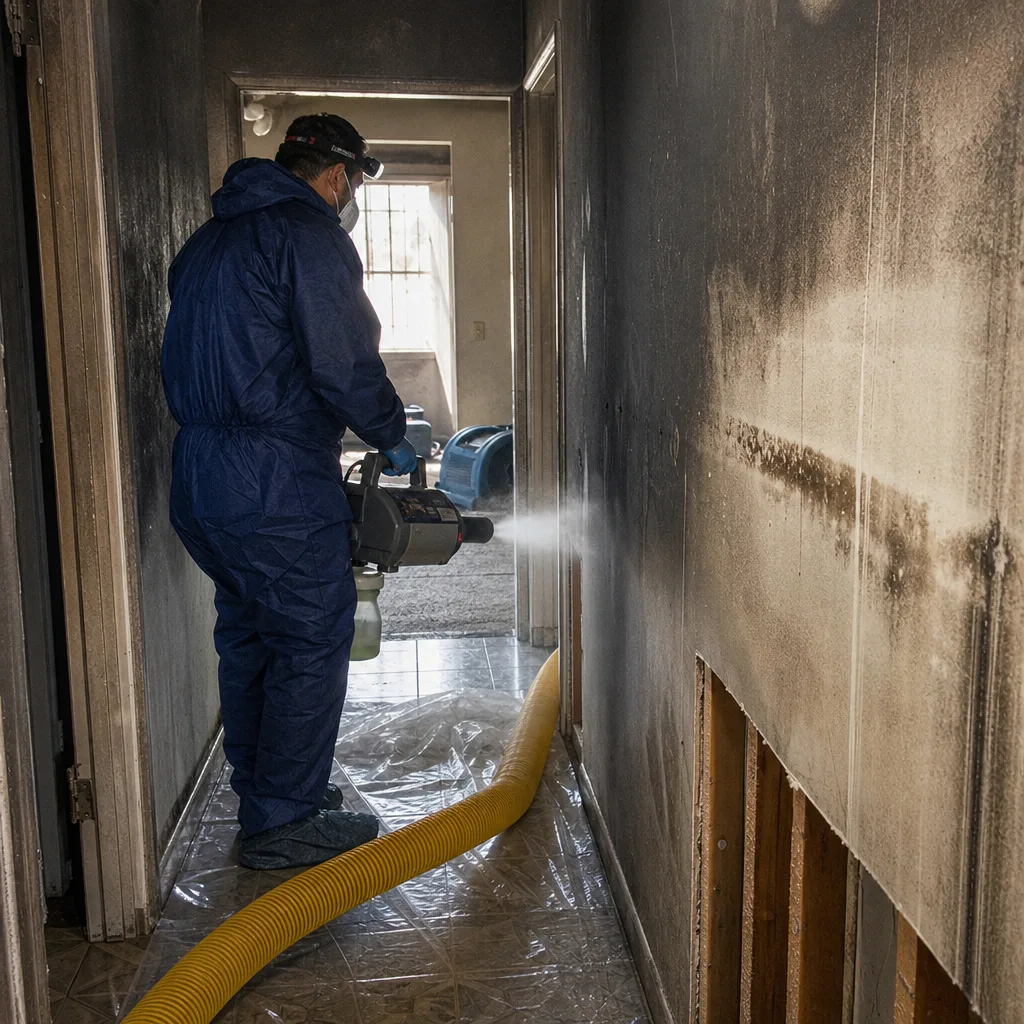
Basement Water Removal
True basements are rare in Compton’s slab-on-grade stock, but partial daylight basements and converted crawl spaces appear in pockets near the Dominguez Hills area. These spaces flood differently - hydrostatic pressure pushes water through slab cracks, and sump failures compound the problem. We deploy submersible pumps and portable extraction, then address the drainage failure that caused the intrusion.
What happens when you call
- 1
A real person answersNo phone trees - you reach a local pro.
- 2
You get an upfront price rangeHonest numbers before anyone is dispatched.
- 3
A background-checked tech heads outLicensed & insured, dispatched right away.
- 4
You approve before work beginsNothing starts until you say go.
Water Damage Restoration Costs in Compton, CA
Emergency water extraction in Compton runs $450-$950 for a standard residential loss, with after-hours and holiday surcharges adding 15-25%. Structural drying and dehumidification typically costs $1,800-$4,200 for a 1,200-square-foot home, depending on material saturation and the number of affected rooms. Full restoration including drywall, flooring, and trim replacement ranges $2,800-$7,500 for Category 1-2 losses.
Compton Creek flood losses and pre-1960 homes trend higher. Category 3 flood cleanup with antimicrobial treatment adds $800-$1,500. Mandatory lead and asbestos abatement before demolition runs $1,200-$3,800 depending on square footage and material type - this is not optional, and any contractor who skips it exposes you to regulatory liability.
Insurance typically covers sudden accidental discharge and storm-driven flooding if you carry the appropriate policy endorsement. We provide a written price before any work begins, Haven Standard, Clause 1, and a free second opinion on any competitor’s written estimate. Call (628) 226-1011 for an exact scope - estimates are free.
We Also Serve Cities Near Compton
Our crews respond throughout the South Bay and Harbor Area from our Los Angeles dispatch office. We regularly serve Water Damage Restoration in Compton and neighboring Gardena, Carson, Torrance, and Wilmington - each with their own housing stock patterns and loss profiles, each documented to the same standard.
Serving Compton, CA - Our Local Coverage Area
We’re based in the Compton area and know this community well. Use the map below to see our service coverage - if you’re nearby, we can almost certainly help.
Compton Water Damage Restoration Questions, Answered
Why does my Compton slab home still read wet weeks after the creek flood water drained?
The channelized Compton Creek corridor maintains a high water table that keeps slab foundations persistently damp long after surface streets dry.
Moisture meters read elevated because water is still migrating through the concrete capillary structure and wicking into base plates and wall cavities. Standard drying stops at the surface; we extend moisture mapping beneath the slab and deploy Injectidry systems to pull vapor from the sub-slab zone. Ignoring this layer means mold behind baseboards in 30-60 days. Call (628) 226-1011 and we’ll show you the readings.
Does my pre-1960 Compton home need lead and asbestos testing before water damage demo?
Yes - California regulations mandate testing for lead paint and asbestos-containing materials before demolition of any pre-1978 construction, and Compton’s overwhelmingly pre-1960 housing stock makes this virtually unavoidable.
Original popcorn ceilings, 9×9 vinyl floor tiles, duct insulation, and plaster with asbestos joint compound are common here. We coordinate certified abatement contractors and air clearance testing before any demolition begins. A contractor who skips this step saves a day and costs you a regulatory violation. Call (628) 226-1011 for a scope that includes proper abatement sequencing.
How fast does mold start after a Compton Creek flood loss?
Mold colonization begins 24-48 hours after water intrusion on organic materials at sustained moisture levels above 16% wood moisture equivalent.
In Compton Creek corridor homes, the persistent sub-slab dampness extends this window - even after surface drying, wall cavities and base plate zones stay wet enough for hidden colonization. We find active mold behind baseboards in homes that “looked dry” weeks after the flood. Early antimicrobial treatment and sub-slab drying prevent this. Call (628) 226-1011 for moisture mapping that catches what the eye misses.
What is the difference between category 1, 2, and 3 water in a Compton flood cleanup?
Category 1 is clean water from a broken supply line; Category 2 is gray water with chemical or biological contamination from appliances or corroded pipes; Category 3 is black water with pathogenic or toxic agents from sewage or flood sources like Compton Creek.
Compton’s pre-1960 galvanized plumbing usually pushes supply-line failures to Category 2 immediately, and any creek intrusion is Category 3 by definition. The category determines PPE requirements, antimicrobial intensity, and whether materials can be salvaged or must be removed. We classify correctly on arrival and document the rationale for your adjuster. Call (628) 226-1011 for assessment.
Can a burst pipe or roof leak in an older Compton bungalow turn into a bigger restoration job?
Yes - and it usually does when deferred maintenance compounds the presenting loss.
We regularly find corroded galvanized lines, deteriorated roofing, and slow slab leaks beneath the “sudden” event that triggered the call. The water you discovered may be the symptom, not the whole problem. Our inspection documents both the sudden loss and the pre-existing conditions separately, so your adjuster can see what the policy covers and what requires separate attention. Call (628) 226-1011 for a full assessment.
How long does structural drying take in Compton’s older homes?
Standard residential drying takes 3-5 days; Compton’s pre-1960 plaster-and-lath construction typically extends this to 5-8 days.
Plaster is denser than drywall and holds more moisture; lath creates air gaps that slow uniform drying. Creek corridor homes add another 2-3 days for sub-slab equilibrium. We don’t declare a structure dry until moisture readings match the dry standard for each material type, documented daily. Rushing this step saves a day and costs a mold job later. Call (628) 226-1011 for a realistic timeline.
Can my family stay in the home during water damage restoration?
For Category 1 losses limited to one or two rooms, often yes - with containment and air scrubbing in place.
Category 2 and 3 losses, or any job involving lead or asbestos abatement, usually require temporary relocation. The decision depends on contamination level, affected square footage, and whether HVAC systems are involved. We tell you clearly during the initial inspection, not after work has started. Your safety and the documentation of that safety decision matter for your claim. Call (628) 226-1011 to discuss your situation.
What certifications do your Compton water damage technicians hold?
Our technicians hold IICRC WRT (Water Damage Restoration Technician) and AMRT (Applied Microbial Remediation Technician) certifications, with RIA documentation standards for every job.
These are not entry-level credentials - they require continuing education and practical examination. For pre-1960 Compton homes, our crews also carry EPA RRP (Renovation, Repair, and Painting) certification for lead-safe work practices. License numbers are verified before any technician arrives at your property. Call (628) 226-1011 to confirm current credentials for your scheduled crew.
Written by Alicia Brennan, Owner at DryMark Restoration Compton, serving Compton since 2011.
Water Damage Restoration in Nearby Areas