
Last updated September 23, 2026
Free visual inspection and a written scope of work before any mitigation begins - photos, moisture readings, and drying logs go in your claim file
The scope we write is the scope we bill. Anything new gets shown to you, in writing, before we touch it.
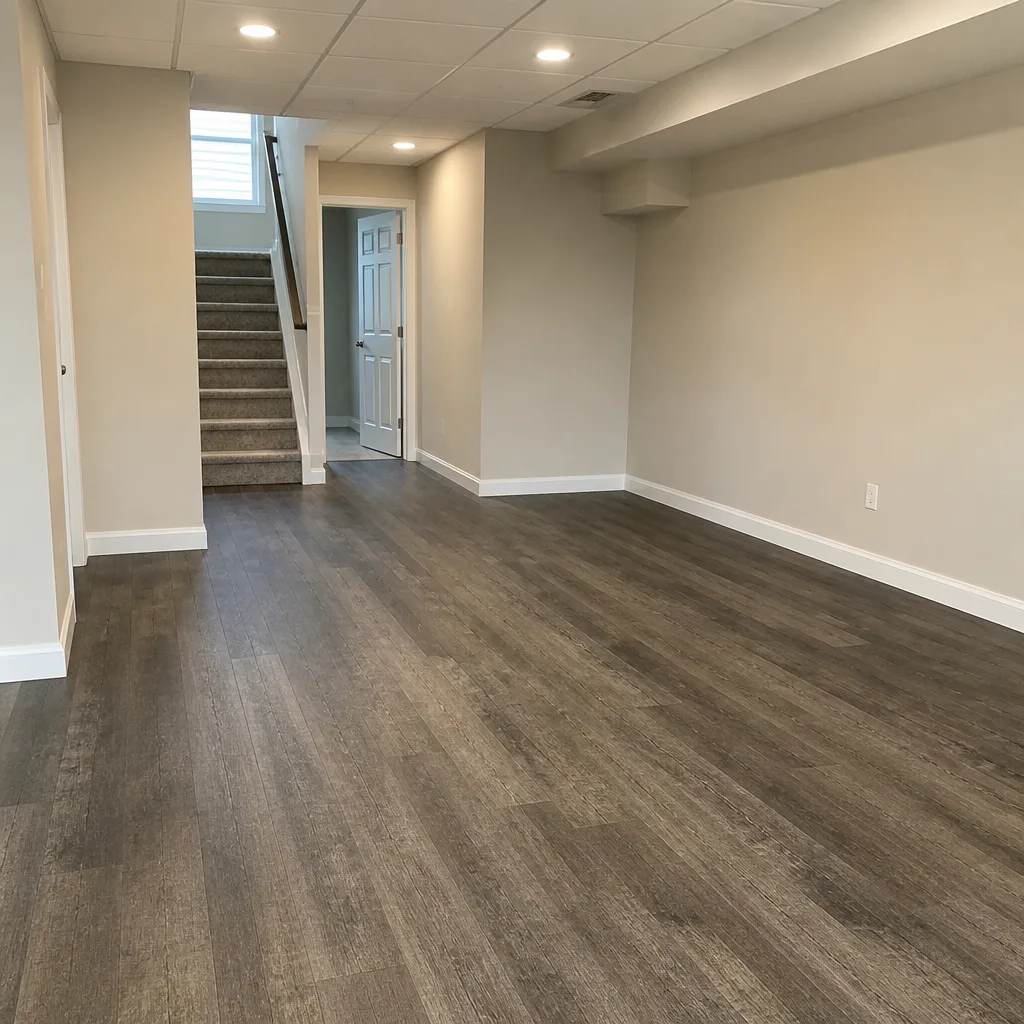
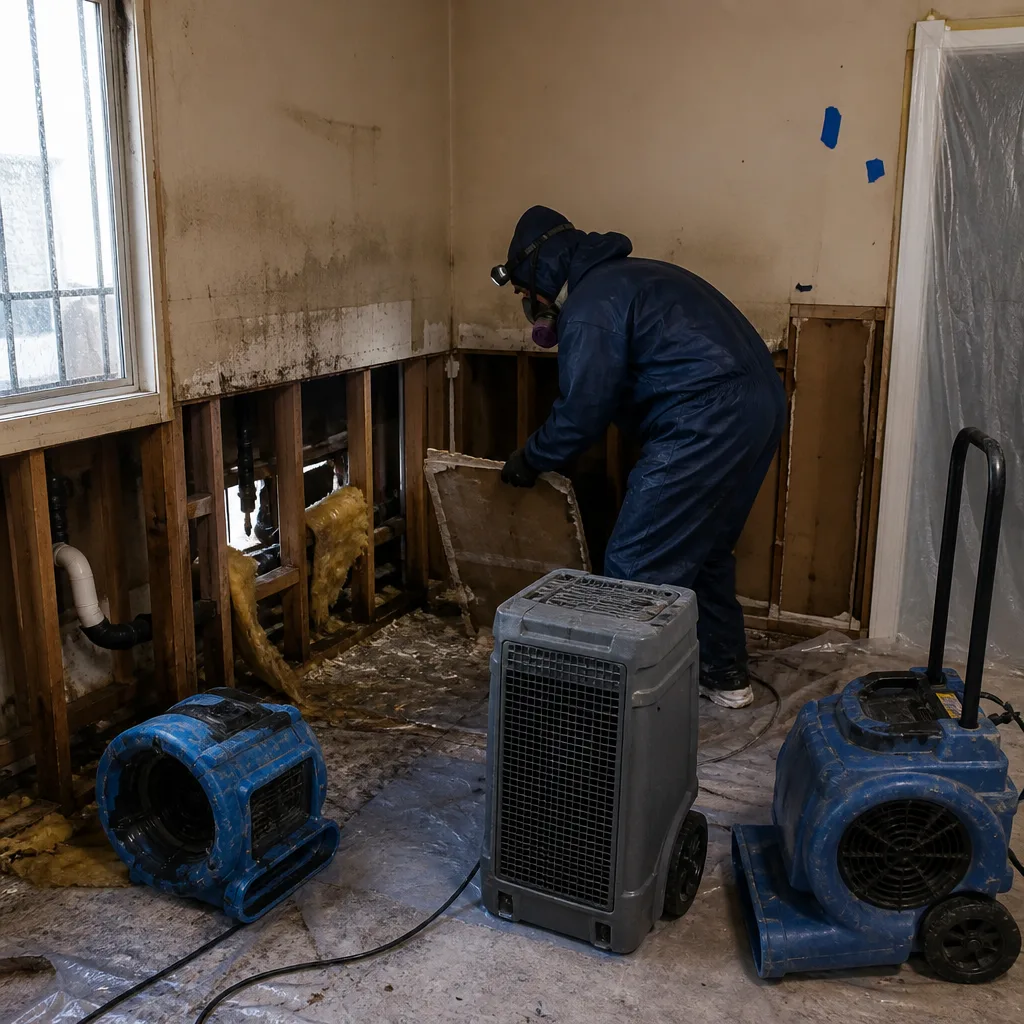 Before
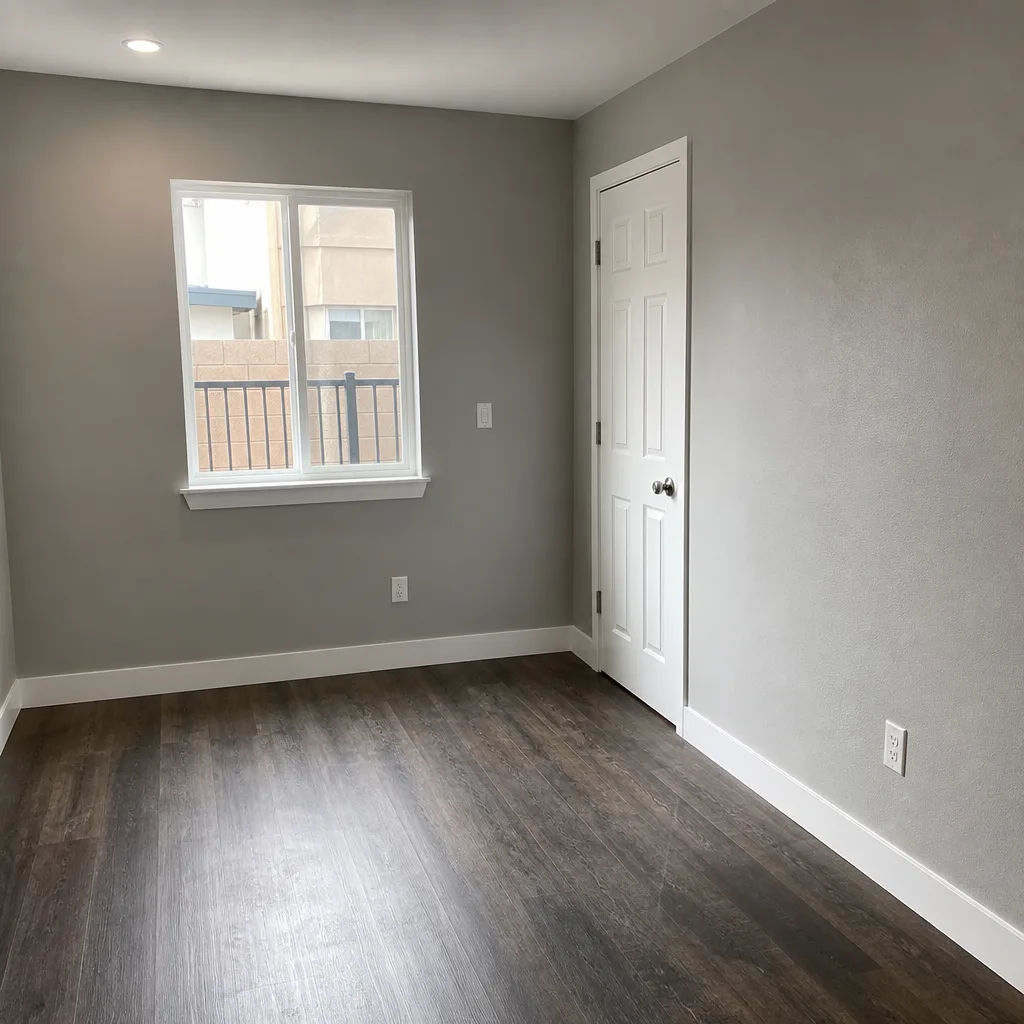 After
After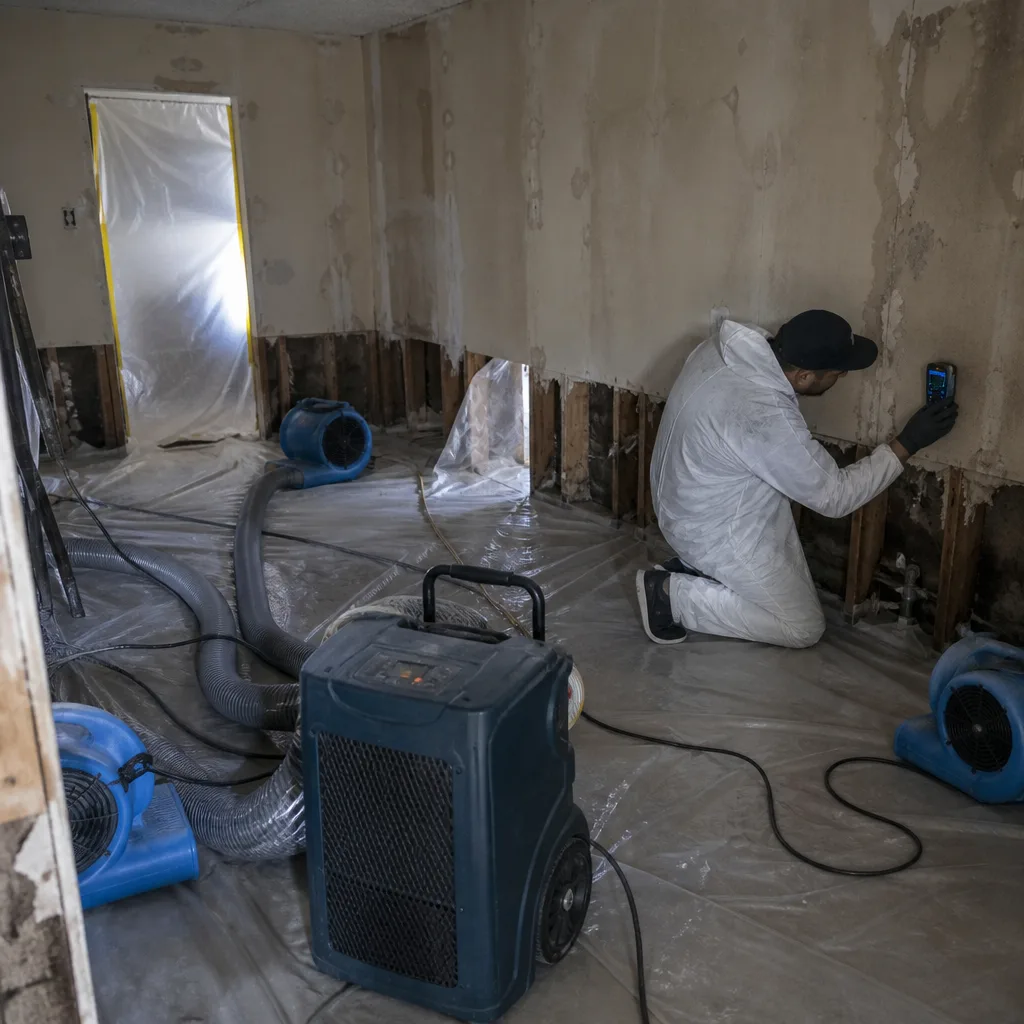 Before
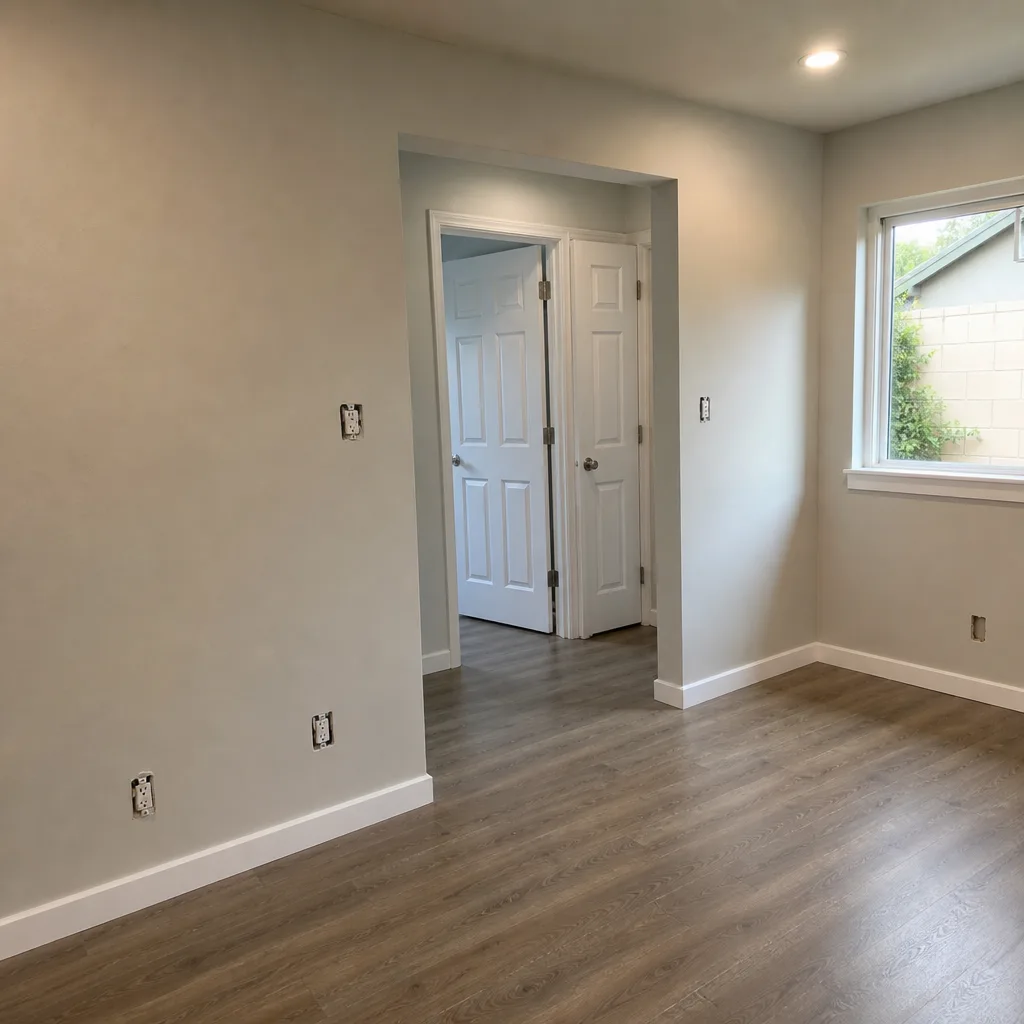 After
After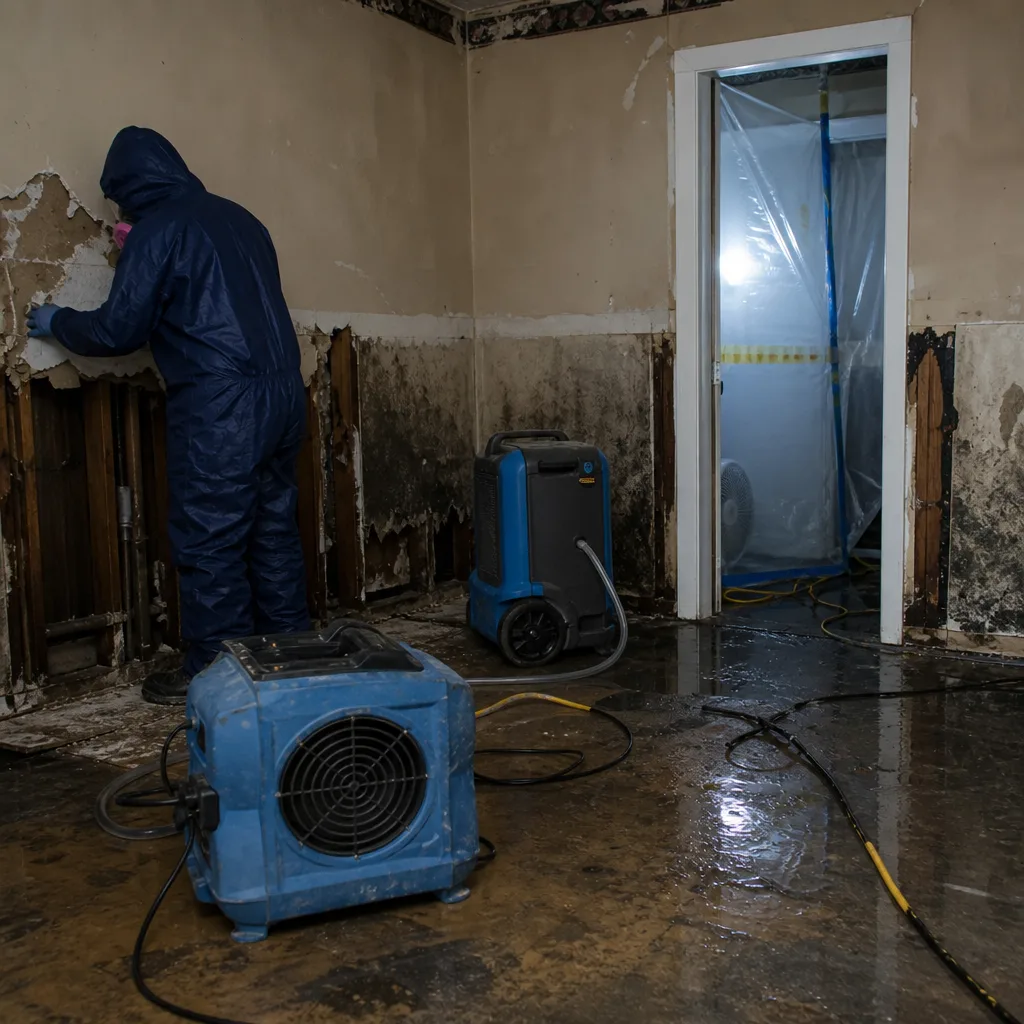 Before
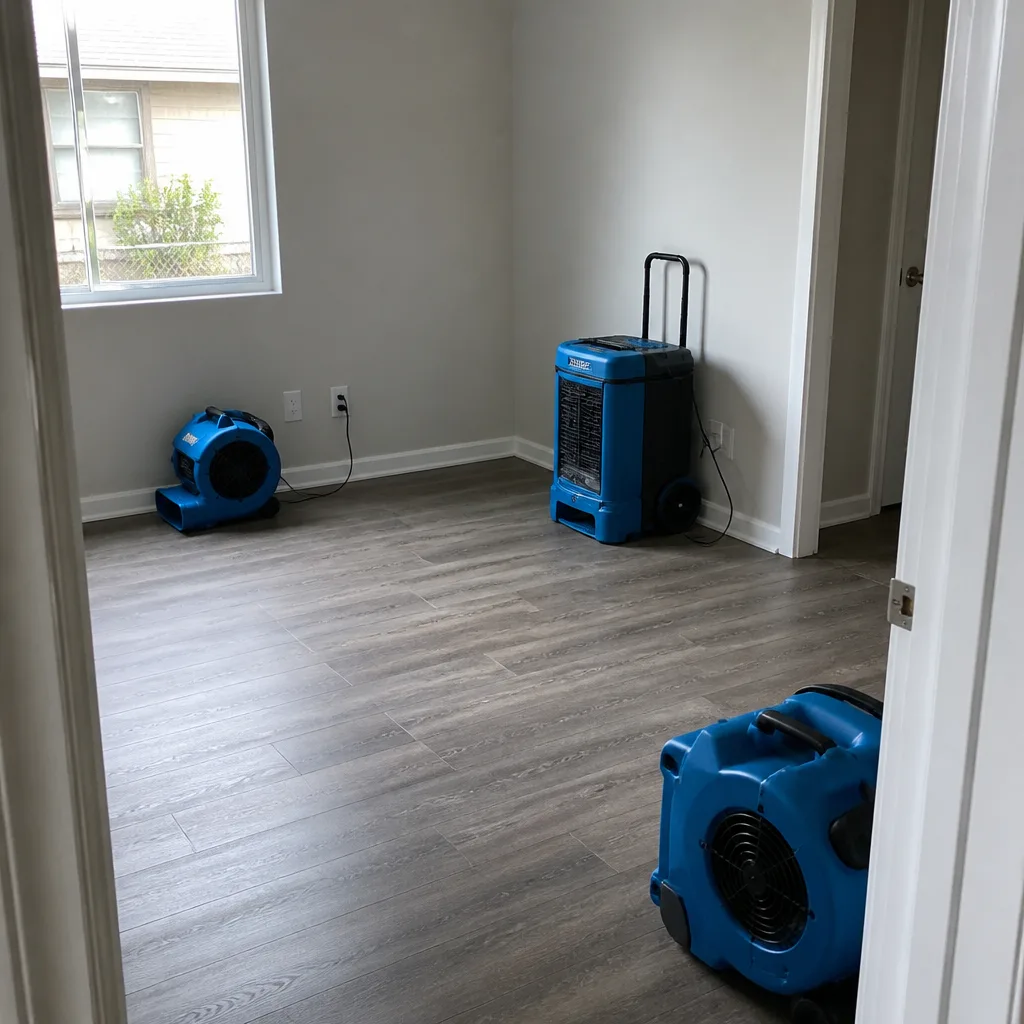 After
AfterDamage Restoration Permits, Codes & Inspections in CA: What You Need to Know
A water-damaged wall rebuilt without a permit in California is, under the Insurance Code, a material change to the insured structure. At least one Los Angeles County homeowner has had a fire claim denied on a wall that was restored without a documented building inspection after a previous water event. In Compton, where many homes sit on slabs with original 1950s electrical and galvanized plumbing, restoration work frequently triggers permit thresholds that contractors either miss or deliberately skip. This guide maps exactly when permits are required, how the inspection record protects your claim, and what gaps in your permit history cost you at resale or when the next disaster hits. For related reading, see our Damage Restoration Warning Signs: A Compton Homeowner’s Reference Guide.
Quick Answer
Most structural restoration work in California requires a building permit when it involves load-bearing walls, electrical or plumbing systems, or more than 200 square feet of wall or ceiling replacement. The permit creates an inspection trail - framing, insulation, wallboard - that proves the repair met code at the time of restoration, which insurers and future buyers treat as material evidence of the structure’s condition.
Table of Contents
- When Permits Are Required for Restoration Work
- LA County vs. City of Compton: Which Jurisdiction Controls
- The Inspection Stages That Must Be Documented Before Close-Out
- California Health and Safety Code Section 17920.3: Mold and Code Violations
- How to Pull Your Permit History and What Gaps Cost You
- How Unpermitted Repairs Become Claim Denial Evidence
- What Your Restoration Contractor Should Handle (and What They Don’t)
- Permit Costs and Inspection Timelines in Compton
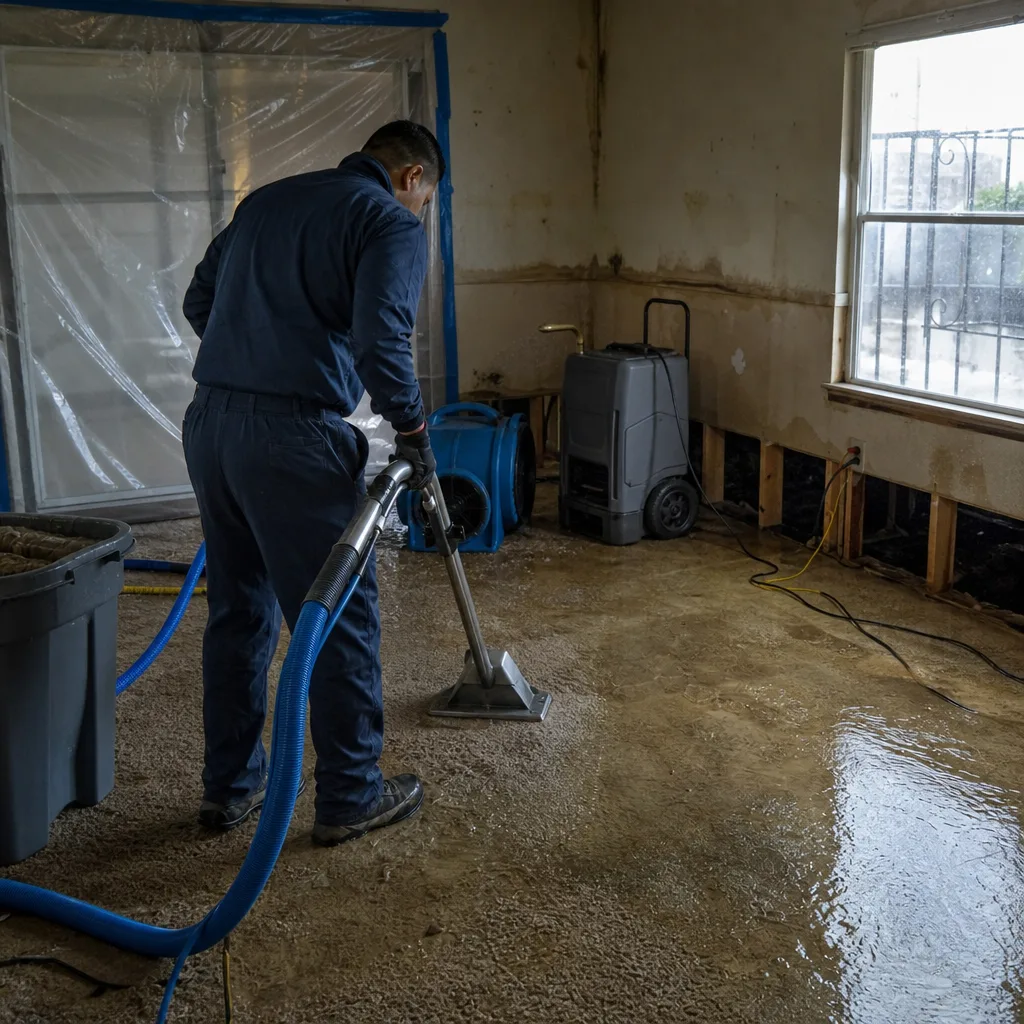
BeforeAfterWhen Permits Are Required for Restoration Work
California Building Code Section 105.1 requires permits for “construction, alteration, repair, removal, or demolition” of any building or structure. For restoration contractors, the threshold questions are: how much material came out, what systems were exposed, and whether structural elements were affected.
Here are the specific triggers we see misapplied most often on jobs in Compton and surrounding LA County:
- Structural repairs: Any repair to load-bearing walls, ceiling joists, or subflooring requires a permit. This includes sistering joists, replacing wall studs, or reframing after significant water damage.
- Electrical exposure: If restoration removes drywall and exposes romex or conduit that must be relocated, extended, or replaced, an electrical permit is required. This is common in Compton’s older homes with knob-and-tube remnants or ungrounded circuits.
- Plumbing exposure: Cutting into walls to access galvanized supply lines, drain-waste-vent stacks, or slab leaks triggers a plumbing permit. Compton’s high water table and aging cast iron drains make this a frequent scenario.
- Wall/ceiling replacement exceeding 200 square feet: The 2019 California Residential Code sets this threshold for “repair” versus “alteration.” A 12×15 foot room with four-foot flood cuts on all walls typically clears 200 square feet.
- Change of occupancy or use: Converting a garage to living space during reconstruction, or changing a bedroom to a bathroom, triggers full permitting regardless of square footage.
- Fire damage restoration: Any fire-damaged structural member replacement requires permits, and the Los Angeles County Fire Department may require separate clearance before building inspections resume.
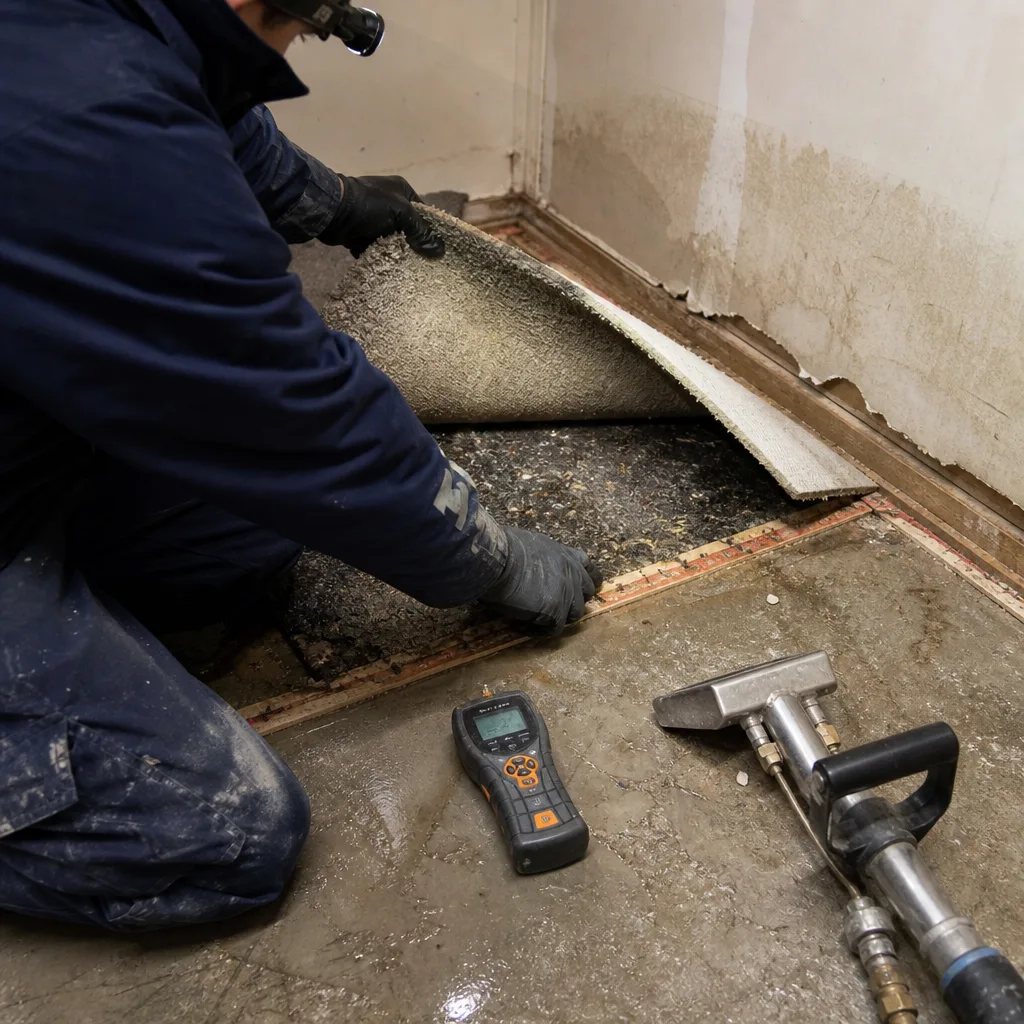
What does not require a permit: pure drying and dehumidification, carpet and pad removal, surface cleaning, and non-structural mold remediation on materials that will be fully removed and replaced in kind. We document these no-permit jobs with photo records and moisture logs anyway - Haven Standard, Clause 3 - because the insurer still wants evidence of what was done.
The most expensive mistake we see is the contractor who tells a homeowner, “This is just a repair, no permit needed,” when the job clearly triggered one. That contractor saves a few hundred dollars and a week of scheduling. The homeowner inherits the risk.
LA County vs. City of Compton: Which Jurisdiction Controls
Compton sits in a jurisdictional patchwork that confuses even experienced contractors. The City of Compton has its own Building and Safety Division, but unincorporated pockets within Compton’s mailing-address boundaries fall under Los Angeles County Department of Public Works. Properties on or near the border - think areas north of Rosecrans Avenue, east of Alameda Street, or the industrial zones along the 710 corridor - may need verification before any permit application.
Here’s how to determine which authority controls your property:
- Check the AIN (Assessor’s Identification Number): Enter your address at the LA County Assessor Portal. The jurisdiction field will show “City of Compton” or “Unincorporated Los Angeles County.”
- Call the City of Compton Building Division at (628) 226-1011: Provide your address and ask directly. They can confirm in under a minute.
- Verify at the LA County DPW website: If the city has no record, the county likely does. Their unincorporated area permit portal handles everything from plan check to final inspection.
The practical difference matters. City of Compton permits typically process in 10-15 business days for residential restoration, with inspections scheduled through the city’s contractor portal. LA County unincorporated areas often take 15-25 business days for plan check, with inspections routed through the county’s regional office in East Los Angeles or Carson. We’ve had jobs in the unincorporated strips near Compton Boulevard where a two-week county delay changed our drying strategy - we couldn’t close walls until the framing inspection passed, so we extended our water damage restoration in Compton with tertiary drying and vapor pressure differential monitoring to prevent secondary damage.
Neither jurisdiction accepts “emergency” permit expediting for restoration work the way they might for life-safety hazards. A burst pipe on Saturday morning still needs a permit before reconstruction begins Monday. The mitigation - extraction, drying, stabilization - proceeds immediately. The rebuild waits.
The Inspection Stages That Must Be Documented Before Close-Out
Permits are only as good as the inspections that validate them. California restoration work typically requires three inspection milestones before the job can be signed off. Each produces a documented record that becomes part of the property’s permanent file.
1. Framing/rough inspection: Occurs after damaged structure is removed and new framing is installed, but before insulation or wallboard goes up. The inspector verifies member sizes, spacing, fasteners, and structural connections match the approved plans. For fire restoration in Compton’s older wood-frame homes, this inspection often reveals code upgrades required - fire blocking, draft stopping, or upgraded header sizes - that weren’t in the original scope.
2. Insulation inspection: Required when walls are opened and insulation must be replaced. California Energy Code (Title 24) mandates specific R-values by climate zone. Compton sits in Climate Zone 8, requiring R-13 minimum in wood-framed walls and R-30 in ceilings. We’ve seen insulation inspections fail because a contractor used R-11 batts in a 2×4 wall, or because kraft-faced batts were installed backward with the vapor retarder on the wrong side for our climate.
3. Wallboard/final inspection: The last checkpoint before texture and paint. The inspector confirms proper fastener spacing, fire-rated Type X where required (garage-to-house walls, for instance), and that all prior inspections passed. The final inspection generates the Certificate of Occupancy or Certificate of Completion that closes the permit.
Each inspection produces a signed card or digital record. In Compton, the city uses an online inspection tracking system; LA County uses the LADBS (Los Angeles Department of Building and Safety) portal for incorporated areas and a separate system for unincorporated zones. We photograph every inspection record and attach it to the job file - Haven Standard, Clause 3 - because insurers increasingly request permit close-out documentation before releasing depreciation holdbacks.
Missing any inspection stage means the permit remains open. An open permit shows up on title searches, complicates refinancing, and can trigger a re-inspection at the homeowner’s expense when discovered years later.
California Health and Safety Code Section 17920.3: Mold and Code Violations
California’s statutory mold definition lives in Health and Safety Code Section 17920.3, which declares mold a “substandard condition” when it renders a building “unfit for human habitation.” This isn’t a suggestion - it’s the legal hook that code enforcement officers use to red-tag properties and that insurers reference when denying or limiting mold-related claims.
The code violation citation works like this: A tenant or neighbor reports visible mold. The city or county inspector arrives, documents the condition under 17920.3, and issues a notice of violation. The property owner must remediate under a permitted scope or face fines and potential condemnation. The citation becomes a public record, discoverable by future buyers, insurers, and lenders.
For homeowners, the critical intersection is between this code framework and your insurance policy. Most California homeowner policies contain a “known condition” or “maintenance” exclusion. If mold was cited by code enforcement before you filed your claim, the insurer may argue the damage was pre-existing and not sudden or accidental. If mold grew because a previous water restoration was done without proper drying documentation - no psychrometric data, no vapor pressure differential logs, no daily moisture readings - the insurer may deny on grounds that the contractor’s negligence, not a covered peril, caused the mold.
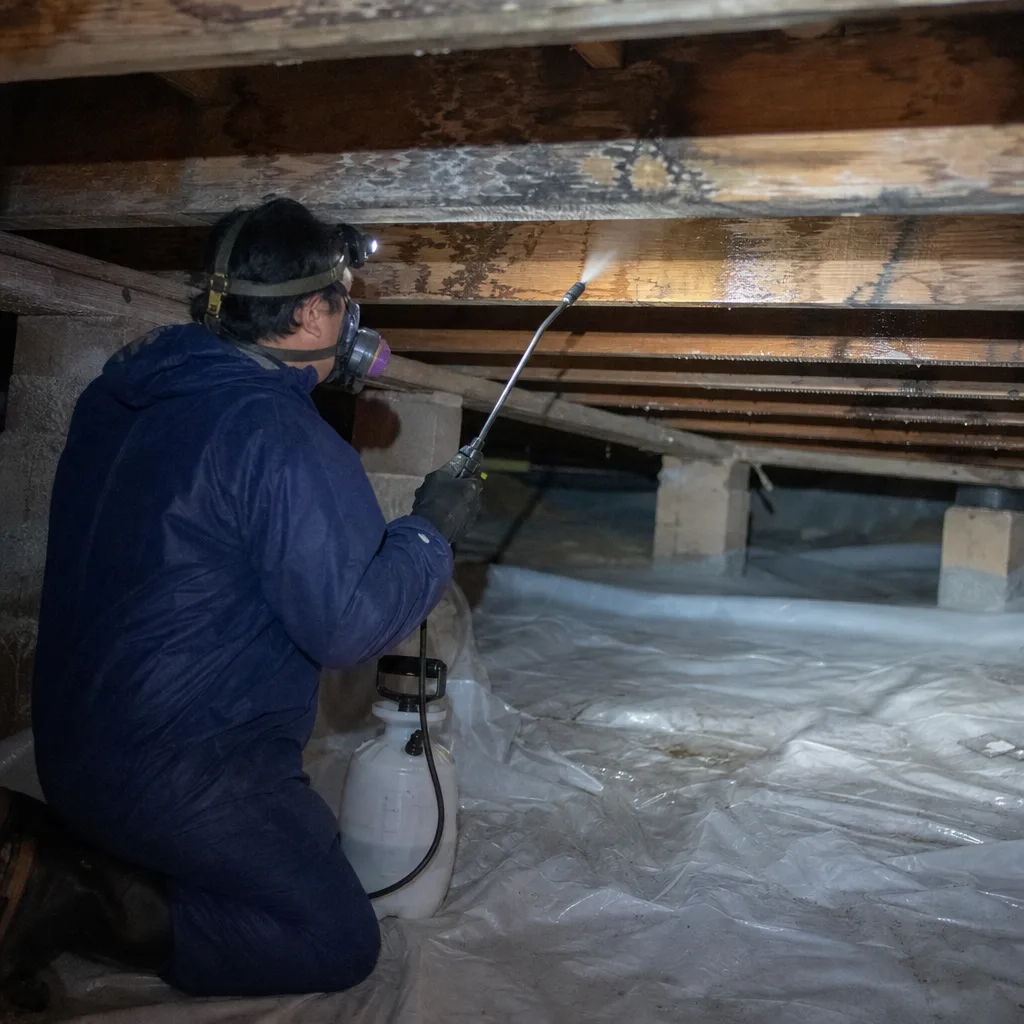
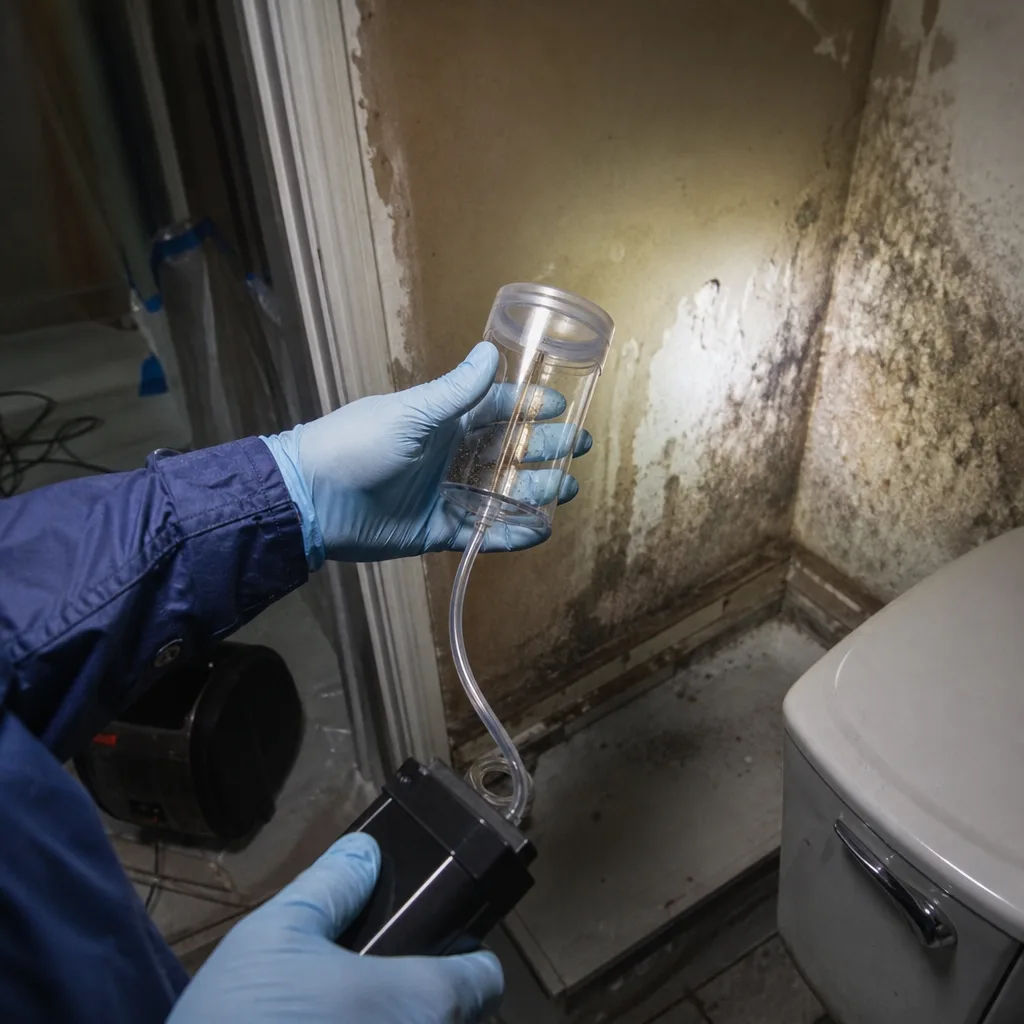
This is why our mold remediation in Compton includes full documentation to IICRC S520 standards, with moisture mapping before and after, photo records of containment setup, and air sampling results that establish a baseline and clearance. When a code officer or adjuster asks, “How do you know this was done right?” we hand them a file, not a promise.
We’ve worked Compton properties where a previous contractor’s “mold treatment” - really just spraying bleach on visible growth - left hidden colonization in wall cavities. When the city inspector cut test holes, the 17920.3 citation wrote itself. The homeowner’s insurer denied the subsequent claim because the initial water damage had been “repaired” without permits or documentation, making the mold a foreseeable consequence of faulty workmanship.
How to Pull Your Permit History and What Gaps Cost You
Every property in California accumulates a permit history that follows it through sales, refinances, and insurance renewals. Smart homeowners check this history before starting restoration work, not after. Here’s how to access yours:
- City of Compton properties: Visit the Compton Building Division at 205 S Willowbrook Ave or call (628) 226-1011. Request a “permit history printout” for your address. There’s typically no fee for residential requests under ten pages.
- LA County unincorporated properties: Use the LA County Building and Safety permit history search. You’ll need your Assessor’s Identification Number (AIN).
- Any California property: The California Building Standards Commission maintains a portal linking to all local jurisdictions, though records vary in digitization quality.
What you’re looking for:
- Open permits: Any permit applied for but never closed with a final inspection. These are title defects that must be cleared before sale.
- Permits with no matching inspection record: Suggests work was started but abandoned, or inspections were failed and never re-scheduled.
- Work described in permits that doesn’t match visible conditions: A “bathroom addition” permit with no bathroom, or a “kitchen remodel” permit when the kitchen is original, may indicate unpermitted work elsewhere that was concealed.
- Missing permits for known work: If you paid for a restoration after a 2019 pipe burst but no permit appears, the contractor either skipped it or pulled it under a different address.
In Compton’s real estate market, where first-time buyers and investors compete for 1950s-era homes, permit gaps are negotiation leverage. We’ve seen $15,000 price reductions demanded for open electrical permits from 1987, or unpermitted garage conversions that can’t be counted as square footage. A clean permit history, by contrast, signals a maintained property with documented systems.
For insurance purposes, the permit gap is more severe. An insurer underwriting a new policy may request a CLUE report (Comprehensive Loss Underwriting Exchange) and cross-reference it against permit history. A water loss in 2021 with no corresponding repair permit suggests either unreported damage, unpermitted repair, or insurance fraud. None of these help your premium or your coverage.
How Unpermitted Repairs Become Claim Denial Evidence
The Insurance Code language that matters here is in California Insurance Code Section 2071, the standard fire insurance policy form, and the case law interpreting “material misrepresentation” and “concealment.” When a homeowner files a claim, the insurer investigates the structure’s condition at the time of loss. Unpermitted repairs are discoverable through permit history, visual inspection, and contractor disclosures.
The denial scenario we described in our opening - fire claim denied on a wall restored without permit after water damage - rests on a specific legal theory. The insurer argues that the unpermitted wall reconstruction altered the structure’s risk profile in ways the insurer wasn’t told about. Maybe the wrong materials were used. Maybe fire blocking was omitted. Maybe electrical was extended without proper gauge or protection. The insurer doesn’t need to prove the unpermitted work caused the fire; it only needs to show that the unpermitted condition voided the policy’s warranty of accurate disclosure.
We’ve documented this risk for Compton homeowners with properties in the high fire severity zone near the Dominguez Channel or industrial areas. After the 2025 fire season, several insurers began requesting five-year permit histories on all new policies in LA County. A gap in that history is now a standard underwriting flag.
The protection is simple: permit every restoration that triggers the threshold, inspect every stage, and keep the close-out documentation with your insurance file. When we handle fire and smoke damage restoration in Compton, we pull the property’s permit history as part of our initial assessment. If we find open permits from prior work, we flag them for the homeowner and adjuster before we start. It’s slower. It’s also the only way to ensure the next claim isn’t compromised by the last repair.
What Your Restoration Contractor Should Handle (and What They Don’t)
Permit responsibility splits between contractor and homeowner in ways that surprise most people. In California, the property owner is ultimately liable for unpermitted work - but the contractor who performed it faces licensing discipline, and the homeowner has recourse against their bond.
Here’s what a competent restoration contractor should do:
- Identify permit triggers during the initial scope: Before demolition begins, the contractor should flag which building, electrical, plumbing, or mechanical permits will be needed. This belongs in the written scope of work - Haven Standard, Clause 1.
- Include permit costs in the written price: No surprises. Plan check fees, permit fees, and inspection fees should be line-itemed or clearly noted as included.
- Pull permits as the property owner’s agent: Most restoration contractors do this routinely. The permit lists the owner as “applicant” and the contractor as “agent.”
- Schedule and attend all inspections: The contractor must be present for framing, insulation, and final inspections, with the approved plans and job file.
- Provide close-out documentation: Final inspection sign-off, certificate of completion, and any correction notices resolved. We attach these to every job file and provide copies to the homeowner and adjuster.
What the contractor does not handle:
- Historic preservation or design review: Compton has limited historic districts, but if your property is in one, a separate approval process may precede building permits.
- HOA architectural review: Many Compton condo and townhouse complexes require HOA approval before exterior work or system changes. This is the owner’s responsibility to secure.
- Separate environmental clearances: If restoration disturbs lead paint (pre-1978 housing) or asbestos-containing material, additional abatement permits and air clearance sampling are required. We coordinate these but the owner must approve the scope and cost.
A contractor who says “permits are your problem” or who asks you to pull your own permits to save money is signaling that they may not be licensed to do the work, or that they have permit violations in their own history that would flag the application. California Contractors State License Board records are public - we encourage homeowners to verify any contractor’s license and permit history before signing. For a full walkthrough, read How to Hire a Damage Restoration Contractor in Compton: A Step-by-Step Guide.
Permit Costs and Inspection Timelines in Compton
Permit costs in California restoration work scale with valuation, not just square footage. Here’s what Compton and LA County property owners typically encounter:
| Permit Type | City of Compton Fee Range | LA County Unincorporated Fee Range | Typical Timeline |
|---|---|---|---|
| Residential repair/replacement (under $5,000 valuation) | $150-$300 | $180-$350 | 10-15 business days |
| Residential alteration ($5,000-$25,000 valuation) | $300-$750 | $350-$900 | 15-25 business days |
| Electrical repair/replacement | $100-$200 | $120-$250 | 5-10 business days |
| Plumbing repair/replacement | $100-$200 | $120-$250 | 5-10 business days |
| Combination permit (building + electrical + plumbing) | $400-$1,100 | $500-$1,300 | 15-30 business days |
| Re-inspection fee (failed inspection) | $75-$150 | $100-$200 | Reschedule + 3-5 days |
These are 2024-2025 fee schedules; cities adjust annually. The valuation is based on the contractor’s estimated cost of work, not the insurance payout. A $15,000 water damage rebuild with new electrical and plumbing will typically clear into the alteration category even if no floor plan changes.
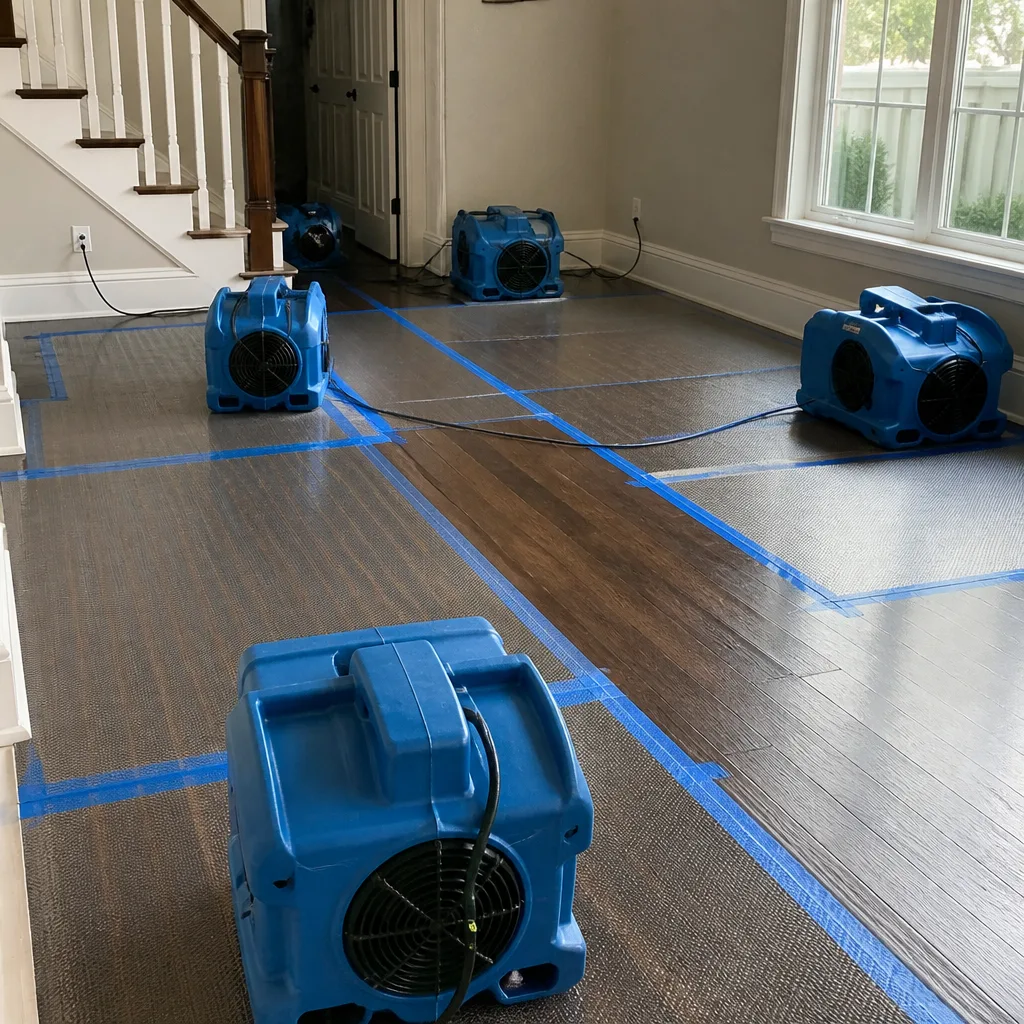
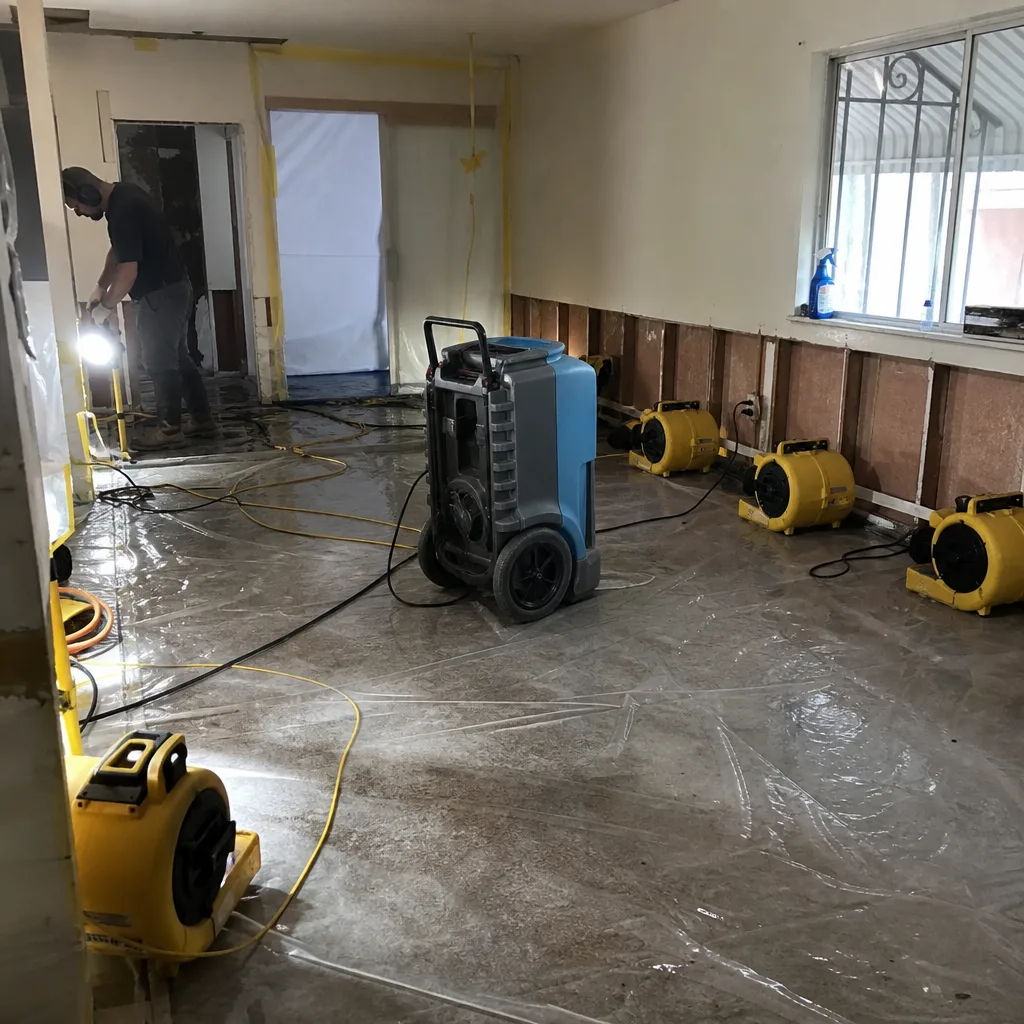
Timeline matters for restoration because moisture doesn’t wait. Our approach on permitted jobs in Compton is to complete all mitigation - extraction, drying with DryMark Restoration Compton home equipment including Injectidry and B-Air systems, content manipulation - while permits are in plan check. By the time the framing inspection is ready, the structure is dry, stabilized, and ready for reconstruction. This parallel processing, documented with daily moisture logs to IICRC standards, prevents the permit delay from becoming secondary damage.
One Compton-specific factor: the city’s Building Division has limited staff and occasionally routes overflow plan check to private firms. This can add 5-10 days but often produces more detailed review comments that catch issues early. LA County’s unincorporated process is more predictable but slower. We advise homeowners in border areas to verify jurisdiction early and build the timeline into their temporary housing plans.
Common Mistakes to Avoid
- Accepting a contractor’s verbal assurance that “no permit is needed for this.” California permit law is specific; if structural, electrical, or plumbing systems are involved, verify independently with the city or county.
- Starting reconstruction before the framing inspection passes. Covering work before inspection means cutting it open again for verification, or worse, an inspector requiring complete removal.
- Assuming insurance will cover permit costs automatically. Some policies include “code upgrade” or “ordinance and law” coverage, but many cap it at 10% of dwelling coverage or exclude it entirely. Check your declarations page.
- Not requesting inspection records from the contractor at job close-out. The final certificate belongs in your permanent file, not the contractor’s truck.
- Ignoring open permits from previous owners. These become your problem at sale. In Compton’s competitive market, buyers’ agents are increasingly running permit histories during due diligence.
- Failing to document drying before walls are closed. Without moisture logs and photo records, you can’t prove the structure was dry when reconstruction began - a common mold denial trigger.
- Using a contractor who pulls permits under another company’s license. This “license lending” is illegal in California and voids your protections if something goes wrong.
When to Call a Professional
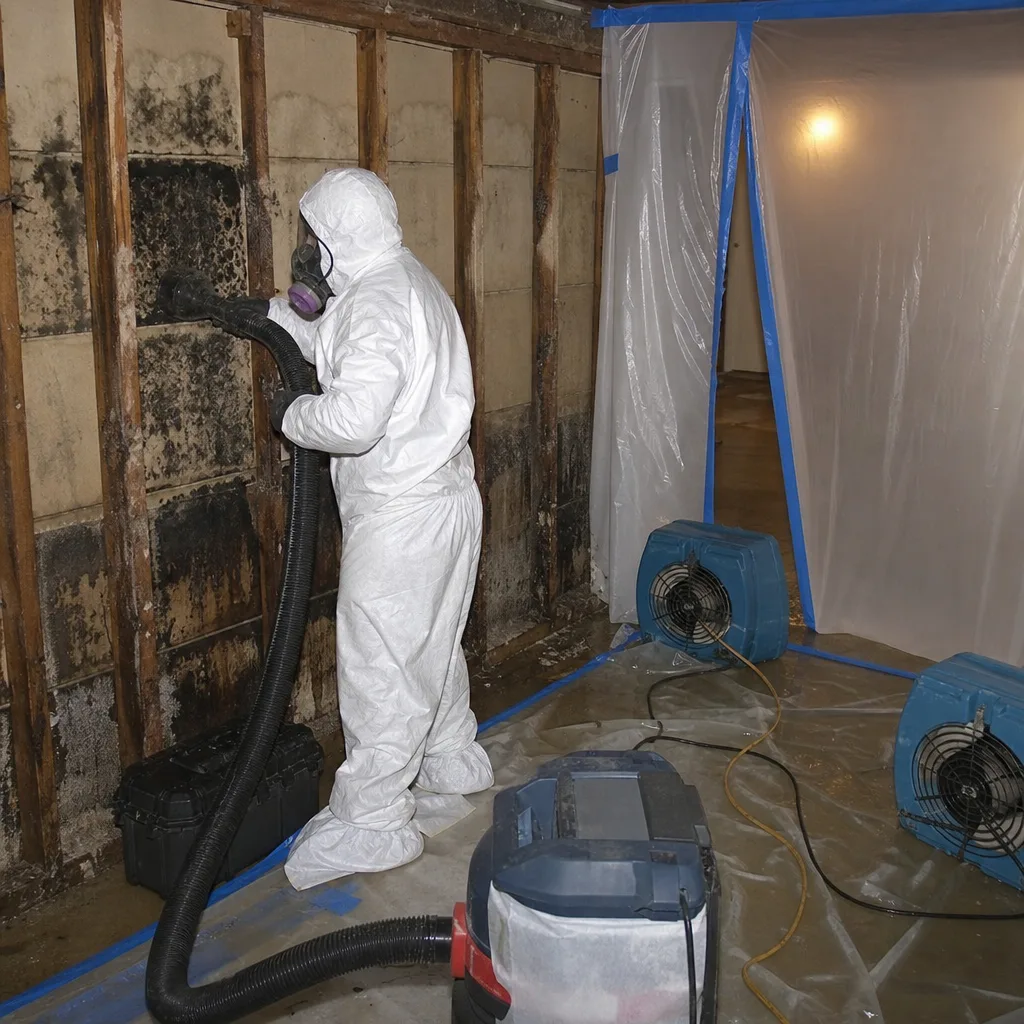
Call a licensed restoration contractor when your damage involves structural materials, electrical or plumbing systems, or more than one room. The permit analysis alone is worth professional review - we’ve seen homeowners spend weeks in permit limbo because they applied for the wrong permit type, or because they didn’t know their property was unincorporated and filed with the city instead of the county.
DryMark Restoration Compton offers free estimates in Compton - call (628) 226-1011. Every estimate includes a permit trigger analysis, a written price before work begins, and a documented photo record on every visit. We pull permits as your agent, attend all inspections, and deliver close-out documentation with your final invoice. The Haven Standard, Clause 1, applies to every job: written price before work starts, no exceptions.
Frequently Asked Questions
Some policies include “ordinance or law” coverage that pays for code-required upgrades and permit costs, but many limit this to 10% of dwelling coverage or exclude it entirely. Review your declarations page or ask your adjuster directly. If your policy lacks this coverage, permit costs come out of the restoration budget unless your contractor includes them in a lump-sum scope. Call (628) 226-1011 and we’ll review your estimate to identify what’s covered and what’s not.
Mitigation - extraction, stabilization, and drying setup - begins immediately, typically within 60-90 minutes for Compton calls during normal hours. Permits for reconstruction are pulled in parallel, not in sequence, so the drying process isn’t delayed. Reconstruction itself cannot begin until permits are approved and inspections scheduled. Call (628) 226-1011 for emergency dispatch; live person answers every call, 24 hours a day, 7 days a week.
Visible mold on a hard surface smaller than ten square feet can sometimes be handled with proper containment and cleaning, but California Health and Safety Code Section 17920.3 defines mold as a substandard condition when it affects habitability. If mold grew after a water event, or if it’s inside walls, HVAC systems, or porous materials, professional remediation with documented clearance sampling is the only way to prove the condition is resolved for insurers and future buyers. Our mold remediation in Compton includes IICRC-standard documentation on every job.
We coordinate directly with your adjuster, providing the photo records, moisture logs, written scopes, and permit documentation they need to process the claim. Our files are organized the way adjusters read them - because our founder was one. The Haven Standard requires that every job file be claim-ready before the adjuster asks for it.
Unpermitted work from prior owners becomes your problem at sale, refinance, or claim time. We recommend pulling the full permit history before starting any new restoration, so we can identify gaps and address them proactively. Sometimes this means permitting retroactively, which is possible but more expensive and time-consuming than doing it right the first time.
Check your property tax bill for the AIN, then search the LA County Assessor Portal or call the City of Compton Building Division at (628) 226-1011 with your address. Border properties, especially near Rosecrans Avenue, Alameda Street, and the 710 corridor, frequently surprise owners with their actual jurisdiction. We verify this on every Compton estimate before pulling any permit application.
The Bottom Line
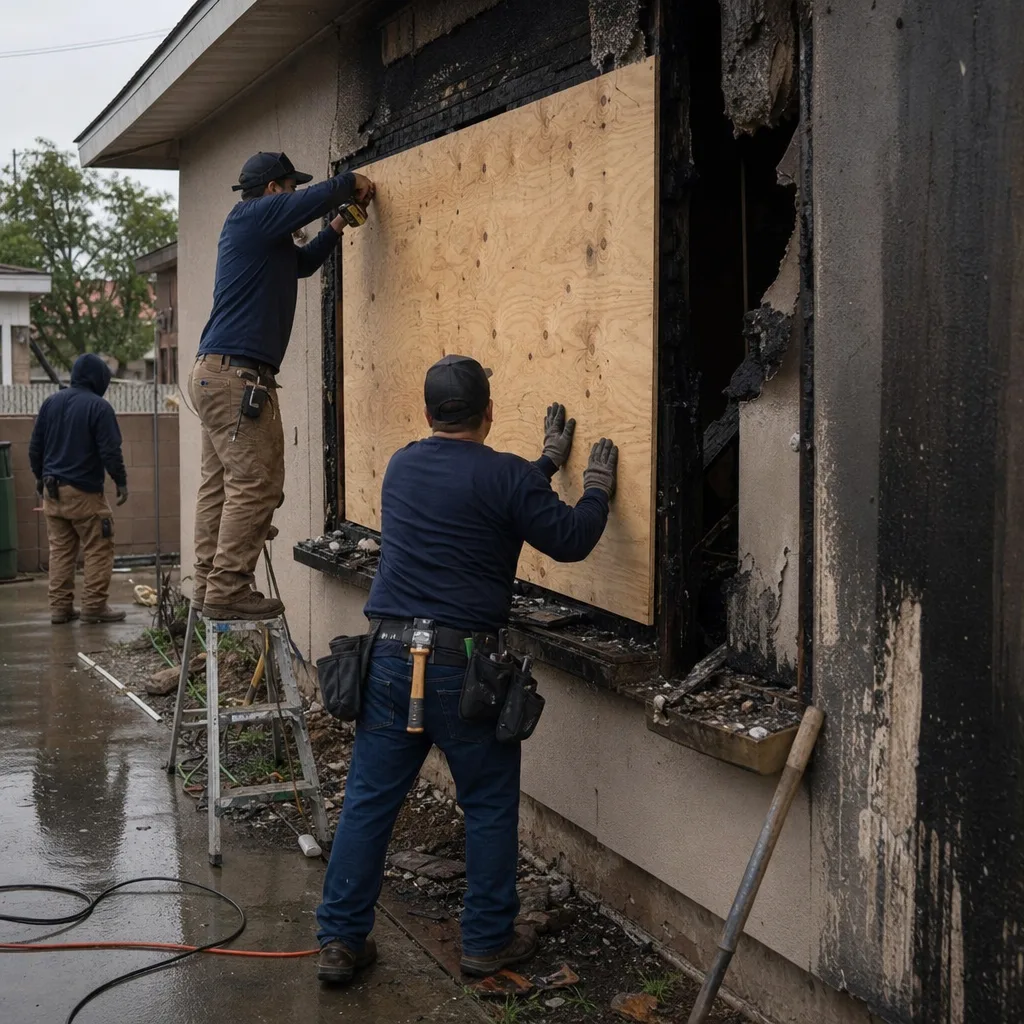
Permits aren’t bureaucracy for bureaucracy’s sake. In California restoration, they’re the documentation that proves your repair met code, protects your insurance coverage, and preserves your property’s marketability. Skipping them saves days and a few hundred dollars upfront. The cost shows up later - in claim denials, sale price reductions, or emergency re-permitting when a sharp-eyed inspector or buyer’s agent finds the gap.
In Compton, where aging housing stock meets strict code enforcement and insurers increasingly scrutinize repair history, the permit record is as important as the repair itself. We build every job file to withstand that scrutiny: written price before work starts, photo records on every visit, daily moisture logs, and permit close-out documentation delivered with the final invoice. The Haven Standard was designed for exactly this - evidence over assurance, every time.
Written by Alicia Brennan, Owner at DryMark Restoration Compton, serving Compton since 2011.